Agri Minister Shivraj hails record 3,765 lakh tonne foodgrain output
Synopsis
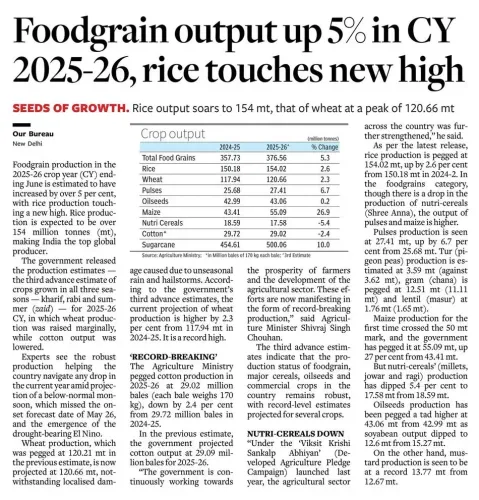
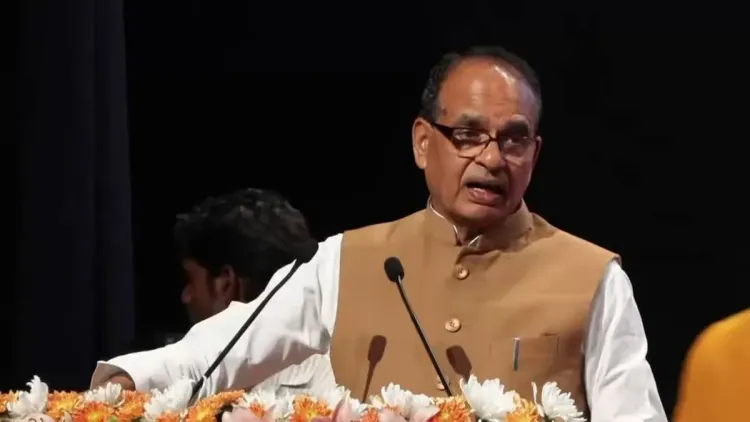
Union Agriculture Minister Shivraj Singh Chouhan announced India's Third Advance Estimates on 28 May 2026, putting total foodgrain production at a record 3,765.63 lakh tonnes — 188 lakh tonnes above the previous year. He credited farmers, ICAR scientists, and state officials for the achievement.
Key Takeaways
India's estimated foodgrain production for 2025-26 stands at 3,765.63 lakh tonnes , a record high according to the Third Advance Estimates.
Output has risen by 188 lakh tonnes compared to the previous agricultural year.
The Third Advance Estimates were released on 27 May 2026 by the Directorate of Economics and Statistics under the Ministry of Agriculture.
Minister Shivraj Singh Chouhan credited farmers, ICAR scientists, and state agriculture officials for the milestone.
Final Estimates revising these figures are scheduled for October 2026 and will inform procurement, buffer-stock, and export policy decisions.
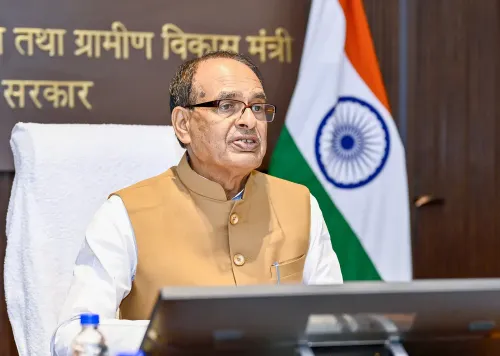
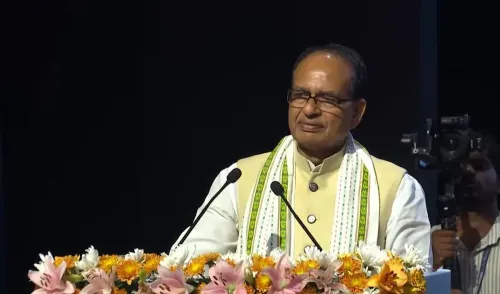
Union Agriculture Minister Shivraj Singh Chouhan announced on Thursday, 28 May 2026 that India has achieved record foodgrain production, citing the Third Advance Estimates released a day earlier that put total output at 3,765.63 lakh tonnes — an increase of 188 lakh tonnes over the previous year.
Context
In his post on X, Chouhan wrote: 'देश में खाद्यान्न का रिकॉर्ड उत्पादन हुआ है' ('The country has achieved record foodgrain production'). He noted that the Third Advance Estimates had been released the previous day, confirming total estimated output of 3,765.63 lakh tonnes for the current agricultural year. The minister offered his respects to farmers, calling them the 'biggest contributors' to this achievement, and congratulated the agriculture team, scientists at ICAR (Indian Council of Agricultural Research), and state officials.
The announcement follows the Ministry's standard statistical calendar. Each agricultural year, the Directorate of Economics and Statistics under the Ministry of Agriculture and Farmers Welfare releases four successive estimates of foodgrain output — the first in September, the second in February, the third in May, and a final revised figure in October. The Third Advance Estimates, released in May 2026, represent the most comprehensive projection before the final count.
Policy Backdrop
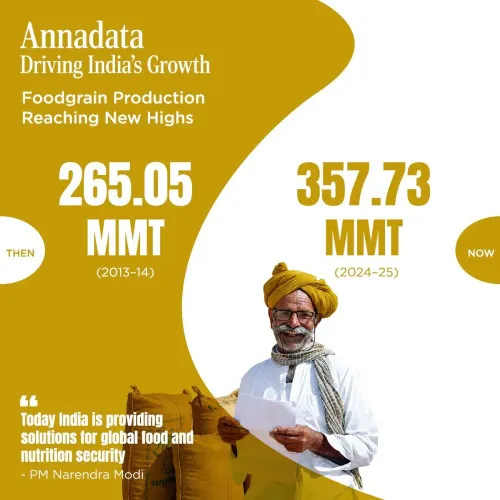
India's foodgrain production trajectory has been on a broadly upward path since the Green Revolution, with output crossing 300 million tonnes (30,000 lakh tonnes) in several recent years. The current figure of 3,765.63 lakh tonnes — approximately 376.56 million tonnes — represents a significant step above that threshold, reflecting cumulative gains from high-yielding seed varieties, expanded irrigation coverage, and minimum support price operations that incentivise farmers to maintain or increase sown area.
ICAR, the apex autonomous body for agricultural research, education, and extension under the ministry, plays a central role in developing and disseminating improved crop varieties and agronomic practices to state extension systems. The coordination between ICAR institutes, state agriculture departments, and the central ministry is the standard mechanism credited with translating research into field-level production gains.
Stakeholders and Impact
The record output has direct implications for India's food security architecture. Higher production volumes feed into buffer-stock management decisions by the Food Corporation of India and inform procurement planning under the National Food Security Act, which covers hundreds of millions of subsidised-grain beneficiaries. A larger harvest also influences government deliberations on export policy — whether to ease or maintain restrictions on wheat and rice shipments that have been in place during periods of tight domestic supply.
For Indian farmers, the record is a validation of the sowing decisions, input investments, and weather cooperation that translated into bumper yields. State agriculture departments and ICAR scientists, whom Chouhan specifically acknowledged, are likely to use the data to benchmark ongoing research priorities and extension outreach for the coming kharif season.
What's Next
The Final Estimates, scheduled for release in October 2026, will revise the third-advance numbers once complete post-harvest data from all states are compiled. Any upward or downward revision will directly shape kharif procurement targets, buffer-stock allocation decisions, and potential changes to grain export or import policy for the remainder of the year. MSP announcements for the next crop cycle, typically made ahead of sowing seasons, will also factor in the final production picture.
With foodgrain output at a record high, the government faces the twin policy challenge of ensuring remunerative prices for farmers while managing storage capacity and keeping consumer prices stable — a balancing act that will define the ministry's agenda through the rest of 2026.
Point of View
765.63 lakh tonnes is a politically significant data point for the BJP-led government, coming as it does from a minister with deep agrarian roots and four terms as Chief Minister of a major farm state. By personally crediting farmers, ICAR scientists, and state officials in the same breath, Chouhan is reinforcing a coalition-building narrative that ties central policy, scientific institutions, and state governments together as co-authors of rural prosperity. The record figure also gives the government leverage in ongoing debates about grain export policy and MSP adequacy — a bumper harvest strengthens the case for easing export restrictions without triggering domestic price spikes. Longer-term, the data will be scrutinised against farmer income and input-cost trends to assess whether production records are translating into genuine welfare gains on the ground.
NationPress
11 Oct 2026
Frequently Asked Questions
What is India's total foodgrain production in 2025-26?
According to the Third Advance Estimates released on 27 May 2026, India's total estimated foodgrain production for 2025-26 is 3,765.63 lakh tonnes , the highest on record.
By how much has India's foodgrain production increased this year?
Foodgrain production has increased by 188 lakh tonnes compared to the previous year, according to figures cited by Agriculture Minister Shivraj Singh Chouhan.
What are Third Advance Estimates in Indian agriculture?
Third Advance Estimates are the third in a series of four annual crop production projections released by the Directorate of Economics and Statistics. They are published in May and represent the most comprehensive forecast before the Final Estimates in October.
What role does ICAR play in India's foodgrain production?
ICAR (Indian Council of Agricultural Research) is the apex body for agricultural research and extension under the Ministry of Agriculture. It develops high-yielding seed varieties and agronomic practices that state departments disseminate to farmers, directly contributing to production growth.
What happens after the Third Advance Estimates are released?
The Final Estimates , scheduled for October 2026, will revise the third-advance figures using complete post-harvest state data. These final numbers feed directly into kharif procurement targets, buffer-stock decisions, and grain export or import policy.