Shekhawat Highlights India's Record Foodgrain Output

Synopsis
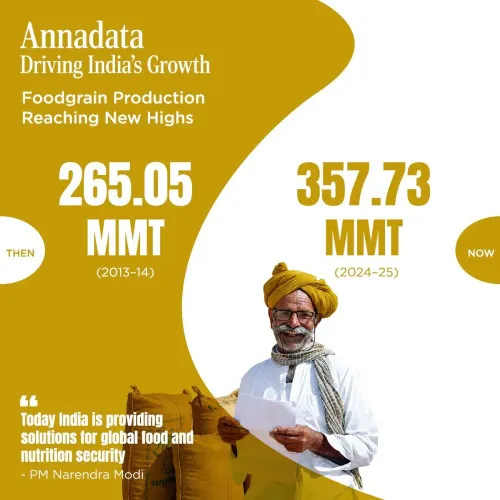
Union Culture and Tourism Minister Gajendra Singh Shekhawat posted crop-wise foodgrain production figures on 7 June 2026, citing records in rice, wheat, maize and pulses, and attributing the gains to PM Modi's policies and farmer effort.
Key Takeaways
Union Minister Gajendra Singh Shekhawat shared foodgrain output figures on 7 June 2026 , crediting PM Modi's policies and farmer hard work.
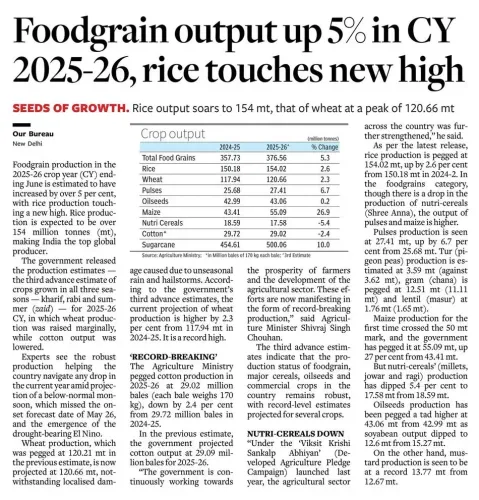
Rice output is cited at 154 million tonnes and wheat at 120.66 million tonnes .
Maize production is stated to have crossed 55 million tonnes for the first time .
Pulses output is cited at a 'historic' 27.4 million tonnes .
The post aligns with a government-wide pattern of amplifying agricultural milestones under the Atmanirbhar Bharat narrative.
Final confirmation of the figures is pending the Ministry of Agriculture's official advance estimates for 2025-26.
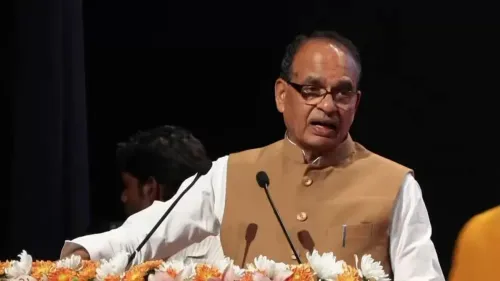
Union Culture and Tourism Minister Gajendra Singh Shekhawat on Sunday, 7 June 2026, shared figures citing record foodgrain production across key crops, attributing the gains to farmer effort, technology adoption, and government policy under Prime Minister Narendra Modi.
Context
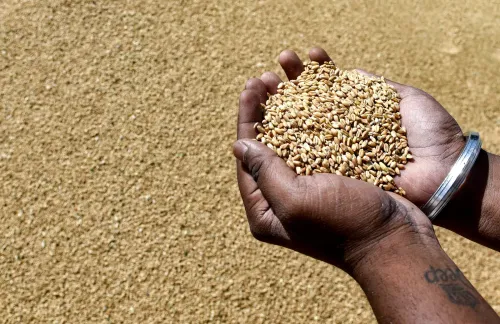
Posting in Hindi on X, Shekhawat described India as moving toward 'new milestones' — naye kirtiman ki or agrassar — driven by what he called the hard work of annadata (food-providers, i.e., farmers), modern technology, and farmer-friendly government policies. The post listed four crop-wise figures: rice at 154 million tonnes, wheat at 120.66 million tonnes, maize crossing 55 million tonnes for the first time, and pulses at a historic 27.4 million tonnes.
The minister credited PM Modi's 'visionary policies' and the resolve of India's farmers for making the agriculture sector 'more empowered and self-reliant every day.' The post included a video attachment alongside the crop-wise data.
Policy Backdrop
India has documented successive peaks in total foodgrain output almost every year since 2016-17, according to Ministry of Agriculture advance estimates. The government has pointed to a cluster of schemes — including the PM-KISAN direct income-support programme launched in 2019, which covers more than 110 million farmers — as structural drivers of productivity gains.
Earlier interventions such as the Soil Health Card scheme (2015) and the e-NAM electronic trading platform (2016) were designed to improve both per-acre yields and market access for smallholders. Together, these measures form the policy lineage that the government routinely cites when highlighting output records.
The messaging fits a broader Atmanirbhar Bharat (self-reliant India) communication pattern in which ministers across portfolios amplify agricultural and economic milestones on social media, reinforcing a cross-sectoral narrative of national progress.
Stakeholders and Impact
The figures, if confirmed by final Ministry of Agriculture estimates, would represent significant benchmarks for Indian farmers, food-security planners, and export policymakers. India is already the world's largest producer of rice, wheat, and pulses, and a maize output crossing 55 million tonnes would mark a new threshold for that crop.
For the farming community — roughly half of India's workforce — record output data carries implications for minimum support price negotiations, procurement volumes, and rural income levels. Commodity traders and agri-input companies also monitor such figures closely for supply-demand signals.
What's Next
Attention will turn to the release of the final 2025-26 advance estimates by the Ministry of Agriculture, which will either confirm or revise the crop-wise figures cited in the post. Any new provisions for crop diversification or irrigation infrastructure in the next Union Budget are also being watched as indicators of the government's intent to sustain the output trajectory. A formal statement from the agriculture ministry would provide the authoritative verification of the numbers highlighted by Shekhawat.
Point of View
Not agriculture — illustrating the BJP government's deliberate strategy of using its entire ministerial bench to amplify economic and sectoral milestones. The crop figures, if verified by the Ministry of Agriculture, would reinforce the Atmanirbhar Bharat narrative heading into budget season and potentially ahead of state election cycles. The specific callout of maize crossing 55 million tonnes for the first time signals an effort to highlight crop diversification beyond the traditional rice-wheat story. Until official advance estimates confirm the numbers, the post functions primarily as political communication rather than a formal policy announcement.
NationPress
19 Sept 2026
Frequently Asked Questions
What are India's foodgrain production figures for 2025-26?
According to a post by Union Minister Gajendra Singh Shekhawat on 7 June 2026, rice production stood at 154 million tonnes, wheat at 120.66 million tonnes, maize crossed 55 million tonnes for the first time, and pulses reached 27.4 million tonnes. These figures are pending official confirmation by the Ministry of Agriculture.
Why is a culture minister posting about agriculture?
Senior ministers across portfolios routinely share economic and sectoral milestones on social media as part of the government's broader Atmanirbhar Bharat communication strategy, even when the subject falls outside their direct portfolio.
What is PM-KISAN and how does it support farmers?
PM-KISAN is a direct income-support scheme launched in 2019 that provides financial assistance to more than 110 million farmers across India; it is one of several policies the government credits for sustained growth in agricultural output.
Has India set foodgrain production records before?
Yes. Ministry of Agriculture advance estimates have documented new peaks in total foodgrain production almost every year since 2016-17, driven by a combination of technology adoption, soil health initiatives, and market-access reforms such as e-NAM.
What should I watch for next on India's crop output?
The release of the final 2025-26 advance estimates by the Ministry of Agriculture will either confirm or revise the figures cited by Shekhawat; new budget provisions for irrigation and crop diversification are also key indicators to follow.