US trade deficit with China hits 20-year low as Bessent touts manufacturing revival
Synopsis
The US goods trade deficit with China has hit a 20-year low, Treasury Secretary Scott Bessent told Congress on 5 June — a headline figure the Trump administration is using to argue that tariffs, tax incentives, and trade deals are fundamentally reshaping America's economic dependence on Beijing. Whether the shift is structural or tariff-distorted is the question that will define this claim's staying power.
Key Takeaways
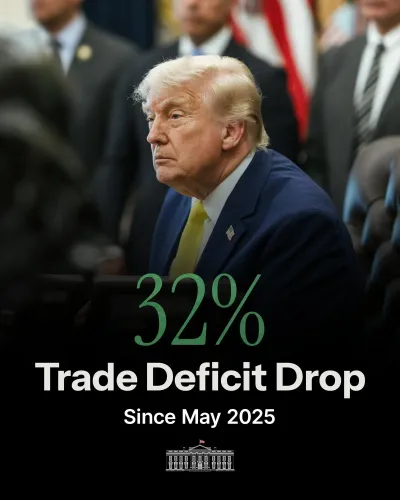
The US trade deficit with China fell 32 per cent last year to its lowest level since 2004 , according to Committee Chairman Jason Smith .
Treasury Secretary Scott Bessent told Congress the overall goods trade deficit dropped by USD 370 billion in the 12 months ending March 2026 versus the prior year.
The US economy added 313,000 net new private sector jobs and 13,000 manufacturing jobs in the past two months, Bessent said.
China has reportedly agreed to buy at least USD 17 billion annually in US agricultural products through 2028 , alongside additional Boeing aircraft orders.
Republican lawmakers framed supply-chain diversification from China as both an economic and a national security imperative.
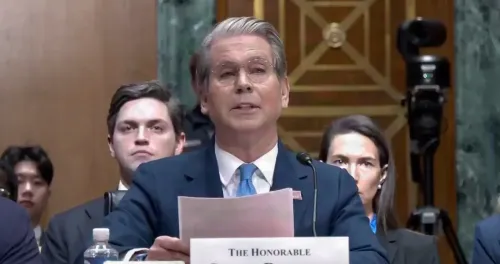
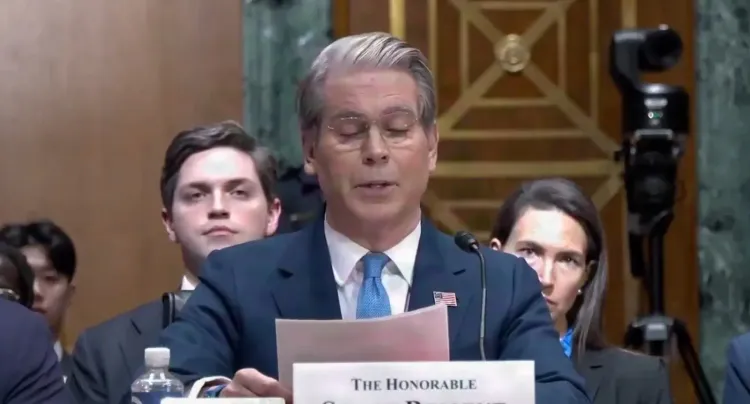
US Treasury Secretary Scott Bessent and senior Republican lawmakers on Thursday, 5 June told a House Ways and Means Committee hearing that Washington's efforts to reduce economic dependence on China were delivering measurable results, pointing to a shrinking bilateral trade deficit, rising domestic manufacturing investment, and new safeguards against Chinese supply-chain exposure.
Key Developments at the Hearing
Committee Chairman Jason Smith, a Republican from Missouri, opened the session with a pointed claim: that the US trade deficit with China fell 32 per cent last year to its lowest level since 2004. He credited the shift to President Donald Trump's combination of tariffs, trade negotiations, and tax incentives — arguing that successive administrations had promised but failed to deliver similar results.
'America is becoming less dependent on China, a goal long promised by Washington politicians with no actual progress until President Trump,' Smith said at the hearing.
What Bessent Said
Secretary Bessent reinforced that message with a broader set of figures. According to Bessent, the overall goods trade deficit declined by USD 370 billion over the 12 months ending March 2026, compared with the same period ending March 2025. He also cited job creation as evidence of an industrial turnaround.
'The economy has added 313,000 net new private sector jobs and 13,000 manufacturing jobs in the past two months,' Bessent told lawmakers. He added that the administration remained committed to opening foreign markets for US goods while rebuilding domestic manufacturing capacity.
China Trade and Agricultural Commitments
Chairman Smith also highlighted a trade agreement under which China has reportedly agreed to purchase at least USD 17 billion annually in US agricultural products through 2028, alongside additional orders for Boeing aircraft. Republicans framed this as evidence that economic pressure was translating into concrete commercial commitments from Beijing.
Strategic and Security Dimensions
Beyond economics, Republican lawmakers repeatedly connected supply-chain diversification to national security. Concerns about Chinese technology and scrutiny of Chinese involvement in federally supported manufacturing projects featured prominently in the discussion. Lawmakers argued that reducing reliance on Chinese supply chains had become both an economic and a strategic imperative — not merely a trade-policy preference.
What Comes Next
The administration's narrative faces continued scrutiny from economists and opposition lawmakers who question whether the deficit reduction reflects durable structural change or a short-term tariff-driven shift in trade flows. Independent analysis of whether manufacturing job gains are sustained — and whether the USD 17 billion agricultural purchase commitment translates into actual deliveries — will be closely watched in the months ahead.
Point of View
But context matters: tariff-driven front-loading by US importers and a slowdown in Chinese export demand can compress a bilateral deficit without any structural shift in supply chains. The administration is presenting outcomes — fewer Chinese goods, more domestic jobs — without yet demonstrating permanence. The USD 17 billion agricultural purchase pledge echoes Phase One commitments from 2020 that Beijing ultimately did not fulfil in full. If this cycle repeats, the headline gains risk being reversed the moment tariff pressure eases. The real test is whether domestic manufacturing investment — not just job counts — holds up once the tariff premium is absorbed into consumer prices.
NationPress
19 Sept 2026
Frequently Asked Questions
By how much did the US trade deficit with China fall?
The US trade deficit with China fell 32 per cent last year to its lowest level since 2004, according to House Ways and Means Committee Chairman Jason Smith at a 5 June hearing. Treasury Secretary Scott Bessent separately cited a USD 370 billion reduction in the overall goods trade deficit over the 12 months ending March 2026.
What did China agree to buy from the United States?
China has reportedly agreed to purchase at least USD 17 billion annually in US agricultural products through 2028, along with additional Boeing aircraft orders. The commitment was highlighted by Chairman Jason Smith as evidence of concrete commercial progress from trade negotiations.
How many manufacturing jobs has the US added recently?
Treasury Secretary Scott Bessent told lawmakers that the US economy added 13,000 manufacturing jobs and 313,000 net new private sector jobs in the two months prior to the 5 June hearing. He cited these figures as evidence that the administration's trade and tax agenda was rebuilding domestic industrial capacity.
Why are Republicans linking China trade policy to national security?
Republican lawmakers argued at the hearing that dependence on Chinese supply chains creates strategic vulnerabilities beyond economic risk. They pointed to administration actions targeting Chinese technology and efforts to scrutinise Chinese involvement in federally supported manufacturing projects as part of a broader security-driven decoupling effort.
How does this compare to previous US efforts to reduce China dependence?
Chairman Smith argued that prior administrations promised but failed to deliver meaningful reductions in US-China trade dependence. Critics, however, note that some deficit reduction may reflect tariff-driven trade diversion rather than permanent structural change, and that earlier commitments — such as Phase One purchase targets — were not fully met by Beijing.