US-China goods deficit hits 20-year low at $200bn, says USTR Greer
Synopsis
The US-China goods trade deficit hit a two-decade low of $200 billion in 2025, with China's share of US imports falling to its lowest since joining the WTO in 2001 — figures the Trump administration is holding up as proof that tariffs are working. But critical minerals supplies from Beijing remain below desired levels, and the broader strategic rivalry is only deepening.
Key Takeaways
US-China goods trade deficit fell to $200 billion in 2025 , the lowest since 2005 , according to USTR Jamieson Greer .
China's share of total US imports dropped to roughly 9% — the lowest since China joined the WTO in 2001 .
The Trump administration claims 19 framework or reciprocal trade deals covering 32% of global GDP have been concluded.
US tariffs on Chinese EVs stand at 100% ; most other Chinese goods face duties of 45–50% ; steel and aluminium face rates well over 50% .
Critical minerals from China are flowing to the US but 'not at the pace we would want,' Greer acknowledged.
Greer accused Beijing of 'weaponising' export controls on fertilisers for strategic purposes.
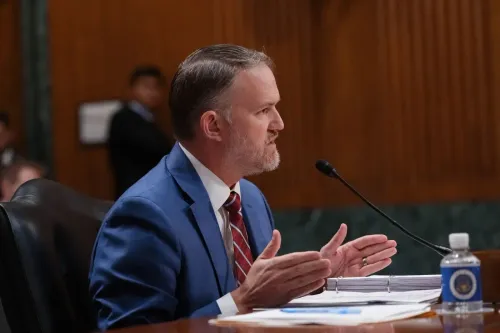
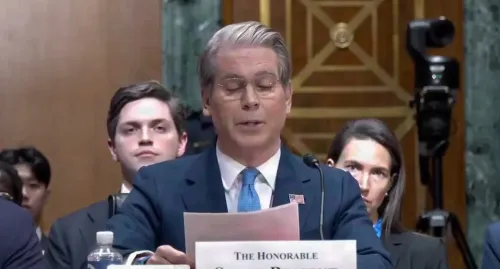
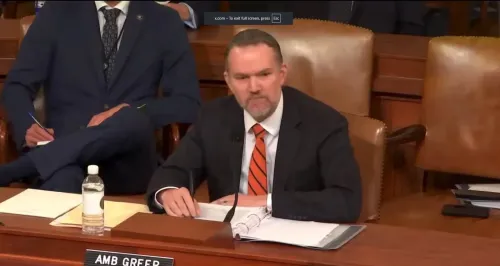
US Trade Representative Jamieson Greer told the Senate Finance Committee on Wednesday, 22 July that the US-China bilateral goods trade deficit had dropped to $200 billion in 2025 — its lowest level since 2005 — crediting President Donald Trump's tariff-driven trade strategy for reshaping American import patterns and boosting domestic production. China's share of total US imports also fell to roughly 9%, the lowest since Beijing joined the World Trade Organization (WTO) in 2001.
Key Claims Before the Senate
Greer argued that the administration's approach had not curtailed overall American trade but had altered its composition. 'The United States has not stopped trading with the world, but the composition of that trade has changed in a way that benefits Americans,' he said. 'We're selling more to the world than ever before because of our increased capacity to produce, and our imports are increasingly the type of goods that help us produce even more here in America.'
He further claimed that American goods and services exports reached record levels between February and May 2025, directly contradicting projections that broad tariffs would suppress trade volumes. 'Everyone said trade would collapse. We've never exported as much as we are now,' Greer said.
Tariff Architecture on Chinese Goods
When pressed by Senator Ron Wyden on why Canada could soon face higher tariffs than China on certain product lines, Greer maintained that Beijing still confronts far steeper overall duties. He cited 100% tariffs on electric vehicles (EVs) imported from China, duties of roughly 45–50% on most Chinese goods, and steel and aluminium tariffs 'well over 50%, some in triple digits.' The administration has also pursued what it describes as a reciprocal trade strategy, reportedly concluding 19 framework or reciprocal trade deals covering 32% of global gross domestic product.
Critical Minerals: Flow Continues, Pace Falls Short
China's dominance in critical minerals emerged as a pointed topic during the hearing. Greer acknowledged that while Beijing had committed to expediting export control approvals for US companies, supplies were not arriving at the pace Washington desired. 'We are getting a flow of critical minerals from China. It's not as much as we would want. It's not at the pace we would want, but we are getting them. We're getting the majority of what we need,' he said.
He added that the administration was simultaneously accelerating domestic critical minerals production to reduce long-term dependence on Chinese supply chains — a structural goal that goes beyond the current tariff regime.
Accusations of Strategic 'Weaponisation'
Greer accused Beijing of deploying export controls — particularly on fertilisers — as instruments of geopolitical leverage. 'They like to weaponise these types of things,' he said. 'They have their own goals, which are not the goals of capitalists or free marketeers. They are goals to have their own supply chain. They want to control fertiliser for their own use. They'll weaponise it at will.'
This comes amid a broader strategic competition between the two countries that now extends well beyond trade to advanced technology, artificial intelligence, semiconductors, critical minerals, and military influence across the Indo-Pacific. Despite years of tariffs, export controls, and technology restrictions imposed by successive US administrations, China remains one of America's largest trading partners.
What Comes Next
The deficit data and Greer's testimony will likely intensify congressional scrutiny of whether tariff-driven trade policy can be sustained without triggering retaliatory escalation from Beijing. Analysts and industry groups will be watching whether the record export figures hold through the second half of 2025, and whether domestic critical minerals output can meaningfully offset Chinese supply constraints in the near term.
Point of View
But context matters: a shrinking bilateral deficit with China does not automatically mean the US is importing less overall — trade can simply reroute through Vietnam, Mexico, or India, leaving the underlying supply-chain dependence largely intact. Greer's own admission that critical minerals are flowing 'not at the pace we would want' undercuts the self-sufficiency narrative. The deeper problem is structural: 20 years of China-centric supply chains cannot be unwound by tariffs alone, and the administration has yet to show a credible domestic production ramp that replaces Chinese inputs at scale. Record export numbers are welcome, but without a breakdown by sector, it is difficult to assess whether they reflect genuine industrial capacity gains or a one-time surge ahead of tariff deadlines.
NationPress
21 Oct 2026
Frequently Asked Questions
What is the current US-China goods trade deficit?
The US-China bilateral goods trade deficit fell to $200 billion in 2025, the lowest level since 2005, according to USTR Jamieson Greer's testimony before the Senate Finance Committee on 22 July. China's share of total US imports also dropped to about 9%, the lowest since China joined the WTO in 2001.
What tariffs does the US currently impose on Chinese goods?
The US charges 100% tariffs on electric vehicles imported from China and roughly 45–50% on most other Chinese goods. Steel and aluminium from China face duties well over 50%, with some in triple digits, according to USTR Greer.
How are critical minerals from China affected by the trade dispute?
China has committed to expediting export control approvals for US companies, and supplies are reaching the United States, but not at the volume or pace Washington wants, Greer said. The administration is accelerating domestic production to reduce long-term dependence on Chinese critical mineral supply chains.
What trade deals has the Trump administration concluded?
USTR Greer told lawmakers the administration had reached 19 framework or reciprocal trade deals covering 32% of global GDP. He also said American goods and services exports hit record levels between February and May 2025, contrary to predictions that tariffs would suppress trade.
Why did USTR Greer accuse China of 'weaponising' exports?
Greer accused Beijing of using export controls on fertilisers as a geopolitical tool, saying China's goals are to control its own supply chains rather than operate as free-market actors. He argued Beijing would use such leverage 'at will' to serve its own strategic interests.