Have Trump Tariffs Really Narrowed the US Trade Deficit to a Five-Year Low?
Synopsis
The US trade deficit has reached its lowest level in five years, shrinking by over 35% from last year, thanks to President Trump's tariff strategy. This article explores the implications of these changes on the economy and trade relationships, including the impact on exports and imports, particularly with China.
Key Takeaways
US trade deficit shrinks to lowest level since mid-2020.
Exports rise by 6%, achieving strong growth.
Tariffs are used as a tool for economic leverage .
Reduction in trade gap with China is significant.
Increased domestic investment is linked to tariff strategy.
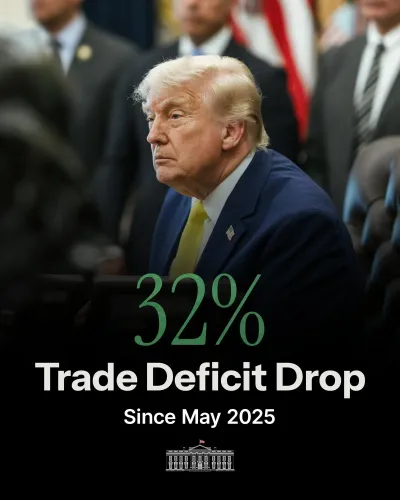
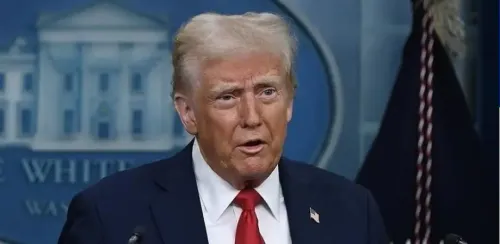
Washington, Dec 13 (NationPress) The US trade deficit has contracted to its lowest point since mid-2020, decreasing by over 35 percent compared to a year ago, as stated in a press release from the White House. This achievement has been attributed to President Donald Trump's tariff-driven trade approach, which is said to have yielded tangible benefits for the American economy.
The administration highlighted that the most recent data reveals a significant enhancement in trade dynamics, with an increase in exports, a reduction in imports, and a notable decrease in the trade deficit with China. These statistics were presented as further proof that the President’s “America First” trade agenda is yielding positive outcomes after years of policies perceived to disadvantage US producers.
According to the release, US exports rose by 6 percent year-over-year, achieving their second-highest recorded value. Exports of consumer goods, adjusted for inflation, reached their all-time peak, emphasizing the administration's narrative of rising global demand for products made in America.
Simultaneously, the seasonally adjusted US trade deficit with China fell to its second-lowest level since 2009. The administration has prioritized rebalancing trade with China as a fundamental aspect of its economic strategy, employing tariffs to advocate for improved market access and trade practices.
The data also indicated a favorable impact on overall economic growth. In the third quarter of 2025, real exports expanded at an annual rate of 4.1 percent, while imports decreased by approximately 5 percent, contributing around one percentage point to real gross domestic product growth, as per the release.
The White House noted that the trade deficit for November was slashed by more than half in comparison to the same month last year, crediting this significant improvement to a spike in tariff revenues. It asserted that the combination of increasing exports, declining imports, and growing tariff collections is leveling the playing field for American workers, farmers, and manufacturers.
The administration portrayed the latest statistics as a reversal of decades of ineffective trade policies that allowed foreign nations to inundate US markets with goods while limiting access for American producers. It claimed that President Trump has secured better conditions for domestic industries through the strategic use of tariffs.
Since unveiling what it termed a historic trade agenda in April, the President’s tariff usage has granted the United States unprecedented leverage to negotiate new and enhanced trade agreements, as mentioned in the release. These agreements encompass more than half of the global GDP and involve key partners like the United Kingdom, the European Union, Japan, China, and the Republic of Korea.
The list of cited countries also includes Indonesia, Malaysia, Thailand, Vietnam, the Philippines, Cambodia, El Salvador, Ecuador, Argentina, Guatemala, Switzerland, and Liechtenstein, illustrating the administration’s assertion that its trade strategy has achieved a wide global impact across both developed and emerging economies.
In addition to trade balances, the White House connected the tariff strategy to a surge in domestic investment. As the President embarks on what the release described as a bold America First trade agenda, numerous companies have announced trillions of dollars in new investments, relocating workers from abroad and creating tens of thousands of new American jobs.
The administration noted that these investment pledges are establishing the United States as a leading player in the jobs of the future, reinforcing the argument that trade policy serves as a vital tool for industrial and employment strategies.
The US trade deficit quantifies the gap between the value of goods and services the nation imports versus what it exports. A shrinking deficit may result from increased exports, decreased imports, or a combination of both, and is closely monitored by policymakers as a measure of trade competitiveness.
Historically, tariffs have been a contentious aspect of US trade policy, lauded by supporters as a means to safeguard domestic industries, while criticized by detractors for raising costs and risking retaliation. Under President Trump, tariffs have become a more aggressive component of trade negotiations with major partners, transforming the US approach to global commerce during his second term.
Point of View
It is essential to recognize the profound impact of trade policies on the US economy. President Trump’s tariff strategy has indeed shifted trade dynamics, leading to a notable reduction in the trade deficit. While there are divided opinions on the efficacy of tariffs, the reported gains in exports and job creation cannot be overlooked. This issue warrants a closer examination of its long-term effects on American industries and global trade relations.
NationPress
7 Oct 2026
Frequently Asked Questions
How do tariffs affect the US economy?
Tariffs can protect domestic industries by making imported goods more expensive, potentially boosting local production and job creation. However, they can also lead to increased costs for consumers and retaliatory measures from trading partners.
What is the significance of a narrowed trade deficit?
A narrowing trade deficit indicates improved trade competitiveness, as it may result from stronger exports and/or reduced imports, which can contribute positively to economic growth.
How have US exports changed recently?
US exports have increased by 6% from the previous year, reaching their second-highest value on record, driven by rising global demand for American-made products.
What role does China play in the US trade deficit?
China has historically contributed significantly to the US trade deficit. Recent data shows a reduction in the trade gap with China, which is part of the administration's strategy to rebalance trade relations.
How do tariffs influence job creation?
Tariffs can lead to job creation by encouraging domestic production. As companies respond to tariffs by investing in local manufacturing, new jobs may be generated for American workers.