White House Claims Trade Agreements, Including India, Have Significantly Reduced US Trade Deficits

Synopsis
In a recent announcement, the White House highlighted how new trade agreements, particularly with India, have effectively reduced the US trade deficit, marking a significant shift in economic strategy under the Trump administration.
Key Takeaways
New trade agreements have significantly reduced US trade deficits.
The US goods trade deficit fell by 24% in the last year.
Bilateral trade balances improved with over 63% of partners.
The US has experienced a resurgence in manufacturing and investments.
American workers have seen real wage increases of over $1,400 .
Washington, April 3 (NationPress) The White House announced that recent trade agreements, notably with India, have played a crucial role in rebalancing global trade and reducing the US trade deficits as part of Donald Trump’s tariff strategy.
As the administration commemorates a year since what it refers to as 'Liberation Day', officials assert that the US economy has become more robust, competitive, and secure.
"One year ago today, President Trump dismissed the misconceptions surrounding 'free trade' to prioritize Americans and America," stated White House spokesperson Kush Desai. "The outcomes since Liberation Day have been remarkable: over 20 new trade agreements, trillions in manufacturing investments, reduced drug prices, and diminished goods trade deficits."
Desai continued, "This is merely the start of the President’s overhaul of global trade: as these investment and trade agreements take effect and additional ones are finalized, Americans can anticipate even greater benefits ahead."
The administration highlighted that the US goods trade deficit decreased by 24 percent from April 2025 to February 2026 compared to the previous year. It also noted that the deficit has fallen month-over-month on a year-over-year basis since the shift in policy.
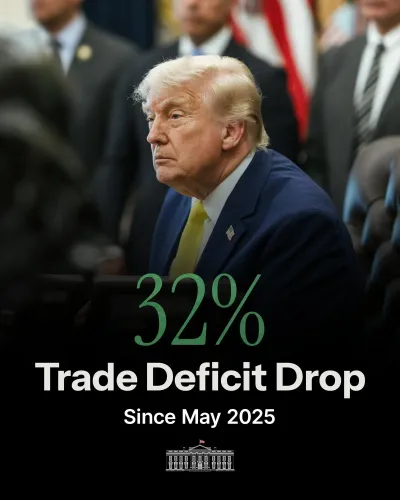
Officials reported improvements in bilateral trade balances with over 63 percent of trading partners. Specifically, the goods trade deficit with China dropped by 32 percent over the past year and by 46 percent from April 2025 through January 2026.
For the first time since 2000, China is no longer the nation with the highest trade deficit with the United States, according to the statement.
The deficit with the European Union also saw a significant reduction, declining by nearly 40 percent during the same timeframe. Additionally, the United States has begun to experience a goods surplus with Switzerland for the first time since 2012.
The White House indicated that international producers are absorbing part of the tariff costs. Citing a study from the Bank of England, it noted that export prices to the US decreased while prices to other countries remained stable, suggesting that foreign exporters lowered prices to maintain competitiveness.
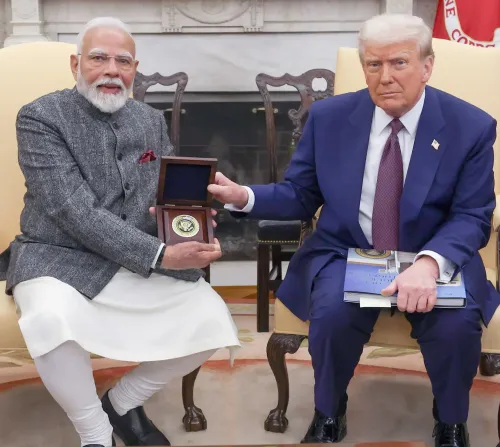
The administration stated it has secured over 20 trade agreements with key partners, including the European Union, Japan, India, Vietnam, and Argentina. These agreements encompass more than half of the global GDP, aiming to reduce non-tariff barriers and open new markets for US agricultural, energy, and industrial products.
Officials also emphasized a revival in manufacturing. "Trillions in private and foreign investments are driving a historic reshoring of American industry, bringing jobs, production, and supply chains back home," the statement indicated.
Investments involve companies such as Apple, Toyota, Micron, and Pfizer, among others.
Shipments of core capital goods reached unprecedented levels in 2025, while capital goods imports as a proportion of total imports also hit record highs.
Manufacturing activity registered growth in early 2026 for the first time in over two years, with growth persisting through February and March. The industrial production index is now at its highest point since 2019, as reported by the White House.
In 2025, the United States overtook Japan in crude steel production for the first time since 1999, becoming the third-largest steel producer globally, following China and India.
The administration noted that American workers have experienced substantial wage growth. Private sector workers saw real wage increases exceeding $1,400 within a year, with even higher increases in manufacturing, construction, and mining.
"These impressive results demonstrate that President Trump’s America First trade policies are restoring wealth, strength, and respect to our nation," the statement concluded.
Trade policy has been a pivotal aspect of Trump’s economic strategy, with tariffs aimed at reducing reliance on imports and boosting domestic production. This approach has transformed trade dynamics and initiated negotiations with key partners.
The United States continues to be one of the world’s largest trading economies, with India, the European Union, and China among its primary partners. Trends in trade deficits, industrial output, and wages remain closely monitored as indicators of the policy’s long-term effects.
Point of View
The recent statements from the White House regarding trade agreements and their impact on the US economy highlight a strategic shift towards prioritizing domestic production and reducing trade deficits. While the administration celebrates these developments, the long-term implications for global trade dynamics and economic relations remain to be seen.
NationPress
7 Oct 2026
Frequently Asked Questions
What has the White House said about trade agreements?
The White House has stated that recent trade agreements, including those with India, have helped reduce the US trade deficit and rebalance global trade.
How much has the US goods trade deficit decreased?
The US goods trade deficit has decreased by 24 percent from April 2025 to February 2026 compared to the previous year.
Which countries are involved in the new trade agreements?
The new trade agreements involve major partners such as the European Union, Japan, India, Vietnam, and Argentina.
What has been the impact on American manufacturing?
American manufacturing has seen a resurgence with substantial investments, leading to job creation and an increase in production.
How have American wages been affected?
American workers in the private sector have experienced real wage increases of over $1,400 in the past year.