US lawmakers move to curb China biotech ties, target Pfizer-BMS deals
Synopsis
A bipartisan US bill wants Pfizer, Bristol Myers Squibb and other drugmakers to clear a national security review before cutting deals with Chinese biotech. The trigger: licensing transactions ballooned from under $5 billion in 2020 to $136 billion in 2025. Washington is now treating biotech the way it treats semiconductors — as a strategic chokepoint, not just a commercial sector.
Key Takeaways
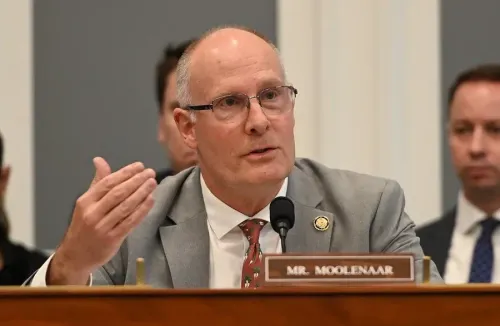
The Biotech Investment National Security Act (BINSA) was introduced in the US House by Rep.
John Moolenaar and Rep.
It would add biotech to the COINS Act framework, triggering Treasury review of US investments, JVs and licensing deals with Chinese biotech firms.
Cross-border pharma licensing with Chinese firms reportedly hit $136 billion in 2025 , up from under $5 billion in 2020 .
The Defence Department must assess national security impact within 60 days ; Treasury must issue rules within one year.
Pfizer and Bristol Myers Squibb were named as examples of concerning US-China biotech engagement.
Agricultural biotech, non-pharma industrial fermentation and basic academic research are excluded from screening.
Bipartisan lawmakers in the US House of Representatives have introduced legislation that would place American investments and technology transfers into China's biotechnology sector under national security review, signalling Washington's hardening stance on Beijing's expanding footprint in global pharmaceutical research and manufacturing. The Biotech Investment National Security Act (BINSA), unveiled in early June, would fold biotech into the screening framework already covering other strategic sectors.
What the bill proposes
BINSA would add biotechnology to the sectors covered under the Comprehensive Outbound Investment National Security (COINS) Act, requiring government review of select US investments, licensing agreements and joint ventures involving Chinese biotech firms. The US Treasury Department would screen pharmaceutical licensing deals, equity investments and intellectual property transfers tied to Chinese entities.
The measure directs Treasury to issue implementing regulations within one year, after consulting the Departments of Health and Human Services and Defence, and the Director of National Intelligence. The US Defence Department would have 60 days to assess whether American capital flows into Chinese biotech damage US national security and military readiness.
Why lawmakers are alarmed
Proponents argue that American pharmaceutical majors are increasingly handing over valuable intellectual property, research capabilities and manufacturing know-how to Chinese partners, creating long-term strategic dependencies. Cross-border licensing transactions between Western drugmakers and Chinese biotech firms reportedly touched $136 billion in 2025, against less than $5 billion in 2020 — a more than 25-fold surge in five years.
“This legislation will protect research, innovation, and the medicines Americans depend on. Right now, American companies including Pfizer and Bristol Myers Squibb are making dangerous deals with Chinese biotech companies that threaten the future of American pharmaceutical production,” said Rep. John Moolenaar, chairman of the House Select Committee on China.
“We must not allow American investment, expertise, and technology to offshore our biotech industry, hand Chinese companies another chokehold over our economy, and hollow out our nation's research infrastructure,” Moolenaar added.
The bipartisan push
The bill was introduced jointly by Moolenaar and Rep. Debbie Dingell, underscoring rare cross-aisle alignment on China policy. “Biotechnology will shape the future of medicine, agriculture, manufacturing, and national security,” Dingell said.
“The United States must remain the global leader in innovation, and we cannot afford to be dependent on foreign competitors – like the People's Republic of China – for critical pharmaceutical ingredients, drug development, and medical supply chains,” she said.
What's in and what's out
The legislation flags pharmaceutical products, biological products, therapeutic compounds, drug-discovery platforms, clinical research capabilities, biologics manufacturing and related IP transfers as areas that could fall under outbound investment screening. It specifically excludes agricultural biotechnology, industrial fermentation unrelated to pharmaceutical production and basic academic research.
The bigger Washington shift
BINSA fits a broader pattern of US efforts to reduce reliance on China across sectors considered strategically critical — semiconductors, artificial intelligence, critical minerals and advanced manufacturing. Policymakers from both parties have sharpened focus on supply-chain vulnerabilities first exposed during the Covid-19 pandemic. With biotech now formally on that list, the next test will be how Treasury operationalises the screening without freezing legitimate cross-border R&D collaboration.
Point of View
And a blunt review regime could simply route deals through third countries. The bipartisan framing also masks a deeper tension — Pfizer and Bristol Myers Squibb are not rogue actors; they are responding to commercial logic Congress has yet to counter with domestic biotech incentives at comparable scale. Without a parallel push on US-based biologics manufacturing, BINSA risks becoming a brake without an engine.
NationPress
21 Oct 2026
Frequently Asked Questions
What is the Biotech Investment National Security Act (BINSA)?
BINSA is a bipartisan US House bill that would subject American investments, licensing deals and joint ventures with Chinese biotechnology firms to national security review. It folds biotech into the existing COINS Act outbound investment screening framework administered by the Treasury Department.
Why are US lawmakers targeting China biotech deals now?
Lawmakers cite a surge in cross-border pharma licensing between Western and Chinese firms, reportedly from under $5 billion in 2020 to about $136 billion in 2025. They argue this transfers critical IP, research capacity and manufacturing know-how to China, creating strategic dependencies in medicines and supply chains.
Which companies have been named in the debate?
Rep. John Moolenaar specifically named Pfizer and Bristol Myers Squibb as US firms making what he called dangerous deals with Chinese biotech companies. The bill itself does not single out individual firms but covers a wide range of pharmaceutical and biologics transactions.
What types of activities would be screened?
Screening would cover pharmaceutical and biological products, therapeutic compounds, drug-discovery platforms, clinical research capabilities, biologics manufacturing and related IP transfers. Agricultural biotechnology, non-pharma industrial fermentation and basic academic research are explicitly excluded.
When would the new rules take effect?
If passed, the Treasury Department would have one year to issue implementing regulations, in consultation with HHS, the Defence Department and the Director of National Intelligence. The Defence Department must separately assess national security risks from US capital flows into Chinese biotech within 60 days.