Gadkari backs public transport as engine of progress
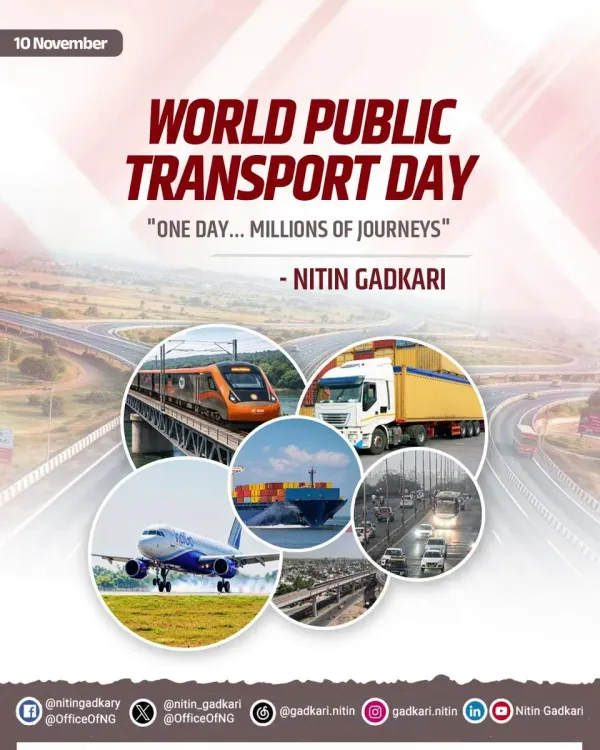
Synopsis
On World Public Transport Day, Minister Nitin Gadkari called public transport an engine of social and economic progress, linking stronger transit systems to India's sustainability goals and ongoing schemes like PM-eBus Sewa and Bharatmala Pariyojana.
Key Takeaways
Union Minister Nitin Gadkari marked World Public Transport Day on November 10, 2026 by framing public transit as an engine of social and economic progress.
The PM-eBus Sewa scheme (launched 2023 ) aims to deploy electric buses across Indian cities to cut emissions and improve urban mobility.
The Bharatmala Pariyojana highway programme integrates public transport corridors into national highway planning.
State transport undertakings remain the key delivery agencies for fleet renewal and last-mile connectivity.
Upcoming Union Budget allocations for transport will be a critical indicator of how fast India scales its public transit ambitions.
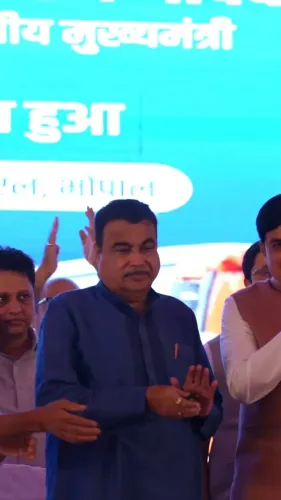
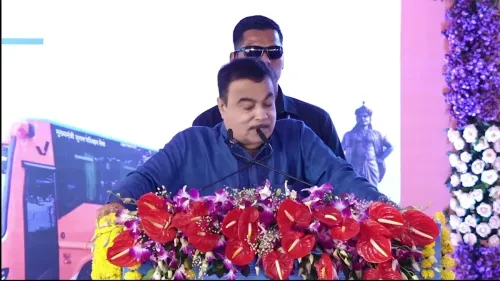
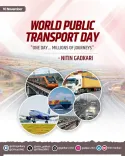
Public transport, Union Road Transport and Highways Minister Nitin Gadkari argued on Tuesday, November 10, 2026, is not merely a way to get from one place to another — it is the structural backbone of social mobility and economic growth. His message, posted on World Public Transport Day, framed stronger bus and rail networks as non-negotiable infrastructure for a prosperous India.
More than commuting: the equity argument
Gadkari's framing was deliberate. 'Public transport is more than a means of mobility; it is an engine of social and economic progress,' he wrote, stressing its role in 'connecting communities, expanding opportunities and driving sustainable development.' That language maps directly onto India's urbanisation challenge — hundreds of millions of people moving to cities that are only now scaling up mass-transit capacity to meet them.
The Ministry of Road Transport and Highways sits at the centre of that effort. Beyond highways, the ministry has championed initiatives that knit public transport corridors into the broader road network, recognising that last-mile connectivity — the gap between a highway interchange and a household — is often the difference between an opportunity seized and one missed.
PM-eBus Sewa and the electric-bus push
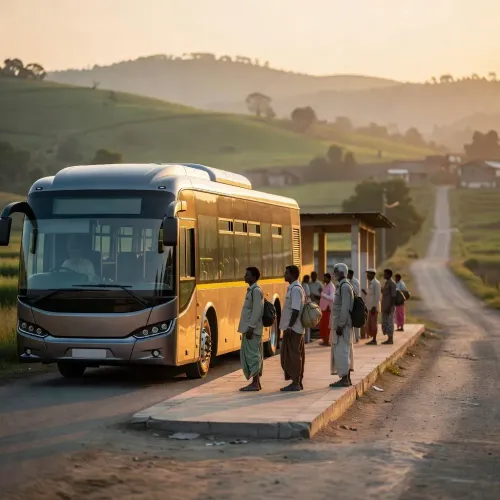
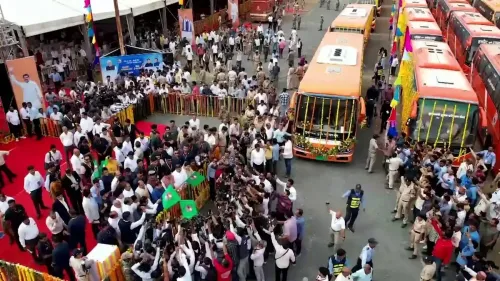
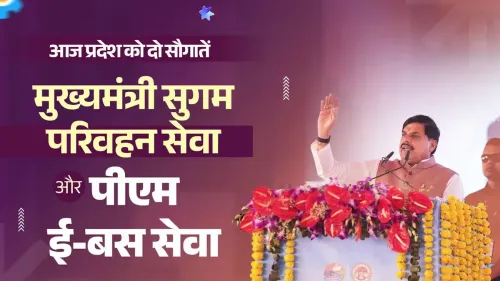
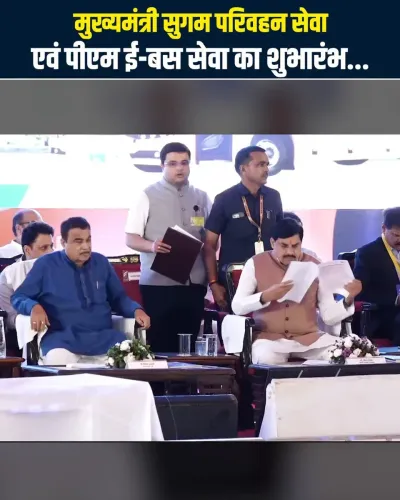
The policy context behind Gadkari's message is concrete. The PM-eBus Sewa scheme, launched in 2023, set out to deploy electric buses across Indian cities, targeting both emission reduction and improved urban mobility. It represents a direct bet on public transport as climate policy — a bus that runs on clean energy and carries fifty passengers off the road simultaneously is among the most cost-effective decarbonisation tools available to a rapidly urbanising nation.
Simultaneously, the Bharatmala Pariyojana highway expansion programme has incorporated public transport corridor integration into its planning phases, ensuring that new national highway stretches do not simply generate more private-vehicle traffic but are designed with bus rapid transit and feeder services in mind.
What state transport undertakings must now deliver
The central government can set frameworks and fund schemes, but the state transport undertakings (STUs) across India's states are where the rubber meets the road. Fleet renewal — replacing ageing diesel buses with electric or CNG variants — and metro project expansions in Tier-2 cities are the immediate deliverables. Watchers of the sector will be closely tracking transport-related allocations in the next Union Budget, which could accelerate or stall the momentum Gadkari's ministry has built.
India's emission reduction commitments under its national mobility plans add urgency: a dense, well-funded public transport network is simultaneously a poverty-reduction tool, a congestion fix, and a climate lever. Gadkari's post names all three without calling them by those names — and that compression is precisely the point.
Point of View
Multimodal mobility. Framing buses and transit networks as social equity tools, not just infrastructure line items, signals a broader political consensus around urbanisation management and India's climate commitments. With the next Union Budget approaching, the message also functions as a soft lobbying exercise for continued central funding of electric-bus and corridor-integration programmes. How much of that vision translates into Budget allocations — rather than social-media rhetoric — will define the ministry's legacy on urban mobility.
NationPress
10 Nov 2026
Frequently Asked Questions
What is World Public Transport Day?
World Public Transport Day is an annual observance that highlights the importance of buses, metros, trains and other shared transit systems in connecting communities and reducing emissions. Its global recognition is marked by governments and transport agencies worldwide.
What is the PM-eBus Sewa scheme?
The PM-eBus Sewa scheme was launched in 2023 by the Indian government to deploy electric buses in cities across India, aiming to improve urban public transport while cutting carbon emissions from the road transport sector.
What is Bharatmala Pariyojana and how does it relate to public transport?
Bharatmala Pariyojana is India's flagship national highway development programme. Its later phases include integration of public transport corridors alongside highways, ensuring new road infrastructure supports bus rapid transit and feeder services rather than only private vehicles.
What is Nitin Gadkari's role in India's transport sector?
Nitin Gadkari is India's Union Minister of Road Transport and Highways , overseeing national highways, road safety and multimodal transport policy. He is a senior BJP leader and former BJP national president.
Why does public transport matter for India's sustainable development goals?
A robust public transport network reduces private-vehicle congestion, cuts carbon emissions and improves access to jobs and services for lower-income urban residents — directly supporting India's urbanisation management and its emission reduction commitments under national mobility plans.