Owaisi Cites Court Quote on Police Loyalty, Flags Anti-Muslim Bias
Synopsis
AIMIM president Asaduddin Owaisi shared a court observation on police aligning with political superiors over the Constitution, linking it to encounter killings, misuse of the Gangsters Act, and demolition drives he says disproportionately target Muslim communities.
Key Takeaways
Owaisi quoted a court observation stating officers show 'vertical loyalty' to the ruling dispensation rather than the Constitution.
The cited court text flagged encounter killings, selective crackdowns, and targeted use of the Gangsters Act as having 'periodically attracted judicial notice.' Owaisi characterised the pattern as 'Rule By Gun and Bullet for Muslims' and 'Bulldozers for Muslim properties.' The 2006 Prakash Singh judgment mandated police insulation from political interference, but compliance across states has been uneven.
Demolition drives in Uttar Pradesh and Madhya Pradesh intensified from 2022 , drawing opposition criticism over alleged selective targeting of Muslim localities.
Petitions on encounter killings and demolitions remain pending before Indian courts, keeping the issue in active judicial consideration.
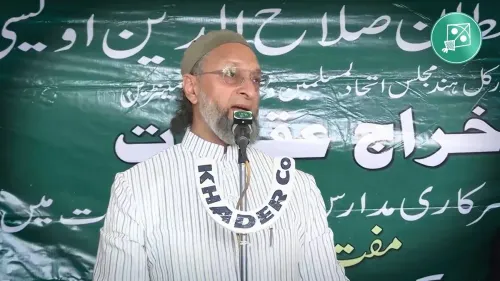
AIMIM president Asaduddin Owaisi on Sunday, June 7, 2026, shared what he attributed to a court observation warning that police officers align their conduct with political superiors rather than the Constitution, and linked the finding to what he described as a pattern of gun-and-bulldozer enforcement disproportionately targeting Muslim communities.
Context
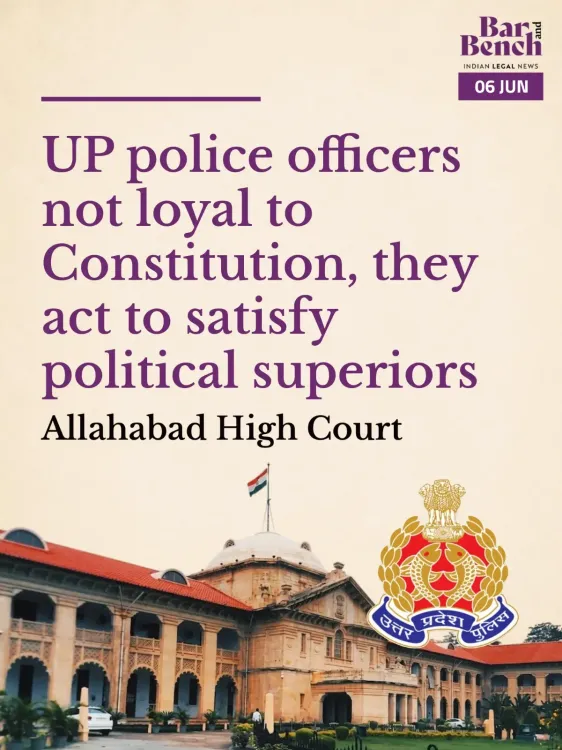
Owaisi's post quoted language attributed to a court, stating: 'The vertical loyalty of officers runs not toward the Constitution but toward the ruling dispensation. Field officers, acutely conscious of the transfer-posting economy, calibrate their conduct to satisfy political superiors.' The court, according to the quoted text, also noted that 'encounter killings, selective crackdowns, and targeted use of the Gangsters Act against inconvenient individuals have periodically attracted judicial notice.'
Owaisi appended his own framing to the citation: 'Rule By Gun and Bullet for Muslims (mainly). Bulldozers for Muslim properties.' The post carried one image but no video. The research note flags that the exact court quote and any events dated 2026 cannot be independently verified from available training data.
Policy Backdrop
Indian courts have a documented history of flagging political influence over police transfers, postings and investigative priorities. The landmark 2006 Prakash Singh judgment by the Supreme Court of India laid down binding guidelines to insulate police from executive interference, though compliance across states has been uneven.
On encounter killings, the Supreme Court and several High Courts have periodically issued guidelines requiring mandatory registration of FIRs and independent investigations whenever a person dies in police custody or in an alleged encounter. The Gangsters Act — primarily operative in Uttar Pradesh — has drawn scrutiny from courts over its application to individuals whose criminal antecedents are disputed.
Separately, large-scale demolition drives targeting structures described by authorities as 'illegal constructions' intensified in Uttar Pradesh and Madhya Pradesh from 2022 onward. Opposition parties and civil-society groups have argued that the drives were concentrated in Muslim-majority localities and timed to follow communal incidents, a charge state governments have denied.
Stakeholders and Impact
Muslim communities in states where such enforcement actions have been reported are the most directly affected stakeholders. Civil-liberties organisations and opposition parties — including AIMIM, which draws its core constituency from Hyderabad and pockets of Maharashtra and Bihar — have repeatedly raised these concerns in Parliament and in court petitions.
State police forces, particularly in BJP-governed states, are at the centre of the allegations. Those governments have consistently maintained that demolitions target illegal structures regardless of the owner's religion and that encounter killings follow due process. Courts remain the primary arena where these competing claims are being adjudicated.
Owaisi, as a Lok Sabha MP from Hyderabad, has raised police-accountability and minority-rights issues in Parliament across multiple sessions, making this post consistent with a long-standing legislative and public-advocacy record.
What's Next
Petitions challenging demolition drives and encounter killings are pending before various courts. Any fresh judicial observation or order in these matters is likely to be cited by both government defenders and opposition critics in the ongoing debate over institutional autonomy versus executive control.
The broader question of whether the Prakash Singh police-reform directives are being implemented remains open, and future bench hearings on police accountability could amplify the concerns Owaisi has raised. The political salience of these issues is expected to remain high ahead of state assembly elections in several large states.
Point of View
He attempts to shift the evidentiary weight of the argument from partisan opinion to judicial record. This is consistent with a broader opposition strategy of using court observations — which carry institutional authority — to challenge the legitimacy of law-enforcement actions in BJP-governed states. The twin motifs of 'gun-and-bullet' and 'bulldozer' have become shorthand in Indian political discourse for what critics describe as a two-track system of coercive state power applied unevenly along religious lines. Whether or not the specific court quote is from a recent judgment, the underlying policy debate on police accountability and demolition drives is well-documented and live in multiple courtrooms, giving the post durable political resonance beyond the immediate news cycle.
NationPress
25 Sept 2026
Frequently Asked Questions
What court observation did Owaisi quote in his post?
Owaisi quoted text attributed to a court stating that police officers show 'vertical loyalty' to the ruling dispensation rather than the Constitution, and that encounter killings, selective crackdowns and targeted use of the Gangsters Act have periodically attracted judicial notice. The exact source court and case could not be independently verified at the time of publication.
What is the Gangsters Act and why is it controversial?
The Gangsters Act is a law primarily operative in Uttar Pradesh that allows authorities to book individuals with alleged criminal gang links. Critics and courts have raised concerns about its use against individuals whose criminal antecedents are disputed, arguing it can be applied selectively against political opponents or minority community members.
What are the bulldozer demolitions Owaisi is referring to?
Since 2022, authorities in Uttar Pradesh and Madhya Pradesh have conducted large-scale demolitions of structures described as illegal constructions. Opposition parties argue the drives disproportionately targeted Muslim-majority localities, often in the aftermath of communal incidents. State governments have denied any religious targeting.
Has the Supreme Court addressed police encounter killings before?
Yes. The Supreme Court and several High Courts have issued guidelines requiring mandatory FIR registration and independent investigation whenever a person dies in police custody or in an alleged encounter. The 2006 Prakash Singh judgment also mandated structural reforms to insulate police from political interference.
Who is Asaduddin Owaisi and what party does he lead?
Asaduddin Owaisi is the president of the All India Majlis-e-Ittehadul Muslimeen (AIMIM) and a Lok Sabha MP from Hyderabad. AIMIM is a regional party focused on Muslim political representation, active primarily in Hyderabad and parts of Maharashtra and Bihar. Owaisi has consistently raised police-accountability and minority-rights issues in Parliament.