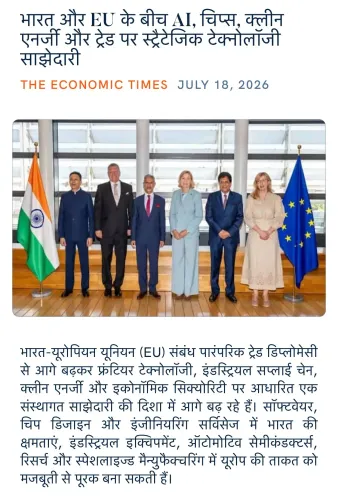
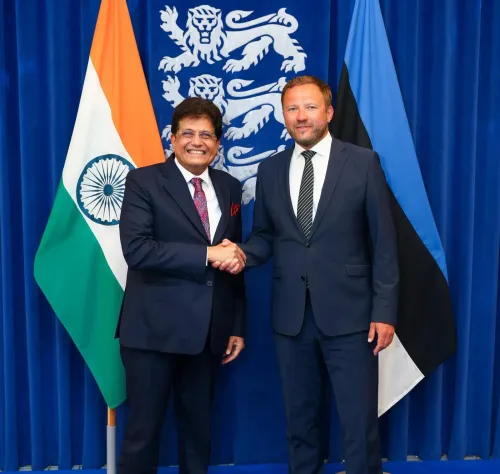
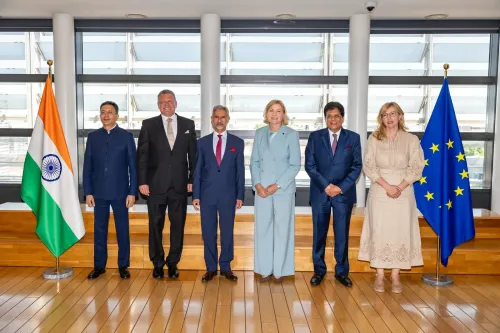
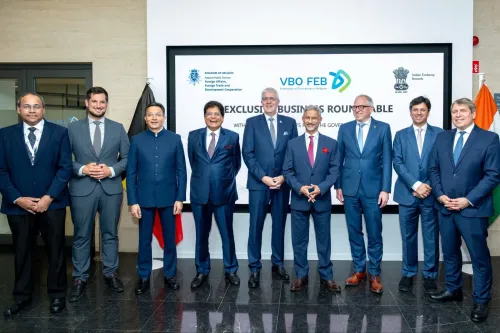
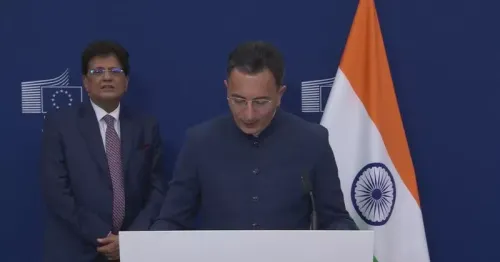
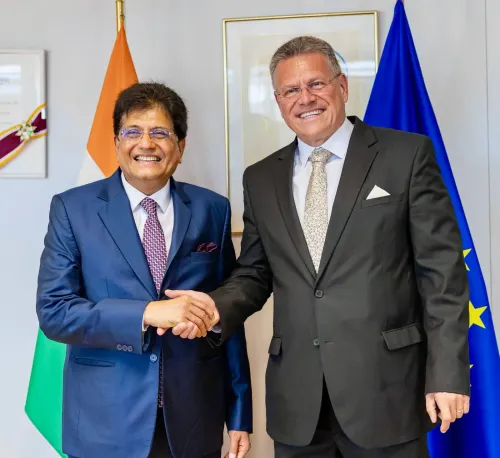
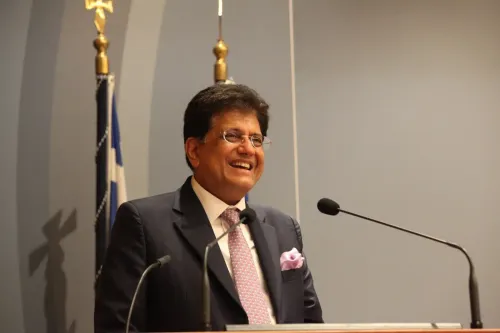
Goyal addresses press after 3rd India-EU TTC meeting
Synopsis
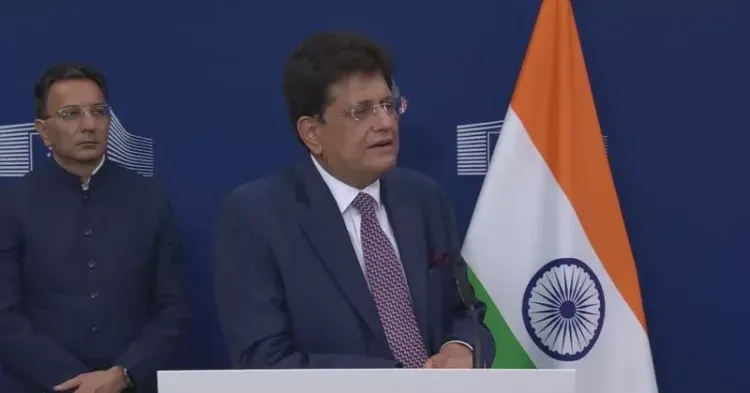
Union Commerce and Industry Minister Piyush Goyal spoke to the press on 15 July 2026 following the 3rd India-EU Trade and Technology Council meeting, underscoring India's deepening institutional trade and technology engagement with the European Union.
Key Takeaways
Minister Piyush Goyal addressed the press on 15 July 2026 after the 3rd India-EU Trade and Technology Council (TTC) meeting.
The TTC, launched in April 2022 , covers three working groups: trade, technology, and security.
The EU is India's largest trading partner in goods and services combined.
India-EU BTIA negotiations, suspended since 2013 , were resumed in June 2022 alongside the TTC launch.
Key stakeholders include Indian tech exporters , MSME manufacturers , and semiconductor firms .
The 2027 India-EU Summit is the next major milestone for elevating bilateral outcomes.
Union Commerce and Industry Minister Piyush Goyal spoke to the press on Wednesday, 15 July 2026, following the conclusion of the third India-EU Trade and Technology Council (TTC) meeting, sharing updates on the bilateral dialogue between India and the European Union.
Context
The India-EU Trade and Technology Council is a structured bilateral body that brings together senior officials and ministers from both sides to advance cooperation across three working groups covering trade, technology, and security. The EU is India's largest trading partner in goods and services combined, making the TTC one of the most consequential institutional mechanisms in India's external economic diplomacy.
Minister Goyal's press interaction after the 3rd TTC meeting signals continued high-level political ownership of the India-EU engagement at a time when both sides are navigating complex negotiations on trade access, digital governance, and supply-chain resilience.
Policy Backdrop
The TTC was formally launched in April 2022 during European Commission President Ursula von der Leyen's visit to New Delhi, providing an institutional home for strategic technology and trade dialogue. Simultaneously, negotiations on the long-stalled India-EU Broad-based Trade and Investment Agreement (BTIA) — suspended since 2013 — were formally resumed in June 2022.
The TTC framework operates within the broader India-EU Strategic Partnership, established in 2004 and upgraded at subsequent summits in 2017 and 2020. The council allows both sides to address regulatory divergences in areas such as digital trade, data governance, and green standards without requiring an immediate commitment to a comprehensive free trade agreement.
Stakeholders and Impact
The TTC's outcomes carry direct implications for Indian tech exporters, MSME manufacturers, and semiconductor firms seeking deeper integration with European supply chains and regulatory frameworks. Alignment on technology standards and trade facilitation measures can open market access for Indian goods and services while attracting European investment into India's manufacturing sector.
India's engagement with the EU through the TTC also fits a broader strategic pattern: New Delhi has pursued institutionalised technology and trade dialogues with multiple Western partners — including the India-US iCET and India-Japan semiconductor cooperation — to diversify supply chains and secure access to critical technologies while preserving strategic autonomy. The TTC mirrors these mechanisms, offering a platform for issue-based engagement without the constraints of a full FTA.
What's Next
Attention will now turn to any joint deliverables or communiques released following the 3rd TTC meeting, as well as the next round of India-EU BTIA negotiations. The trajectory of these talks will be a key indicator of whether the two sides can bridge longstanding differences on market access, data localisation, and intellectual property.
The 2027 India-EU Summit is expected to serve as the next major political milestone, where outcomes from the TTC process and BTIA negotiations could be elevated to the highest level of bilateral engagement.
Point of View
The TTC's third iteration carries more strategic weight than its predecessors. Goyal's visible role signals that commerce, not just diplomacy, is driving the India-EU relationship forward.
NationPress
14 Oct 2026
Frequently Asked Questions
What is the India-EU Trade and Technology Council?
The India-EU Trade and Technology Council (TTC) is a bilateral institutional body launched in April 2022, with three working groups covering trade, technology, and security, designed to deepen regulatory cooperation and supply-chain dialogue between India and the European Union.
What did Piyush Goyal say after the 3rd TTC meeting?
Minister Piyush Goyal addressed the press on 15 July 2026 following the 3rd India-EU TTC meeting, though the specific details of his statement are drawn from his post on X referencing the press interaction.
What is the India-EU BTIA?
The India-EU Broad-based Trade and Investment Agreement (BTIA) is a comprehensive free trade agreement under negotiation; talks were suspended in 2013 and formally resumed in June 2022 alongside the TTC launch.
Why is the India-EU TTC important for India?
The TTC gives India a structured platform to engage the EU — its largest trading partner in goods and services combined — on trade access, digital governance, and critical technology cooperation without an immediate commitment to a full free trade agreement.
When is the next India-EU Summit?
The 2027 India-EU Summit is the next major political milestone where outcomes from the TTC process and BTIA negotiations are expected to be elevated to the highest level of bilateral engagement.