PM Modi thanks EU chief, reaffirms India-EU partnership
Synopsis
Prime Minister Narendra Modi on 10 June 2026 publicly reaffirmed the India-EU strategic partnership in a direct exchange with European Commission President Ursula von der Leyen, highlighting trade, technology, mobility and security as pillars of the growing bilateral relationship.
Key Takeaways
PM Modi responded to EU Commission President Ursula von der Leyen on 10 June 2026 , reaffirming bilateral ties.
The India-EU Strategic Partnership was originally launched in 2004 and has expanded steadily since.
The India-EU Trade and Technology Council , established in May 2022 , covers supply chains, emerging tech, and security.
The EU is India's largest trading partner bloc , making economic cooperation central to the relationship.
Modi highlighted four pillars: trade, technology, mobility, and security .
Next steps include progress on the Broad-based Trade and Investment Agreement (BTIA) and a potential 2026 bilateral summit .
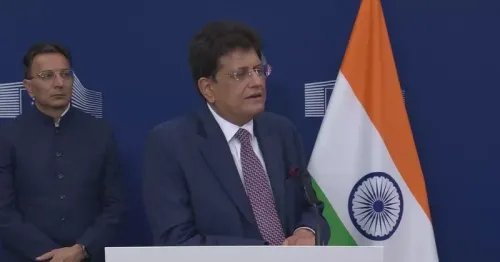
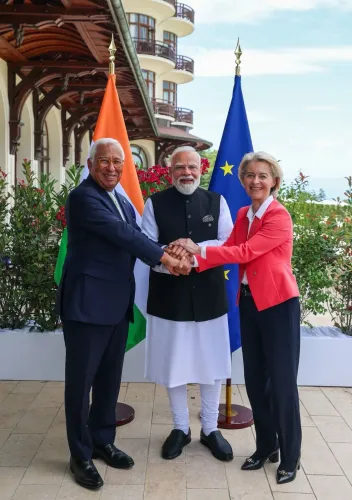
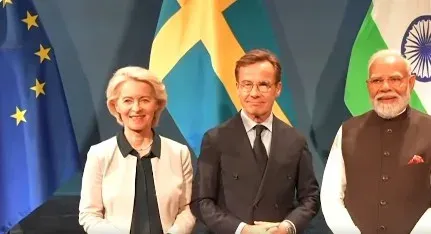
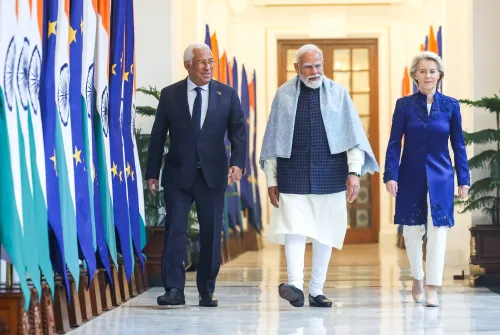
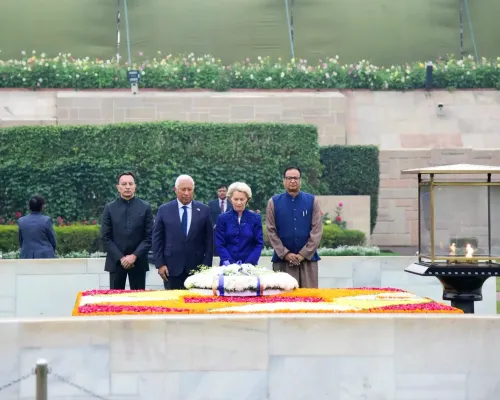
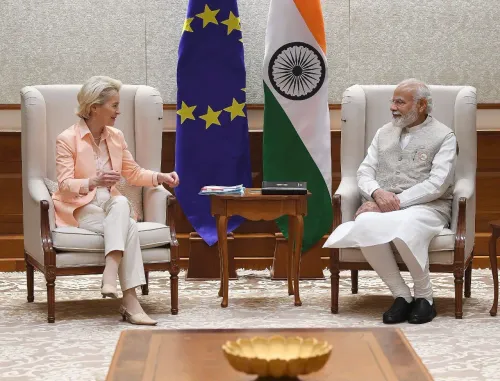
Prime Minister Narendra Modi on Wednesday, 10 June 2026 responded to European Commission President Ursula von der Leyen on X, reaffirming that the India-EU partnership continues to grow across trade, technology, mobility, and security — and pledging to deepen it further for the benefit of both sides.
Context
Modi's post was a direct reply to von der Leyen, thanking her for 'kind words' and signalling sustained high-level engagement between New Delhi and Brussels. While the precise trigger for the exchange has not been publicly detailed, the exchange reflects the increasingly active diplomatic channel between the two leaders. The India-EU Strategic Partnership, launched in 2004, has served as the institutional foundation for this relationship for over two decades.
Policy Backdrop
The partnership received a significant upgrade when the 15th India-EU Summit in July 2020 relaunched negotiations on a Broad-based Trade and Investment Agreement (BTIA) and established a Connectivity Partnership. A further milestone came in May 2022, when both sides launched the India-EU Trade and Technology Council (TTC) — a structured mechanism addressing supply-chain resilience, emerging technologies, and security cooperation. The TTC mirrors a similar framework the EU has with the United States, underlining the strategic weight New Delhi carries in the EU's global partnerships.
The European Union remains India's largest trading partner bloc, making the economic dimension of this relationship central to both sides' growth agendas. Modi's explicit mention of 'mobility' alongside trade and technology points to ongoing negotiations around migration and mobility partnerships, a sensitive but important pillar of the bilateral agenda.
Stakeholders and Impact
Indian exporters in sectors such as pharmaceuticals, textiles, and information technology stand to gain from any acceleration in BTIA talks, which have been under negotiation in various forms for nearly two decades. EU technology firms and defence manufacturers are equally invested, as India's large market and growing defence procurement budget represent significant commercial opportunity.
At a strategic level, both sides share an interest in diversifying critical supply chains away from single-country dependencies — a goal that has gained urgency following global disruptions in semiconductors and clean-energy components. India's multi-alignment foreign policy, which runs parallel engagements with the Quad, BRICS, and the EU simultaneously, gives New Delhi significant leverage in these negotiations.
What's Next
Observers will watch closely for concrete outcomes from any planned 2026 India-EU bilateral summit or ministerial meetings, where the broad language of 'deepening partnership' would be expected to translate into specific deliverables on trade, technology transfer, and mobility frameworks. The Modi-von der Leyen exchange, brief as it is, signals that political will at the highest level remains intact — a prerequisite for progress on the technically complex BTIA negotiations.
Point of View
Modi acknowledged a pillar that has historically been a sticking point, suggesting some willingness to engage on that front. The exchange also fits India's broader multi-alignment strategy: maintaining warm ties with Brussels even as New Delhi deepens Quad security commitments and retains its BRICS membership. For the EU, which is actively diversifying critical supply chains, sustaining Modi's personal engagement is strategically valuable.
NationPress
26 Oct 2026
Frequently Asked Questions
What is the India-EU Trade and Technology Council?
The India-EU Trade and Technology Council (TTC) was launched in May 2022 as a structured bilateral mechanism to address supply-chain resilience, emerging technologies, and security cooperation between India and the European Union .
What did PM Modi say to EU President von der Leyen?
PM Modi thanked European Commission President Ursula von der Leyen for her 'kind words' and stated that the India-EU partnership continues to grow across trade, technology, mobility, and security, pledging to deepen it further.
Is the EU India's largest trading partner?
Yes. The European Union is collectively India's largest trading partner bloc , a status it has held for several years, making the economic dimension central to the India-EU Strategic Partnership .
What is the India-EU BTIA?
The Broad-based Trade and Investment Agreement (BTIA) is a comprehensive free-trade agreement under negotiation between India and the EU . Talks were relaunched at the 15th India-EU Summit in July 2020 after a prolonged pause.
When was the India-EU Strategic Partnership launched?
The India-EU Strategic Partnership was launched in 2004 to expand cooperation across trade, security, and technology, and has since grown to include mechanisms like the Trade and Technology Council .