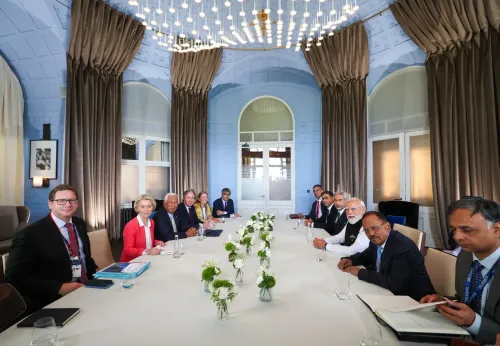
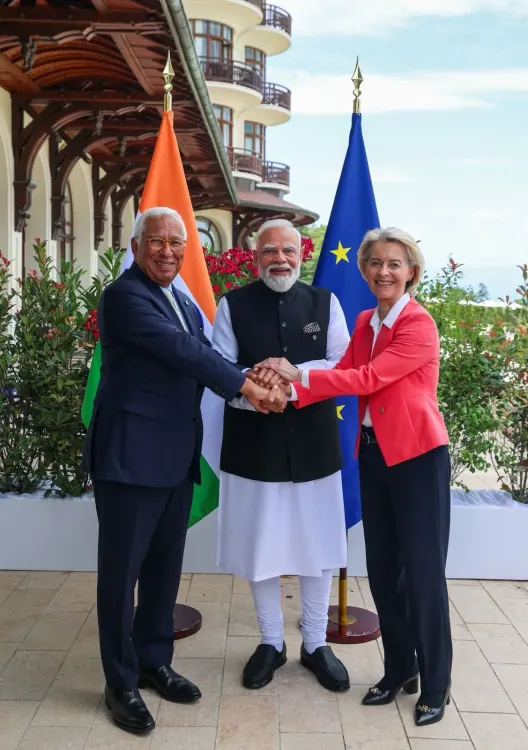
PM Modi meets EU Council, Commission chiefs in Evian
Synopsis
Prime Minister Narendra Modi held high-level talks with European Council President António Costa and European Commission President Ursula von der Leyen in Evian on 17 June 2026, describing the meeting as a highlight of a strong year for India-EU ties that began with both leaders attending India's Republic Day.
Key Takeaways
PM Modi met European Council President António Costa and European Commission President Ursula von der Leyen in Evian, France on 17 June 2026 .
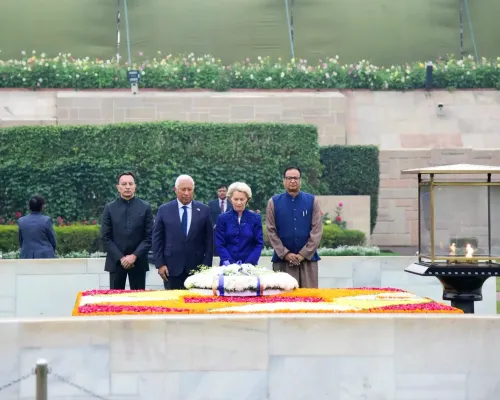
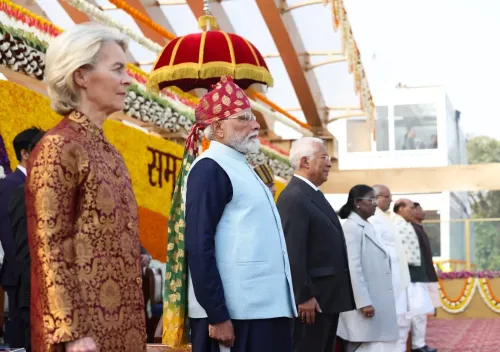
Both EU leaders had earlier attended India's Republic Day in January 2026 , a rare symbolic gesture underscoring elevated ties.
The India-EU Strategic Partnership , launched in 2004 , now covers trade, security, climate and technology cooperation.
Negotiations on the India-EU Broad-based Trade and Investment Agreement were relaunched in June 2022 after a prolonged pause.
Priority cooperation areas include semiconductors , clean hydrogen and defence technology .
Progress on the trade agreement and a date for the next India-EU Summit are the key markers to watch.
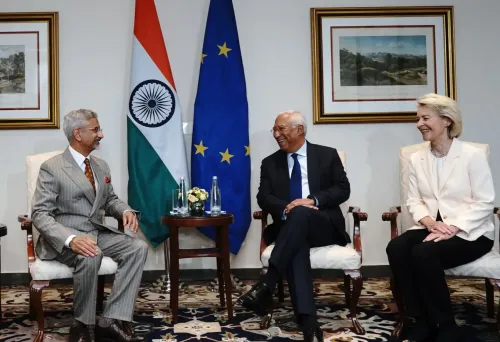
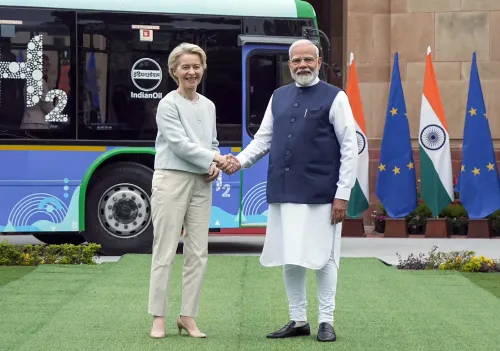
Prime Minister Narendra Modi met European Council President António Costa and European Commission President Ursula von der Leyen in Evian, France, on Wednesday, 17 June 2026, marking a significant high-level engagement between India and the European Union on the sidelines of an international gathering.
Modi described the meeting as 'wonderful' and noted that the year had already seen a strong start for bilateral ties, pointing to the fact that both European leaders had been hosted in India for Republic Day celebrations earlier in 2026. 'This has been a great time for India-EU ties,' he wrote on X.
Context
The Evian meeting comes months after Costa and Von der Leyen attended India's Republic Day in New Delhi in January 2026 — a rare and symbolically significant gesture that underscored the elevation of the relationship. Inviting the heads of the EU's two principal institutions to one of India's most important national ceremonies signalled that New Delhi views the partnership as a strategic priority.
The India-EU Strategic Partnership was first launched in 2004 and has since been upgraded to encompass trade, security, climate action and technology cooperation. Regular leader-level exchanges have become a defining feature of the relationship over the past decade.
Policy Backdrop
Negotiations on the India-EU Broad-based Trade and Investment Agreement were relaunched in June 2022 after a prolonged pause of nearly a decade, and progress on that agreement remains a central plank of the bilateral agenda. Alongside trade, both sides have identified semiconductors, clean hydrogen and defence technology as priority areas for deeper collaboration.
India has pursued closer ties with the EU as part of a broader strategy to diversify its economic and strategic partnerships amid global supply-chain shifts and geopolitical realignments. The EU, for its part, has sought to deepen engagement with large democratic economies as it recalibrates its own external relationships.
Stakeholders and Impact
Indian exporters stand to gain from any acceleration in trade-agreement talks, while EU investors and technology firms are keenly watching for signals on market access, regulatory convergence and investment protection. The semiconductor and clean-energy sectors on both sides have flagged the partnership as critical to building resilient supply chains.
The meeting in Evian also carries diplomatic weight beyond economics: with global multilateral institutions under strain, India-EU coordination on issues such as climate finance, digital governance and security has taken on greater importance for both blocs.
What's Next
Attention will now turn to whether the Evian interaction yields any formal follow-up — including a date for the next India-EU Summit or ministerial-level meetings on trade and technology. Progress on the long-pending trade and investment agreement will be the clearest indicator of whether the diplomatic warmth translates into concrete economic outcomes.
Point of View
Coming within months of both EU institutional heads attending India's Republic Day, reflects a deliberate and sustained effort by New Delhi to treat the European Union as a tier-one strategic partner rather than a secondary relationship. For the EU, deepening ties with India fits a broader pattern of diversifying partnerships in an era of geopolitical uncertainty. The real test of this diplomatic momentum will be whether the India-EU trade agreement — stalled for years before its 2022 relaunch — moves toward a conclusion, as symbolic high-level meetings alone cannot sustain the narrative of a transformed partnership. Modi's framing of 2026 as 'a great time for India-EU ties' sets a political benchmark that both sides will be expected to meet with tangible deliverables.
NationPress
16 Sept 2026
Frequently Asked Questions
Why did PM Modi meet EU leaders in Evian in June 2026?
PM Modi met European Council President António Costa and European Commission President Ursula von der Leyen in Evian on 17 June 2026 on the sidelines of an international gathering, continuing high-level engagement that began when both EU leaders attended India's Republic Day in January 2026.
What is the India-EU Strategic Partnership?
The India-EU Strategic Partnership was launched in 2004 and has been progressively upgraded to cover trade, security, climate action and technology cooperation, with regular leader-level summits forming its backbone.
What is the status of the India-EU trade agreement?
Negotiations on the India-EU Broad-based Trade and Investment Agreement were relaunched in June 2022 after a prolonged pause of nearly a decade; the agreement has not yet been concluded and remains a key priority for both sides.
Who is António Costa and what is his role?
António Costa is the President of the European Council since December 2024 and a former Prime Minister of Portugal; in his current role he chairs EU summits and represents the bloc on major external affairs.
What are the key areas of India-EU cooperation in 2026?
Beyond trade, India and the EU have identified semiconductors, clean hydrogen, defence technology and digital governance as priority sectors for deeper collaboration as both sides seek to build resilient supply chains.