PM Modi, France to Launch Economic Security Dialogue, Push India-EU FTA
Synopsis
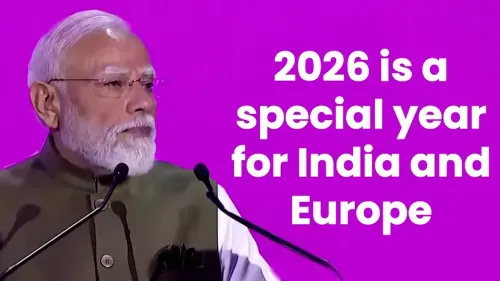
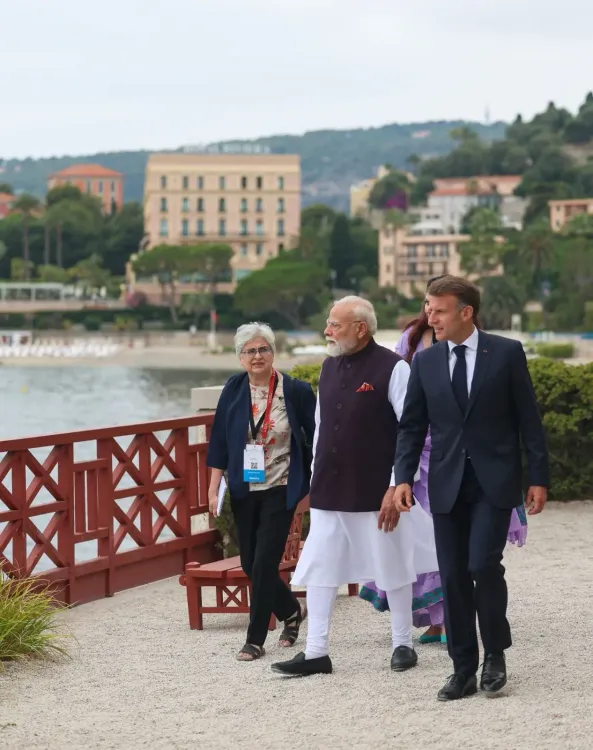
Prime Minister Narendra Modi on 14 June 2026 announced a new India-France Economic Security Dialogue focused on critical minerals and technology supply chains, while affirming that the India-EU Free Trade Agreement will provide fresh momentum to bilateral economic ties.
Key Takeaways
PM Modi confirmed that India and France will launch a dedicated Economic Security Dialogue to strengthen supply chains in critical minerals and technology.
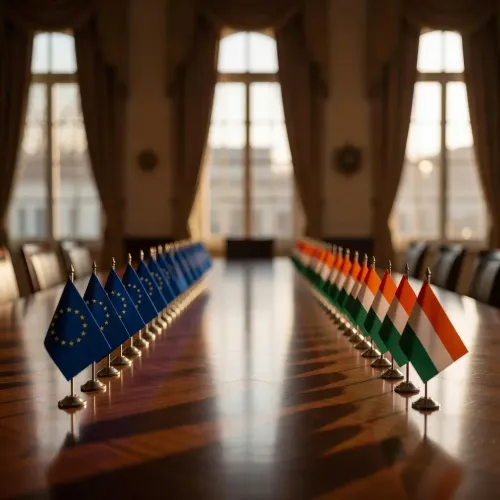
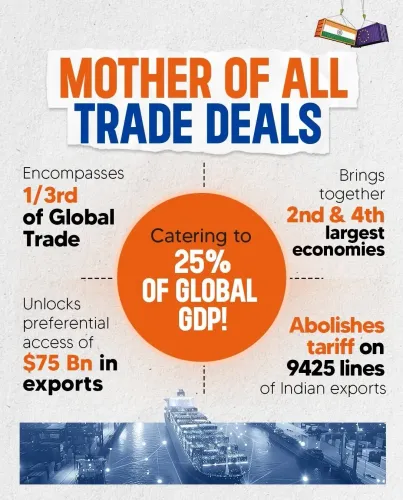
The India-EU FTA (BTIA) , with negotiations resumed in 2022 after a decade-long pause, is cited as providing 'unparalleled momentum' to India-France economic ties.
The India-France strategic partnership dates to 1998 and spans defence, civil nuclear energy, space, and trade.
The EU is among India 's largest trading partner blocs, with bilateral trade having exceeded $115 billion in recent years.
The new dialogue fits India 's broader 'China+1' supply-chain diversification strategy, accelerated since 2020 .
Key beneficiaries include Indian technology firms, critical minerals importers, and exporters seeking reduced barriers under the BTIA .
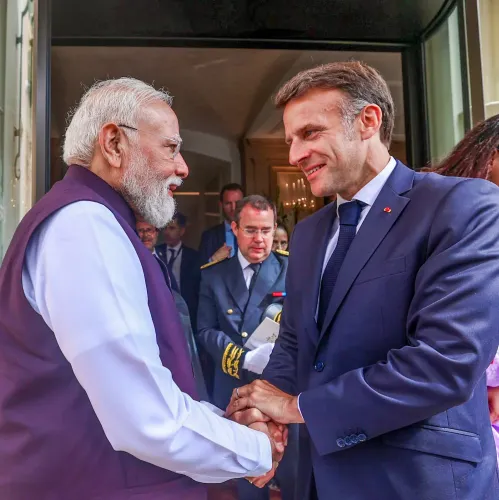
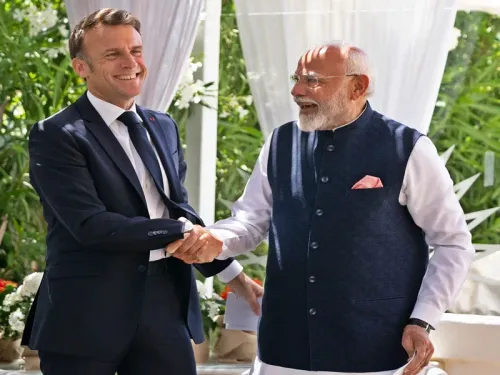
Prime Minister Narendra Modi on Sunday, 14 June 2026 announced that India and France will deepen economic cooperation, citing the India-EU Free Trade Agreement as a key driver, and confirmed the launch of a new Economic Security Dialogue to strengthen supply chains in critical minerals and technology.
Context
In his post on X, Prime Minister Modi stated: 'India and France will keep working together to boost economic ties. The India-EU FTA provides unparalleled momentum in this regard. We are also launching an Economic Security Dialogue to ensure stronger supply chains in critical minerals and technology.'
The announcement signals a significant step in the India-France strategic partnership, which was formally established in 1998 during the Vajpayee-Chirac summit and has since encompassed defence, civil nuclear energy, space cooperation, and trade.
Policy Backdrop
The India-EU Broad-Based Trade and Investment Agreement (BTIA) — commonly referred to as the India-EU FTA — has had a long and complex history. Negotiations were launched in 2007, paused in 2013, and formally resumed at the 2022 India-EU Summit. The European Union is among India's largest trading partner blocs, with bilateral trade having exceeded $115 billion in recent years.
The newly announced Economic Security Dialogue fits a broader pattern in New Delhi's foreign economic policy: embedding dedicated supply-chain resilience mechanisms within existing strategic partnerships. Since 2020, India has pursued active supply-chain diversification, including Production Linked Incentive (PLI) schemes targeting semiconductors and electronics, as part of a 'China+1' sourcing strategy.
France and the broader EU have been identified as reliable partners for high-technology inputs and green-transition materials — two categories central to India's industrial ambitions over the coming decade.
Stakeholders and Impact
Indian exporters and technology firms stand to benefit from accelerated India-EU FTA chapters, which could reduce tariff and non-tariff barriers across goods and services. For France specifically, deeper economic ties align with its strategic interest in maintaining a strong bilateral relationship with one of the world's fastest-growing major economies.
The Economic Security Dialogue is particularly significant for India's critical minerals importers and domestic technology manufacturers, who have faced supply vulnerabilities exposed by global disruptions since 2020. A structured bilateral mechanism with France — a country with deep expertise in nuclear, aerospace, and green-energy supply chains — could provide India with more predictable access to strategic inputs.
Broader stakeholders include Indian and French firms operating in semiconductors, rare earth processing, defence manufacturing, and renewable energy infrastructure.
What's Next
Attention will now turn to the next India-EU Summit, where progress on specific BTIA chapters — including market access, intellectual property, and investment protection — is expected to be reviewed. The inaugural meeting of the Economic Security Dialogue will be closely watched for its agenda, participating ministries, and any joint deliverables on critical minerals sourcing.
The announcement reinforces India's strategy of converting high-level diplomatic relationships into concrete economic architecture — a pattern that analysts expect to deepen as New Delhi seeks to position itself as an indispensable node in global technology and green-energy supply chains.
Point of View
PM Modi is effectively layering economic-security logic onto a trade negotiation that has historically moved slowly, injecting fresh political urgency. France, as a nuclear and aerospace power with significant rare-earth processing capacity, is a logical first mover for such a mechanism within the EU. If the dialogue produces tangible deliverables, it could serve as a template for similar mechanisms with other strategic partners, marking a maturation of India's foreign economic policy beyond market access into supply-chain statecraft.
NationPress
13 Sept 2026
Frequently Asked Questions
What is the India-France Economic Security Dialogue announced by PM Modi?
It is a new bilateral mechanism announced by Prime Minister Narendra Modi on 14 June 2026 aimed at ensuring stronger supply chains in critical minerals and technology between India and France . Specific details on its agenda and participants are yet to be officially disclosed.
What is the India-EU FTA and how does it affect India-France ties?
The India-EU Broad-Based Trade and Investment Agreement (BTIA) , commonly called the India-EU FTA , is a comprehensive trade deal whose negotiations were launched in 2007 , paused in 2013 , and resumed in 2022 . As a major EU member, France is a direct stakeholder, and progress on the FTA is expected to reduce tariff and non-tariff barriers affecting bilateral trade.
Why is critical minerals supply chain important for India?
India depends on imports for several critical minerals essential to electric vehicles, semiconductors, and defence manufacturing. Supply disruptions since 2020 have accelerated New Delhi 's push to diversify sourcing through partnerships with reliable partners like France and the broader EU .
What is the history of the India-France strategic partnership?
The India-France strategic partnership was formally established in 1998 during the Vajpayee-Chirac summit . It covers defence, civil nuclear energy, space cooperation, and trade, making France one of India 's oldest and most comprehensive strategic allies.
How much trade does India do with the EU?
India and the European Union have had bilateral trade exceeding $115 billion in recent years, making the EU one of India 's largest trading partner blocs. The ongoing BTIA negotiations aim to further expand this relationship.