Rijiju Hails India-EU FTA as Modi Visits France
Synopsis
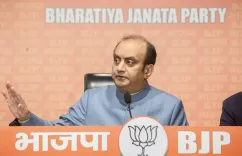
Union Parliamentary Affairs Minister Kiren Rijiju shared PM Modi's remarks on 18 June 2026 declaring the India-EU Free Trade Agreement concluded during the Prime Minister's visit to France, citing expanded trade, investment, talent, technology, and tourism pathways.
Key Takeaways
PM Modi declared the India-EU Free Trade Agreement concluded 'at the beginning of the year,' as quoted by Minister Kiren Rijiju on 18 June 2026 .
The agreement covers trade, investment, talent exchange, technology cooperation, and tourism facilitation between India and the EU.
India-EU trade negotiations were first launched in 2007 , suspended in 2013 , and revived at the India-EU Summit in May 2022 .
The EU accounts for approximately 11 per cent of India's global trade and is a major source of FDI and high-value technology partnerships.
The deal follows India's earlier Comprehensive Economic Partnership Agreements with the UAE and Australia , both signed in 2022 .
Parliamentary ratification in India and approval by the European Parliament and EU member states remain the next critical steps.
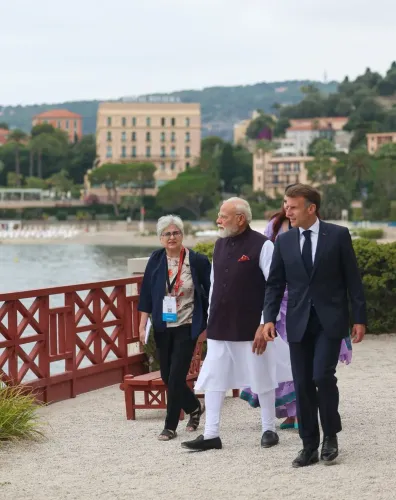
Union Parliamentary Affairs Minister Kiren Rijiju on Thursday, 18 June 2026, shared remarks by Prime Minister Narendra Modi highlighting the conclusion of the India-European Union Free Trade Agreement, describing it as a historic milestone that will expand trade, investment, and people-to-people ties between India and the EU bloc. Rijiju's post, made during PM Modi's visit to France, quoted the Prime Minister directly on the sweeping scope of the new agreement.
Context
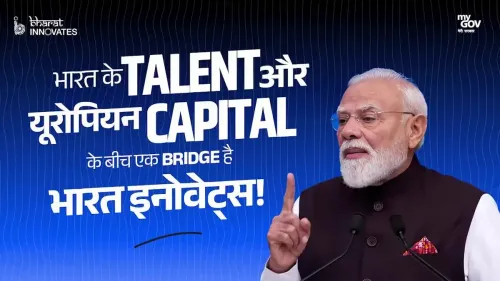
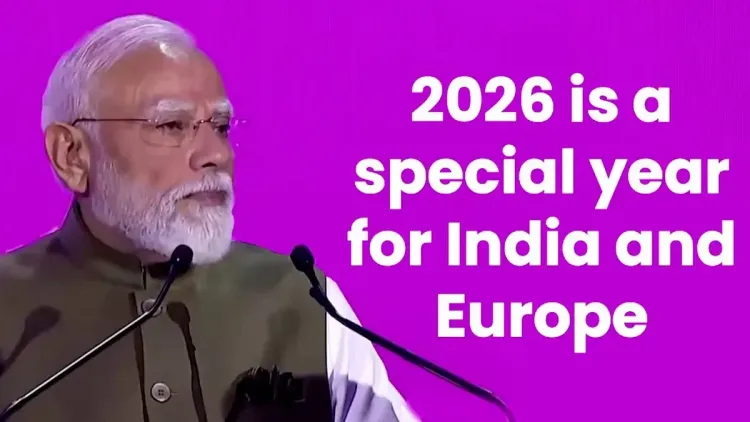
Quoting PM Modi, Rijiju wrote: 'At the beginning of the year, we concluded the historic India-EU Free Trade Agreement. This agreement will expand our trade and investment and it will open up many pathways for the exchange of talent, technology and tourism.' The post was tagged #PMModiInFrance, placing it squarely in the context of the Prime Minister's ongoing state-level engagement with France, a key EU member state.
The agreement, if formally concluded as stated, would mark the end of one of the longest-running trade negotiation processes in India's diplomatic history. Talks between India and the EU were first launched in 2007 under the Broad-based Trade and Investment Agreement (BTIA) framework, suspended in 2013 after 11 rounds of negotiations, and formally revived at the India-EU Summit in May 2022.
Policy Backdrop
India's push to conclude the EU pact fits within a broader FTA acceleration strategy that has seen New Delhi sign Comprehensive Economic Partnership Agreements with the UAE and Australia, both in 2022. The EU accounts for roughly 11 per cent of India's global trade and is one of the largest sources of foreign direct investment and high-value technology partnerships for the country.
The BTIA framework covers tariff reductions, services liberalisation, investment protections, and regulatory alignment — areas that have historically been contentious between the two sides. PM Modi's framing of the agreement as opening pathways for 'talent, technology and tourism' signals that the final text addresses not just goods trade but also mobility and digital cooperation.
Stakeholders and Impact
Indian exporters in sectors such as textiles, pharmaceuticals, engineering goods, and IT services stand to gain preferential market access to the 27-nation EU bloc. Conversely, European investors and manufacturers — particularly in automobiles, machinery, and luxury goods — are expected to benefit from reduced Indian tariffs and a more predictable regulatory environment.
The agreement's provisions on talent exchange are particularly significant for India's large services sector, which has long sought easier mobility for skilled professionals within the EU. Tourism facilitation measures could also boost two-way travel, which has grown steadily since the post-pandemic recovery.
What's Next
The agreement will now need to go through parliamentary ratification in India, as well as review and approval by the European Parliament and individual EU member states — a process that can take considerable time given the complexity of mixed agreements under EU law. Sector-specific tariff schedules and the investment chapter's implementation timelines will be closely watched by industry bodies on both sides.
As the world's most populous nation deepens its integration with its largest trading partner bloc, the India-EU FTA could redefine the architecture of India's external economic relationships for decades to come.
Point of View
Amplified by a senior Cabinet minister during a high-profile foreign visit, signals that the government is treating the India-EU FTA as a landmark diplomatic achievement to be communicated at the highest political level. The framing around 'talent, technology and tourism' — beyond conventional goods trade — suggests the deal's services and mobility chapters may be its most politically saleable elements domestically. For the BJP, a concluded EU pact fills a long-standing gap in India's trade architecture and reinforces the 'Viksit Bharat' narrative of India as a globally integrated economic power. The ratification road, however, runs through both the Indian Parliament and the notoriously slow EU approval machinery, meaning implementation timelines will be the real test of the agreement's ambition.
NationPress
18 Sept 2026
Frequently Asked Questions
What is the India-EU Free Trade Agreement?
The India-EU Free Trade Agreement, formally known as the Broad-based Trade and Investment Agreement (BTIA), is a comprehensive trade pact between India and the 27-nation European Union covering tariff reductions, services, investment, and regulatory cooperation. Negotiations began in 2007, were suspended in 2013, and were revived in 2022.
When was the India-EU FTA concluded?
According to PM Modi's remarks shared by Minister Kiren Rijiju on 18 June 2026, the agreement was concluded 'at the beginning of the year,' referring to early 2026.
What does the India-EU FTA cover?
PM Modi stated the agreement will expand trade and investment and open pathways for the exchange of talent, technology, and tourism between India and the European Union.
Why is PM Modi in France?
PM Modi visited France in June 2026 as part of high-level bilateral engagement. The hashtag #PMModiInFrance accompanied Rijiju's post, indicating an official state-level visit, though specific agenda details were not provided in the announcement.
What happens after the India-EU FTA is signed?
The agreement must undergo parliamentary ratification in India and be reviewed and approved by the European Parliament and individual EU member states before it can come into force. Implementation of sector-specific tariff schedules and the investment chapter will follow ratification.