Rijiju Returns From Five-Nation Tour, Held Talks With Global Business Leaders
Synopsis
Union Parliamentary Affairs Minister Kiren Rijiju has returned from a five-nation overseas tour, revealing he held detailed talks with corporate leaders from dozens of countries as part of Prime Minister Modi's economic diplomacy drive. Specific countries and outcomes are yet to be officially disclosed.
Key Takeaways
Kiren Rijiju returned from a five-nation overseas tour approximately two days before 23 May 2026 .
He held detailed meetings with leaders of major companies representing dozens of countries , not just the five nations visited.
The minister invoked Prime Minister Narendra Modi 's name, framing the engagements within the government's economic diplomacy agenda.
The specific countries visited and any resulting commercial agreements have not been officially announced .
The visit forms part of a sustained BJP government strategy since 2014 of using ministerial overseas tours to attract foreign investment.
A video accompanying the post suggests a fuller account of the tour's outcomes may be forthcoming.
Union Parliamentary Affairs Minister Kiren Rijiju on Saturday, 23 May 2026, disclosed that he had returned just two days earlier from a five-nation overseas visit during which he held extensive meetings with leaders of major companies from dozens of countries, framing the engagements as part of Prime Minister Narendra Modi's broader economic diplomacy agenda.
Context
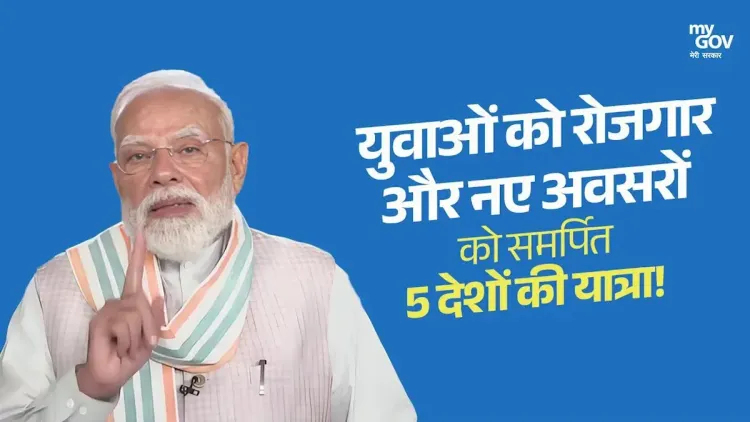
Rijiju shared the update on X, writing in Hindi: 'अभी दो दिन पहले मैं पाँच देशों की यात्रा करके लौटा हूँ' ('Just two days ago I returned from a tour of five countries'). He noted that while the visit formally spanned five nations, the conversations it enabled were far broader — involving corporate leaders representing dozens of countries — and were held in detail. The minister invoked Prime Minister Narendra Modi's name in framing the purpose of these engagements.
The post was accompanied by a video, suggesting Rijiju may elaborate on the visit's outcomes in a longer address or press interaction. The specific countries on the itinerary and any commercial agreements reached have not been officially announced.
Policy Backdrop
Since 2014, the Modi government has systematically deployed ministerial overseas visits as instruments of economic diplomacy — a strategy that runs parallel to, and often supplements, prime ministerial foreign tours. The approach is designed to position India as a preferred investment destination by giving global corporate decision-makers direct access to senior government interlocutors.
This model of multi-country ministerial outreach has intensified under successive BJP-led administrations, with ministers from key portfolios travelling to engage foreign investors, technology firms, and trade bodies. Parliamentary Affairs ministers have occasionally been part of such delegations when the government seeks to signal cross-sectoral intent.
Stakeholders and Impact
The primary beneficiaries of such engagements, if they translate into commitments, are Indian businesses seeking foreign partnerships, foreign investors evaluating India-entry strategies, and sectors the government is actively promoting — manufacturing, infrastructure, and emerging technology among them. Meetings with 'leaders of major companies from dozens of countries,' as Rijiju described, suggest the conversations were not confined to any single bilateral corridor.
For the BJP, high-visibility ministerial travel also carries a domestic political signal: that the government's foreign policy outreach is institutionalised across the cabinet, not concentrated solely at the prime ministerial level.
What's Next
Observers will watch for follow-up statements in Parliament or formal government communiqués detailing investment commitments, memoranda of understanding, or bilateral commercial agreements that may have been discussed during the tour. Rijiju's reference to Prime Minister Modi at the close of his post suggests a fuller account — possibly a formal briefing or a video statement — may be forthcoming. Whether the visit yields concrete, publicly announced outcomes will determine how the tour is assessed against India's broader economic diplomacy scorecard.
Point of View
Rather than state-to-state diplomacy, signals that investment attraction, not geopolitics, was the tour's stated purpose. Until specific countries, companies, and outcomes are named, the announcement functions more as a signal of diplomatic activity than a verifiable policy deliverable. Parliament and formal government channels will be the test of whether substance follows the statement.
NationPress
26 Oct 2026
Frequently Asked Questions
Which five countries did Kiren Rijiju visit on his recent tour?
The specific countries on Rijiju's five-nation itinerary have not been officially announced as of his 23 May 2026 post on X.
What was the purpose of Kiren Rijiju's five-nation foreign tour?
Rijiju described the tour as an opportunity to hold detailed discussions with leaders of major companies from dozens of countries, framing it as part of Prime Minister Modi's economic diplomacy agenda.
Did Kiren Rijiju sign any investment deals during his overseas visit?
No specific deals or memoranda of understanding have been officially announced. The minister's post indicated discussions were held, but outcomes are yet to be publicly detailed.
What is India's ministerial economic diplomacy strategy?
Since 2014, the Modi government has deployed senior ministers on multi-country tours to engage global corporate leaders and promote India as an investment destination, supplementing prime ministerial foreign visits.
What is Kiren Rijiju's current role in the Indian government?
Kiren Rijiju serves as Union Minister of Parliamentary Affairs and Minister of Minority Affairs, and is a senior BJP leader from Arunachal Pradesh.