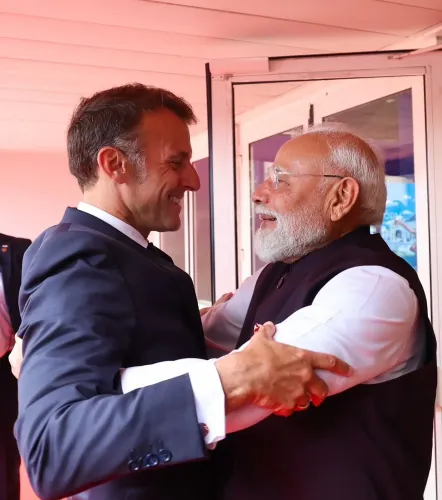
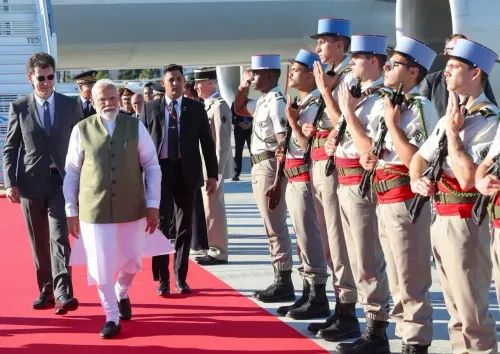
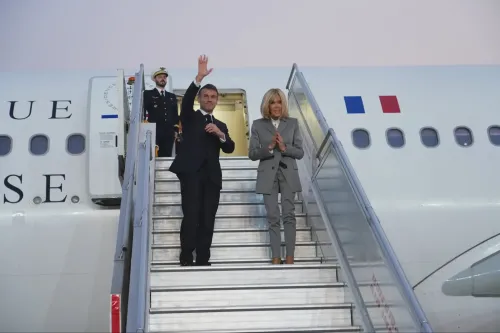
Modi-Macron summit: India, France to double trade in 5 years, launch AI working group
Synopsis
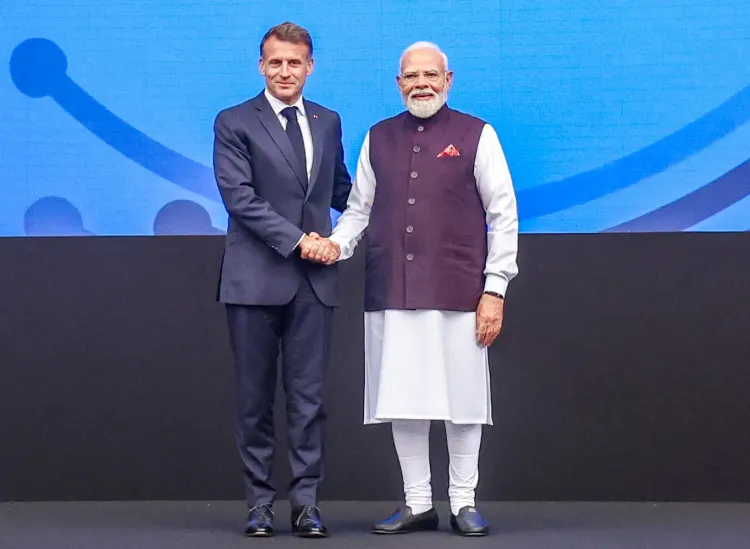
The Modi-Macron summit at Nice wasn't just a diplomatic courtesy call — it produced a structured agenda: a five-year trade-doubling target, a Joint AI Working Group, an Innovation Roadmap 2030, and 19 institutional agreements. With the India-EU FTA on the table and UPI expanding in France, this is among the most operationally dense India-France meetings in recent years.
Key Takeaways
Prime Minister Modi and President Macron met in Nice, France on 14 June and agreed to double bilateral trade within five years via a high-level mechanism.
Both leaders called for early implementation of the India-EU Free Trade Agreement .
A Joint India-France AI Working Group was announced, alongside adoption of an Innovation Roadmap 2030 .
A Centre of Excellence for Skilling in Aeronautics will be set up in Kanpur .
19 institutional agreements were signed across innovation sectors; UPI expansion in France was welcomed.
India's SHANTI Act was cited as enabling new cooperation on small and advanced modular reactors.
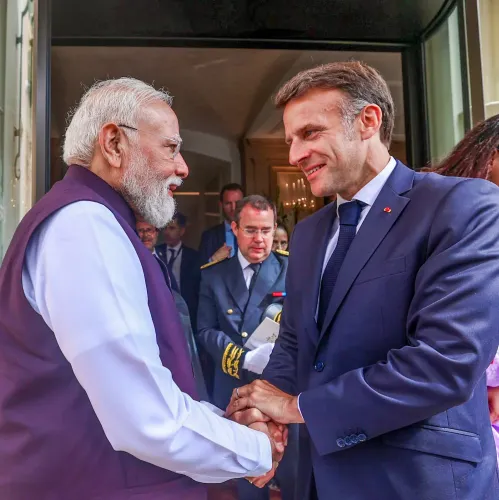
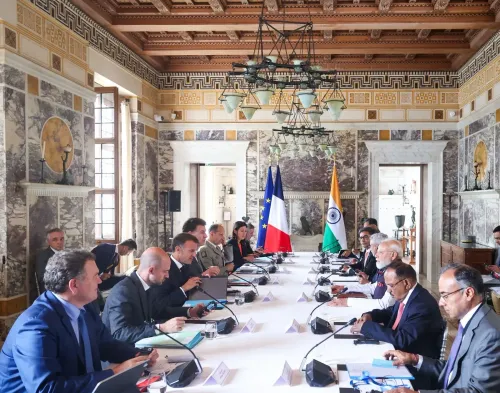
Prime Minister Narendra Modi and French President Emmanuel Macron on Sunday, 14 June agreed to establish a high-level mechanism aimed at doubling bilateral trade between India and France within five years, following a summit at Nice, France. A joint statement issued after the meeting outlined concrete steps to deepen ties across economic growth, technology, talent mobility, and innovation.
Trade and Economic Priorities
The two leaders called for early implementation of the India-EU Free Trade Agreement, describing it as a unique opportunity to expand bilateral trade and investment. They also discussed enhanced cooperation in the SME, aviation, and railway sectors. A key outcome was the agreement to establish a Centre of Excellence for Skilling in Aeronautics in Kanpur. Both sides also agreed to strengthen supply chain resilience — particularly in critical minerals — through a newly launched Dialogue on Economic Security.
Technology, AI, and Innovation Roadmap
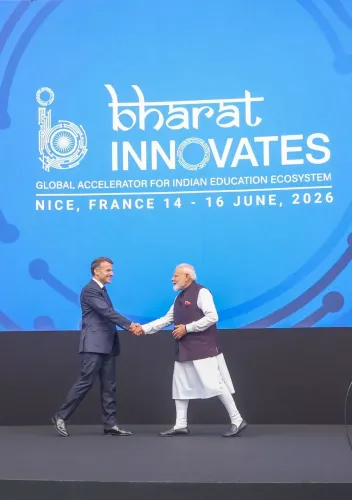
Recognising technology as a cornerstone of the bilateral relationship, both nations adopted an 'Innovation Roadmap 2030' to give the partnership long-term direction. Modi and Macron agreed to create a Joint India-France AI Working Group to expand cooperation on Artificial Intelligence. The two leaders jointly inaugurated Bharat Innovates at Nice, and Prime Minister Modi's participation at Vivatech in Paris further cemented collaboration in deep-tech, semiconductors, agri-tech, med-tech, renewable energy, defence, and space. The leaders also noted that India's SHANTI Act opens new avenues for cooperation on small and advanced modular reactors.
Space, Nuclear, and Supply Chains
Both sides discussed expanding private sector collaboration in space, with the SHANTI Act cited as a framework enabling new partnerships. On critical minerals, the newly established Dialogue on Economic Security is expected to coordinate supply chain strategies between the two countries — a priority that reflects growing global competition over strategic resources. This is notably the third major India-France summit in three years, underscoring the deepening strategic convergence.
People-to-People and Education Ties
The two leaders emphasised strengthening people-to-people ties. Prime Minister Modi thanked President Macron for the swift operationalisation of visa-free transit for Indian nationals at French airports. Both sides discussed expanding talent and student mobility, including mutual recognition of educational qualifications. Modi invited French universities to establish campuses in India under the New Education Policy. Cultural cooperation was also on the agenda, with both leaders agreeing to enhance ties between museums and cultural institutions, including the National Maritime Heritage Complex in Lothal.
Digital Payments and Institutional Agreements
The joint statement welcomed the continued expansion of UPI in France — a sign of India's growing digital payment footprint in Europe. The summit also saw the signing of 19 agreements among institutions across the innovation ecosystems of both countries, spanning the range of priority sectors identified in the Innovation Roadmap 2030.
With the Innovation Roadmap 2030 now adopted and a joint AI working group in place, the India-France partnership appears set for its most structured phase of engagement yet — one that will be tested by the pace of FTA negotiations and the speed of institutional follow-through on both sides.
Point of View
Since bilateral trade targets are largely hostage to that multilateral negotiation. The AI Working Group and Innovation Roadmap 2030 are structurally sound ideas, but India has a history of joint working groups that meet infrequently. What distinguishes this summit is the institutional density — 19 agreements and a named roadmap — which at least creates accountability anchors that past summits lacked.
NationPress
21 Sept 2026
Frequently Asked Questions
What did India and France agree at the Nice summit?
India and France agreed to establish a high-level mechanism to double bilateral trade within five years, adopt an Innovation Roadmap 2030, and create a Joint India-France AI Working Group. The summit also produced 19 institutional agreements and a call for early implementation of the India-EU Free Trade Agreement.
What is the India-France Innovation Roadmap 2030?
The Innovation Roadmap 2030 is a jointly adopted framework to give the India-France technology partnership long-term direction, covering sectors such as deep-tech, semiconductors, agri-tech, med-tech, renewable energy, defence, and space. It was announced at the Nice summit on 14 June.
What is India's SHANTI Act and how does it affect India-France ties?
India's SHANTI Act creates new legal and regulatory opportunities for international nuclear collaboration, including on small and advanced modular reactors. At the Nice summit, both leaders noted it opens fresh avenues for India-France cooperation in the nuclear energy space.
How does the Nice summit affect Indian students and travellers in France?
Prime Minister Modi thanked President Macron for swiftly operationalising visa-free transit for Indian nationals at French airports. Both sides also discussed expanding student and talent mobility and mutual recognition of educational qualifications, with Modi inviting French universities to open campuses in India under the New Education Policy.
What is the Centre of Excellence for Skilling in Aeronautics in Kanpur?
It is a jointly agreed institution to be established in Kanpur, aimed at building specialised aeronautics skills as part of the broader India-France cooperation in the aviation sector. The agreement was announced in the joint statement following the Modi-Macron summit at Nice.