Giriraj Singh flags new momentum in India's semiconductor sector
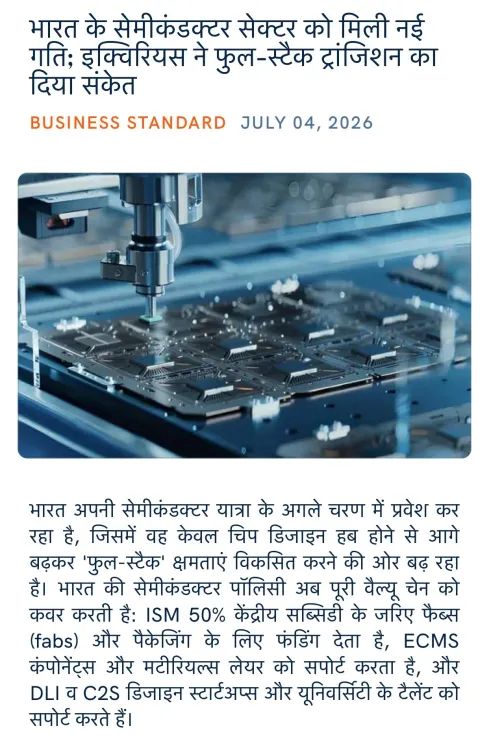
Synopsis
Union Textiles Minister Giriraj Singh on 4 July 2026 amplified signals of fresh momentum in India's semiconductor sector via the NaMo App, citing Equirus's full-stack transition as a marker of the ecosystem's growing maturity under the Rs 76,000 crore India Semiconductor Mission.
Key Takeaways
Union Textiles Minister Giriraj Singh shared the semiconductor sector update on 4 July 2026 via the NaMo App .
Equirus has signalled a full-stack transition , indicating movement across the entire semiconductor value chain from design to assembly.
The India Semiconductor Mission , approved in 2021 , carries a financial outlay of Rs 76,000 crore to support fab and assembly investments.
The PLI scheme for electronics , expanded in 2020-21 , covers mobile phones, components and semiconductor packaging as a complementary incentive layer.
India's semiconductor push aims to reduce dependence on East Asian supply chains and build domestic chip resilience across defence, EVs and consumer electronics.
Cabinet approvals for new semiconductor units and a possible mid-term review of the ISM budget are key near-term policy triggers to watch.
Union Textiles Minister Giriraj Singh on Saturday, 4 July 2026, shared a post via the NaMo App highlighting fresh momentum in India's semiconductor sector, pointing to signals of a full-stack transition by market participant Equirus as evidence of the industry's deepening maturity.
The post, written in Hindi, states: 'Bharat ke semiconductor sector ko mili nayi gati; Equirus ne full-stack transition ka diya sanket' — ('India's semiconductor sector has received new momentum; Equirus has signalled a full-stack transition'). The minister's amplification of the development underscores the Bharatiya Janata Party-led government's sustained focus on building a domestic chip ecosystem.
Context
India's push to establish a credible semiconductor manufacturing base has been one of the most capital-intensive industrial policy bets of the current decade. The government has positioned chip self-sufficiency as central to both economic security and its broader Atmanirbhar Bharat (self-reliant India) agenda, which explicitly targets reducing dependence on East Asian supply chains for critical electronics components.
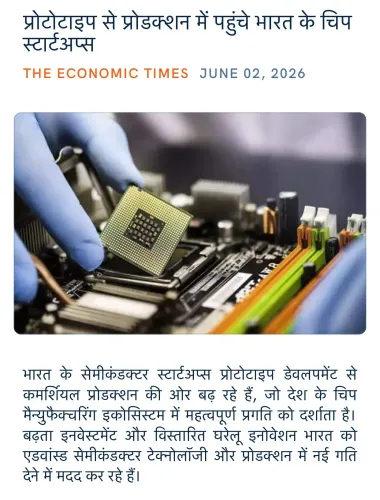
A 'full-stack transition' in semiconductor parlance refers to a company moving beyond a single layer — such as chip design or packaging — to cover the entire value chain, from design through fabrication to final assembly and test. Such moves are considered a maturity signal for any national semiconductor ecosystem.
Policy Backdrop
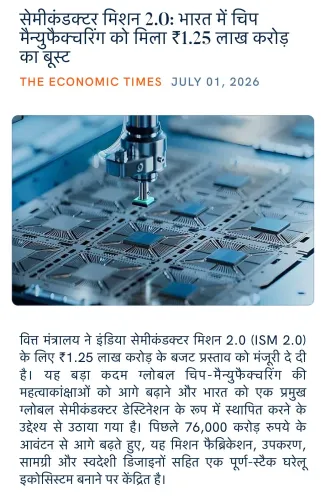
The India Semiconductor Mission (ISM), approved in 2021 with a financial outlay of Rs 76,000 crore, is the primary policy vehicle driving this transformation. The scheme offers capital subsidies, land support and power incentives to offset the enormous fixed costs associated with semiconductor fabrication — costs that have historically made it difficult for India to compete with established hubs in Taiwan, South Korea and China.
Complementing the ISM, the Production Linked Incentive (PLI) scheme for electronics — expanded in 2020-21 — covers mobile phones, components and semiconductor packaging, creating a layered incentive architecture designed to attract both global majors and domestic champions at every node of the supply chain.
Since 2020, multiple memoranda of understanding with global semiconductor firms have been signed, though actual fabrication plant construction timelines remain multi-year undertakings given the complexity of the technology and infrastructure requirements involved.
Stakeholders and Impact
The primary beneficiaries of India's semiconductor push are electronics manufacturers, semiconductor investors and the broader technology supply chain that currently relies heavily on imported chips for everything from consumer electronics to defence systems and electric vehicles. A credible domestic fab ecosystem would reduce India's vulnerability to global supply-chain disruptions of the kind witnessed during the 2020-22 chip shortage.
For listed market participants in the semiconductor and electronics manufacturing space, signals of full-stack capability expansion are closely watched by institutional investors as indicators of long-term revenue visibility and margin improvement. Minister Giriraj Singh's decision to amplify such signals through his official social media channels reflects the government's intent to maintain investor and public confidence in the sector's trajectory.
What's Next
Policy watchers will track Cabinet approvals for additional semiconductor units and any mid-term review of the India Semiconductor Mission budget in the next parliamentary session. The government's ability to convert signed MoUs into operational fabrication units will be the definitive test of whether India's semiconductor ambitions translate into durable industrial capacity. A full-stack transition by even one significant domestic player would mark a qualitative shift in India's position on the global chip map.
Point of View
000 crore India Semiconductor Mission is producing tangible ecosystem outcomes, not just signed MoUs. Coming in mid-2026, the post also appears timed to sustain investor and public confidence ahead of any parliamentary scrutiny of the ISM's mid-term progress. The broader implication is that semiconductor self-reliance has become a cross-cutting political priority, with ministers across portfolios expected to champion it publicly.
NationPress
3 Oct 2026
Frequently Asked Questions
What is India's semiconductor mission and how much money has been allocated?
The India Semiconductor Mission was approved in 2021 with a total outlay of Rs 76,000 crore to support semiconductor fabrication units, assembly, packaging and design capabilities within India.
What does full-stack transition mean in the semiconductor industry?
A full-stack transition means a company moves beyond a single layer of the chip supply chain — such as only design or only packaging — to cover the entire value chain from chip design through fabrication to final assembly and testing.
Why is Giriraj Singh talking about semiconductors if he is the Textiles Minister?
Senior BJP ministers frequently amplify broader industrial and technology policy updates via the NaMo App as part of the government's communications strategy, even when the subject falls outside their direct portfolio.
How does India plan to reduce dependence on imported chips?
India is using a combination of the India Semiconductor Mission's capital subsidies and the PLI scheme for electronics to attract both global semiconductor firms and domestic players to build fabrication and assembly capacity inside the country.
What should investors watch next in India's semiconductor sector?
Key triggers include Cabinet approvals for additional semiconductor fabrication units and a potential mid-term review of the India Semiconductor Mission's Rs 76,000 crore budget in the next parliamentary session.