CM Yogi Pays Tribute to Indian Soldiers on All Fronts
Synopsis
UP Chief Minister Yogi Adityanath saluted Indian soldiers serving in sub-zero glaciers, desert heat, and at sea, writing that their sacrifice allows 140 crore Indians to sleep peacefully. The post underscores the enduring civil-military bond in Indian political discourse.
Key Takeaways
CM Yogi Adityanath posted a tribute to Indian soldiers on 30 May 2026 .
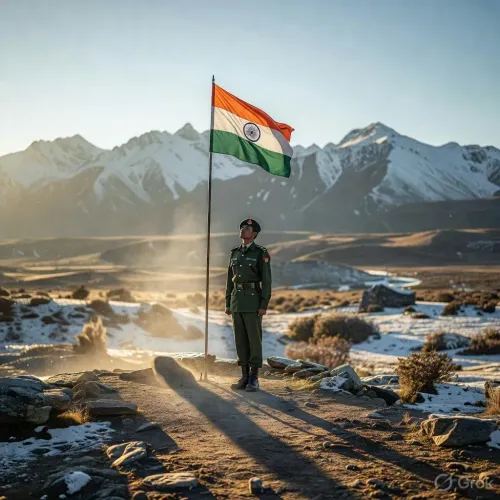
The post honours troops operating in three extreme environments: sub-zero mountains, scorching desert, and open seas.
He stated that 140 crore Indians sleep peacefully because of the soldier's sacrifice.
India has maintained a continuous military presence at the Siachen Glacier since Operation Meghdoot, 1984 .
The tribute reflects a broader pattern of Indian state leaders reinforcing civil-military bonds through public messaging.
Upcoming defence budget debates will test how such tributes translate into concrete welfare measures for soldiers.
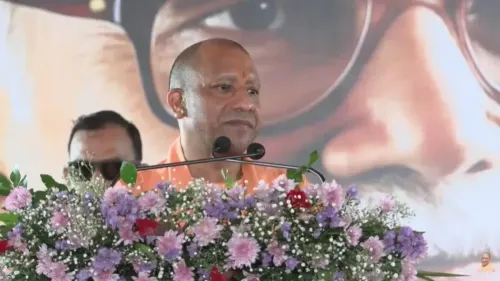
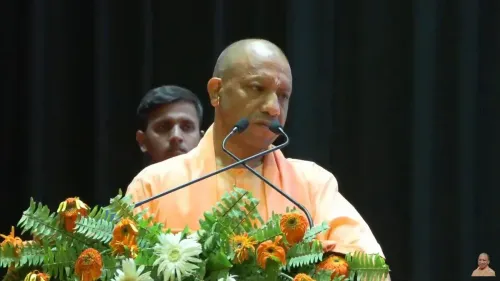
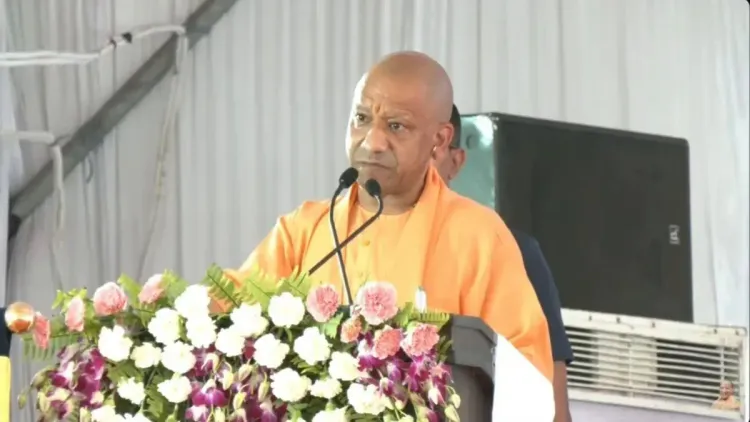
Uttar Pradesh Chief Minister Yogi Adityanath on Saturday, 30 May 2026, posted a heartfelt tribute to the Indian Armed Forces, honouring soldiers who guard the nation across sub-zero mountain passes, scorching desert terrain, and open seas — so that, as he wrote, 140 crore Indians can sleep in peace.
Context
The Chief Minister's post, written in Hindi, reads: 'Jab Bharat ka sainik minus degree temperature par, regiistan ki jhulasti garmi mein evam samudri lahron ka muqabala karte hue desh ki raksha karta hai, tab 140 crore Bharatvasi chain ki neend sota hai' — ('When India's soldier defends the nation in minus-degree temperatures, in the scorching heat of the desert, and against the waves of the sea, then 140 crore Indians sleep peacefully.')
The message accompanied a video post and was addressed to no specific event, presenting itself as a standalone salute to the men and women in uniform who serve across the country's most demanding operational environments.
Policy Backdrop
India maintains a continuous military presence across three of the world's most extreme environments. At the Siachen Glacier — the world's highest battlefield — Indian troops have been deployed without interruption since Operation Meghdoot in 1984, enduring temperatures that can plunge well below minus 40 degrees Celsius.
Along the western border, the Thar Desert sees Indian Army and paramilitary units operating in summer heat that regularly exceeds 50 degrees Celsius. The Indian Navy and Coast Guard, meanwhile, patrol thousands of kilometres of coastline and open ocean. Together, these three theatres define the physical sacrifice that CM Yogi's tribute invokes.
The post also arrives in the broader context of the Agnipath short-service recruitment scheme, announced in June 2022, which restructured induction into the armed forces and renewed public debate about soldier welfare, service conditions, and national recognition of military sacrifice.
Stakeholders and Impact
The tribute speaks directly to the families of serving personnel and veterans across Uttar Pradesh, a state that has historically contributed a large share of recruits to the Indian Army. Political messaging that links state leadership to national security themes reinforces civil-military bonds at the grassroots level.
Indian political figures across the spectrum routinely issue such public salutes, particularly from state governments, as a way of acknowledging the armed forces and connecting regional constituencies to national defence narratives. The post's framing — ordinary citizens sleeping safely because of extraordinary soldiers — is a recurring motif in Indian public discourse around military service.
What's Next
Parliamentary debates on the next defence budget and the potential rollout of enhanced high-altitude equipment, cold-weather gear, and maritime welfare measures will be the concrete policy markers to watch. How governments at both the state and central level translate such public tributes into material support for soldiers — in terms of infrastructure, compensation, and healthcare — remains the measure of their sincerity that veterans' groups consistently emphasise.
Point of View
Which sends a disproportionately large number of recruits into the armed forces. The three-terrain framing (mountain, desert, sea) is carefully constructed to evoke the full geographic sweep of Indian military sacrifice, not just the Himalayan frontier that dominates headlines. This kind of messaging also functions as soft political capital in a state where veterans and defence families form a significant voter constituency. The real test, as defence analysts and veterans' groups consistently note, is whether such tributes are followed by sustained advocacy for soldier welfare in budget and legislative forums.
NationPress
20 Sept 2026
Frequently Asked Questions
What did CM Yogi Adityanath say about Indian soldiers?
CM Yogi Adityanath wrote that when India's soldier defends the nation in minus-degree temperatures, in desert heat, and against ocean waves, 140 crore Indians are able to sleep in peace — a tribute to the armed forces posted on 30 May 2026.
Why do Indian politicians frequently tribute the armed forces?
Indian political leaders across parties issue tributes to the armed forces to reinforce civil-military bonds, acknowledge the sacrifice of soldiers and their families, and connect regional constituencies — especially those with high military enrolment — to national security narratives.
Where do Indian soldiers face the harshest conditions?
Indian troops face extreme conditions at the Siachen Glacier, where temperatures can fall below minus 40 degrees Celsius; in the Thar Desert, where summer heat exceeds 50 degrees Celsius; and at sea, where the Navy and Coast Guard patrol vast stretches of ocean.
What is Operation Meghdoot and why is it significant?
Operation Meghdoot, launched in 1984, established India's continuous military presence at the Siachen Glacier, the world's highest battlefield. It is a landmark in the history of Indian high-altitude warfare and is frequently invoked in tributes to soldier sacrifice.
What is the Agnipath scheme and how does it relate to soldier welfare debates?
The Agnipath scheme, announced in June 2022, restructured short-service military recruitment in India. It renewed public debate about service conditions, post-service benefits, and the broader question of how the nation recognises and supports its soldiers.