Shekhawat: Ramlila season paints India in Ram's colours
Synopsis
Union Culture and Tourism Minister Gajendra Singh Shekhawat declared on 20 October 2026 that India's Ramlila season is the nation's 'life-force', as Dussehra celebrations span villages and cities nationwide, reflecting the ministry's long-running push to centre Ramayana traditions in India's cultural identity.
Key Takeaways
Union Culture Minister Gajendra Singh Shekhawat posted on 20 October 2026 celebrating Ramlila's sweep across India during Dussehra.
He described the tradition not as a festival but as 'Bharat ki praan urja' — the life-force of India.
Ramlila is performed annually in thousands of venues from major cities to rural hamlets during the Dussehra period.
The Ramnagar Ramlila holds UNESCO intangible cultural heritage recognition, underlining the tradition's global stature.
The Culture Ministry has promoted Ramayana tourism circuits linking heritage sites across multiple Indian states.
Shekhawat is a Lok Sabha MP from Jodhpur, Rajasthan and senior BJP leader.
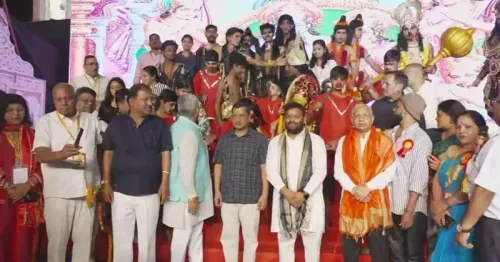
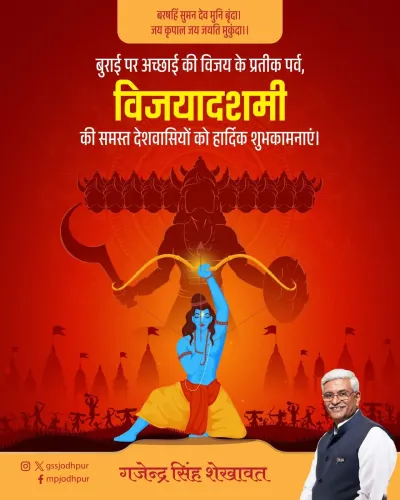
Every village square and city thoroughfare in India is alive with the drama of the Ramayana this week — and Union Culture and Tourism Minister Gajendra Singh Shekhawat wants the country to feel the full weight of that moment. On Tuesday, 20 October 2026, Shekhawat posted on X that the nation is not merely celebrating a festival but breathing its 'life-force' (praan urja).
In Hindi, Shekhawat wrote: 'Aaj Bharat ka kona-kona Raammay hai. Gaon-gaon, sheher-sheher Ramlila ke rang mein desh dooba hua hai. Hamare liye ye kewal tyohaar nahi hai, ye Bharat ki praan urja hai. Siyavar Ramchandra ki jai.' — 'Today every corner of India is suffused with Ram. Village by village, city by city, the country is immersed in the colours of Ramlila. For us this is not merely a festival; it is the life-force of India. Glory to Lord Ramchandra.'
What Ramlila looks like across India right now
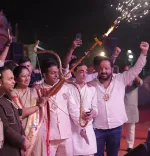
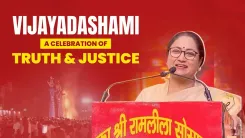
Ramlila — the traditional folk-theatre enactment of the Ramayana epic — is performed across thousands of venues each year during the Dussehra period, from sprawling urban productions to open-air stages in the smallest hamlets. The performances run for several nights, culminating in the symbolic burning of effigies of Ravana on Dussehra day. The tradition is as varied as India itself: Delhi's Ramlila Maidan hosts a massive spectacle, while community troupes in Varanasi, Ayodhya, Ramnagar, and countless rural settlements carry the story in their own dialects and styles.
The UNESCO has recognised the Ramnagar Ramlila as an intangible cultural heritage, a distinction that underlines how deeply this living tradition is woven into India's identity — not just as religion, but as performance, costume, music, and communal memory passed down through generations.
Culture Ministry's stake in the Ramayana tradition
Shekhawat's framing — 'life-force of India' rather than simply 'festival' — is consistent with a broader shift in how the Union Culture Ministry has positioned Ramayana-linked heritage in recent years. The ministry has promoted Ramayana tourism circuits, connecting pilgrimage and heritage sites associated with the epic across multiple states. Documentation and promotion of intangible heritage forms like Ramlila have featured in successive government cultural agendas, recognising that the tradition's vitality depends on institutional support for local performers and troupes who carry it forward.
For Shekhawat — a Lok Sabha MP from Jodhpur, Rajasthan and a senior figure in the BJP — invoking the Ramayana during Dussehra season is both a cultural statement and a political one, placing the ruling party squarely within the tradition it has long championed as India's civilisational bedrock.
As the effigies of Ravana go up in flames across the country this season, the minister's message is clear: what burns brightest is not just a demon king, but a living culture that refuses to fade.
Point of View
A framing the BJP has consistently deployed to anchor cultural nationalism in lived popular practice. For the Culture Ministry, it reinforces the policy logic behind Ramayana tourism circuits: the epic is not merely scripture but an economic and heritage asset. The post arrives as the ministry faces growing pressure to translate cultural messaging into tangible support for the thousands of local troupes and performers who actually keep Ramlila alive, many of them working without institutional backing.
NationPress
20 Oct 2026
Frequently Asked Questions
What did Gajendra Singh Shekhawat say about Ramlila in October 2026?
On 20 October 2026, Shekhawat posted that every corner of India was immersed in Ramlila during Dussehra season and called it not merely a festival but the 'life-force of India' ( praan urja ).
What is Ramlila and when is it performed?
Ramlila is a traditional folk-theatre enactment of the Ramayana epic performed annually across India during the Dussehra period, running for several nights and culminating in the burning of Ravana's effigy.
Does Ramlila have any international recognition?
Yes. The Ramnagar Ramlila has been recognised by UNESCO as an intangible cultural heritage, acknowledging its significance as a living tradition spanning performance, music, and communal memory.
What is the Ramayana tourism circuit promoted by India's Culture Ministry?
The Ramayana tourism circuit is a government initiative connecting pilgrimage and heritage sites across multiple Indian states associated with the Ramayana epic, promoted under the Union Culture and Tourism Ministry.
Who is Gajendra Singh Shekhawat?
Gajendra Singh Shekhawat is India's Union Minister of Culture and Tourism, a senior BJP leader, and Lok Sabha MP representing Jodhpur constituency in Rajasthan.