Smriti Irani Pays Tribute on Ballia Balidan Diwas
Synopsis
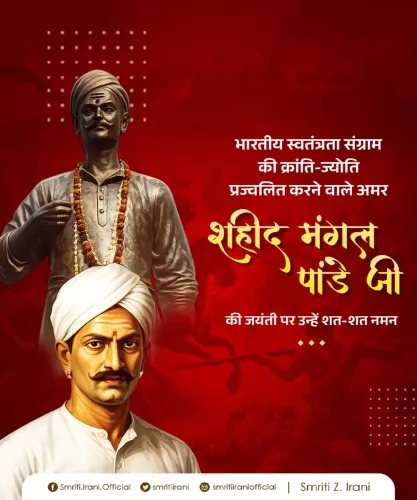
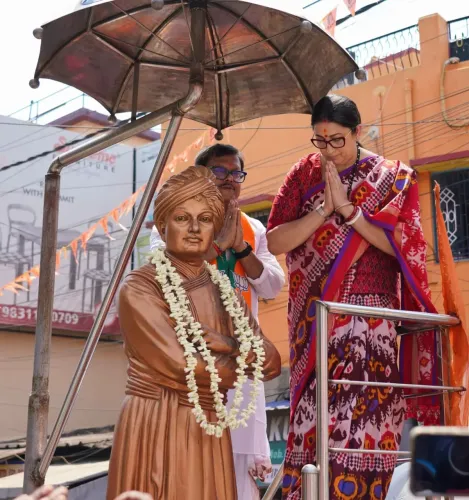
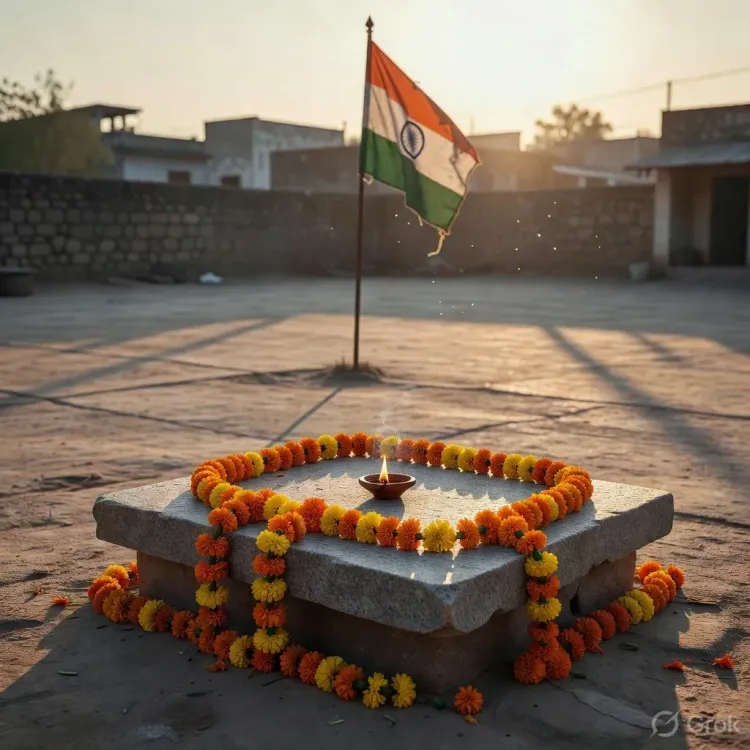
BJP leader Smriti Irani marked Ballia Balidan Diwas by paying homage to the freedom fighters of Ballia, Uttar Pradesh, who under Chittu Pandey's leadership briefly established self-rule during the 1942 Quit India Movement — one of colonial India's most defiant local uprisings.
Key Takeaways
Smriti Irani paid tribute on Ballia Balidan Diwas , observed annually in mid-August to mark the 1942 uprising in Ballia, Uttar Pradesh.
The Quit India Movement was launched on 8 August 1942 at the All India Congress Committee session in Bombay.
Chittu Pandey led Ballia residents in briefly establishing parallel governance during the movement, making the district a symbol of local resistance.
Irani described Ballia as the 'veer dharti' (heroic soil) and honoured fighters who showed 'remarkable courage and sacrifice for the motherland.' Indian political leaders across parties regularly mark Quit India Movement anniversaries, but Ballia holds a distinct place as a site of concrete, localised defiance.
On Ballia Balidan Diwas, BJP leader Smriti Irani bowed to the memory of the freedom fighters who turned the district of Ballia in eastern Uttar Pradesh into a crucible of resistance during the 1942 Quit India Movement — a moment when ordinary Indians chose extraordinary sacrifice over submission.
In her post, Irani paid homage to the 'veer dharti' (heroic soil) of Ballia, writing: 'I bow to the immortal revolutionaries and freedom fighters who displayed remarkable courage and sacrifice for the liberation of the motherland.' She singled out Chittu Pandey, whose leadership during the movement has made him an enduring symbol of local resistance.
Ballia's Brief but Blazing Rebellion
The Quit India Movement was formally launched on 8 August 1942 at the All India Congress Committee session in Bombay, with a clarion call for the British to leave India immediately. What followed across the country was a wave of civil defiance — and Ballia became one of its most vivid flashpoints.
As British administrative authority buckled under the pressure of mass protest, residents of Ballia — led by Chittu Pandey — briefly established parallel governance in the district, a feat that earned Ballia the informal title of the first district to achieve 'independence' during the movement. That act of collective defiance is what Ballia Balidan Diwas commemorates each year in mid-August.
A Tribute Rooted in a Living Tradition
Irani's tribute is part of a well-established pattern among Indian political leaders of all parties — marking Quit India Movement anniversaries to reinforce themes of nationalism and sacrifice. But Ballia carries a specificity that lifts it beyond routine commemoration: it is one of the few places in India where the 1942 uprising produced a tangible, if brief, transfer of administrative control from colonial to local hands.
Chittu Pandey's name, invoked by Irani, remains central to this memory — a reminder that the independence movement was not only shaped by national figures but by local leaders whose courage altered the course of events on the ground.
As India marks another year of remembrance, Ballia's story endures as proof that the impulse for freedom ran deepest not in capital cities, but in the soil of its towns and villages.
Point of View
Drawing a direct line between 1942-era sacrifice and contemporary nationalism. Singling out Chittu Pandey — a locally revered but nationally under-celebrated figure — signals an intent to regionalise that narrative and connect with eastern Uttar Pradesh's political memory. In a state as electorally significant as UP, commemorating district-level heroes is rarely just symbolic; it is also a quiet act of political geography.
NationPress
3 Oct 2026
Frequently Asked Questions
What is Ballia Balidan Diwas?
Ballia Balidan Diwas is observed annually in mid-August to commemorate the role of Ballia district in the 1942 Quit India Movement, when residents under Chittu Pandey's leadership briefly established parallel governance after British authority collapsed locally.
Who was Chittu Pandey?
Chittu Pandey was a freedom fighter from Ballia, Uttar Pradesh, who assumed local leadership during the 1942 Quit India Movement and is credited with helping the district briefly achieve self-rule during the uprising.
When was the Quit India Movement launched?
The Quit India Movement was formally launched on 8 August 1942 at the All India Congress Committee session in Bombay, calling for an immediate end to British colonial rule in India.
Why is Ballia significant in India's independence history?
Ballia is historically significant because during the 1942 Quit India Movement, its residents briefly expelled British administrative authority and established local self-governance — one of the most concrete acts of defiance during the uprising.
What did Smriti Irani say on Ballia Balidan Diwas?
Smriti Irani paid tribute to the 'heroic soil' of Ballia and offered homage to the immortal revolutionaries who showed 'remarkable courage and sacrifice for the liberation of the motherland,' specifically honouring Chittu Pandey's leadership.