Smriti Irani Pays Tribute to Swami Vivekananda on Nirvan Diwas
Synopsis
BJP leader Smriti Irani on 4 July 2026 honoured Swami Vivekananda on his Nirvan Diwas, saying his message of self-reliance and cultural pride remains the most fitting path for India's progress and will inspire generations to come.
Key Takeaways
BJP leader Smriti Irani posted a tribute to Swami Vivekananda on his death anniversary, 4 July 2026 .
Irani credited Vivekananda with restoring the glory of Sanatan Dharma and Indian culture through his life's work.
She described his message of self-reliance and self-confidence as the most appropriate path for national progress.
The Government of India declared 12 January — Vivekananda's birth anniversary — as National Youth Day in 1984 .
The Atmanirbhar Bharat Abhiyan (2020) echoes Vivekananda's philosophy of self-reliance as a national development goal.
Vivekananda passed away on 4 July 1902 at Belur Math, West Bengal , aged 39.
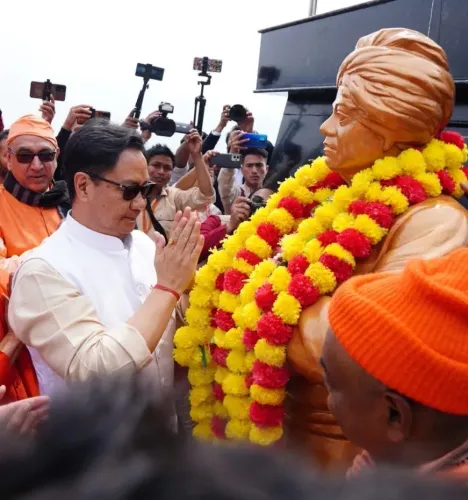
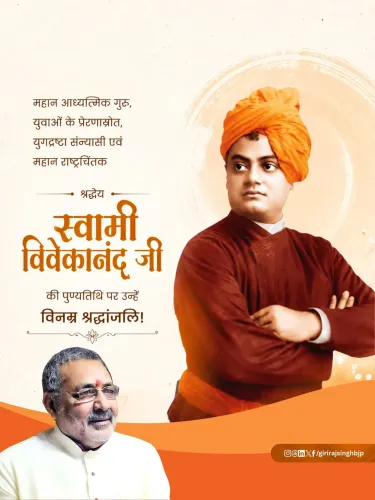
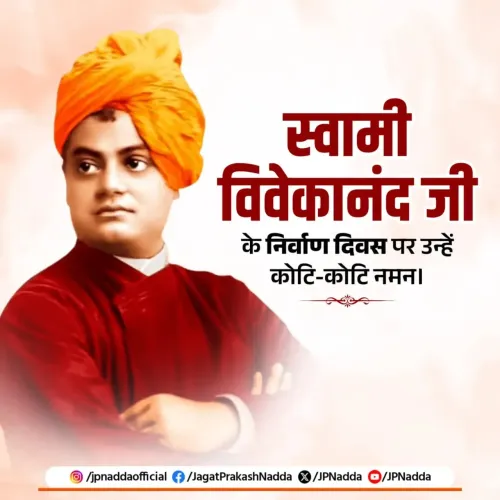
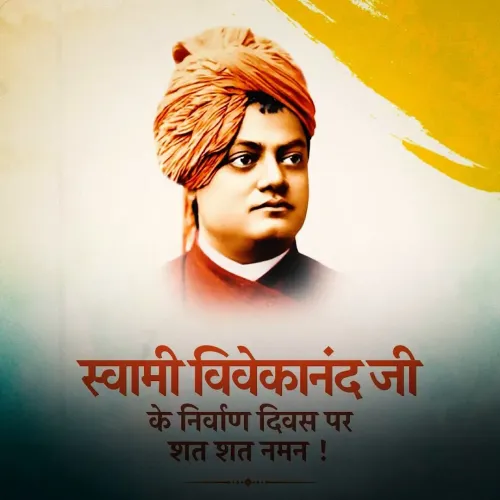
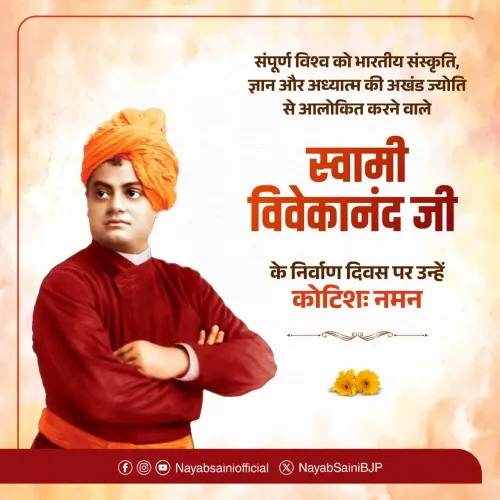
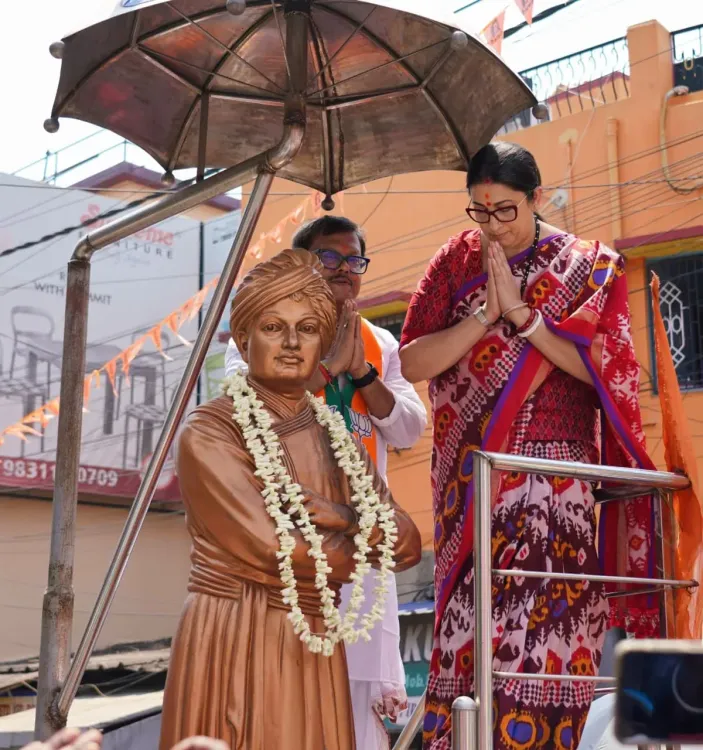
BJP leader and former Union Minister Smriti Irani on Saturday, 4 July 2026, paid tribute to Swami Vivekananda on his death anniversary, known as Nirvan Diwas, honouring the 19th-century monk's legacy of cultural revival, religious consciousness, and youth-led nation-building.
In a post on X, Irani wrote — translated from Hindi — that 'Shraddhey Swami Vivekananda ji' ('Revered Swami Vivekananda') had, through his lifelong efforts, restored the glory of Maa Bharati, Sanatan Dharma, and Indian culture. She noted that his message of self-reliance and self-confidence remains 'the most appropriate path for the progress of our nation,' and that his teachings, philosophy, and 'Himalayan personality' would continue to inspire generations of Indians.
Context
Swami Vivekananda was born on 12 January 1863 in Calcutta and passed away on 4 July 1902 at Belur Math, West Bengal, aged 39. His 1893 address at the Parliament of the World's Religions in Chicago brought global attention to Vedanta and Yoga, and his emphasis on self-confidence as the foundation of individual and national strength made him an enduring symbol of cultural pride in India.
The Government of India declared 12 January — Vivekananda's birth anniversary — as National Youth Day in 1984, recognising his vision of youth as the primary engine of national transformation. His death anniversary on 4 July is observed across the country, particularly by cultural and religious organisations.
Policy Backdrop
Irani's tribute draws an explicit line between Vivekananda's philosophy of atmanirbharta (self-reliance) and contemporary national policy. The Atmanirbhar Bharat Abhiyan, launched in 2020, adopted self-reliance as a central development goal, a framing that BJP leaders have consistently rooted in Vivekananda's thought.
The Bharatiya Janata Party has, since the 1990s, regularly invoked Vivekananda to connect cultural nationalism with youth mobilisation and economic self-sufficiency. His ideas have appeared in party communications, ministerial speeches, and policy preambles as a philosophical anchor for the ruling dispensation's governance narrative.
Stakeholders and Impact
Vivekananda's legacy resonates most directly with youth organisations, cultural bodies such as the Ramakrishna Mission, and educational institutions that draw on his pedagogical philosophy. His teachings on character-building and service have shaped curricula and youth programmes across India for over a century.
For BJP leaders like Irani — who served as Union Minister of Women and Child Development and Union Minister of Minority Affairs — citing Vivekananda on Nirvan Diwas also reinforces the party's positioning of cultural heritage as inseparable from national development goals, particularly in outreach to young voters and cultural organisations.
What's Next
Commemorative events marking Vivekananda's death anniversary are typically held at Belur Math and Ramakrishna Mission centres nationwide. Larger, state-sponsored observances are traditionally concentrated around National Youth Day on 12 January, when youth-focused scheme launches and ministerial addresses are common. Any parliamentary or ministerial statements linking Vivekananda's philosophy to active policy initiatives in the coming months will be worth watching.
Point of View
Drawing a direct thread from 19th-century philosophy to the Atmanirbhar Bharat framework. The post is ceremonial in form but ideological in function, reinforcing the party's claim to Vivekananda's legacy as both a spiritual and developmental touchstone. Coming from a senior leader who held portfolios in women's welfare and minority affairs, the emphasis on youth as the 'foundation of nation-building' also signals continued investment in that demographic as a political constituency. The tribute is consistent with a broader arc in which historical spiritual figures are positioned as validators of present-day policy direction.
NationPress
3 Oct 2026
Frequently Asked Questions
Why is 4 July significant for Swami Vivekananda?
4 July marks Swami Vivekananda's death anniversary, observed as Nirvan Diwas. He passed away on 4 July 1902 at Belur Math, West Bengal, aged 39.
What did Smriti Irani say about Swami Vivekananda?
Smriti Irani said Vivekananda restored the glory of Sanatan Dharma and Indian culture, and that his message of self-reliance and self-confidence remains the most appropriate path for India's national progress.
What is National Youth Day and why is it linked to Vivekananda?
National Youth Day is observed on 12 January, Vivekananda's birth anniversary, as declared by the Government of India in 1984, recognising his vision of youth as the engine of national transformation.
How does Vivekananda's philosophy connect to Atmanirbhar Bharat?
The Atmanirbhar Bharat Abhiyan, launched in 2020, centres on self-reliance as a national goal — a concept BJP leaders trace directly to Vivekananda's teachings on self-confidence and individual strength.
Who is Smriti Irani?
Smriti Irani is a senior BJP leader and former Union Minister who held the portfolios of Women and Child Development and Minority Affairs in the Government of India.