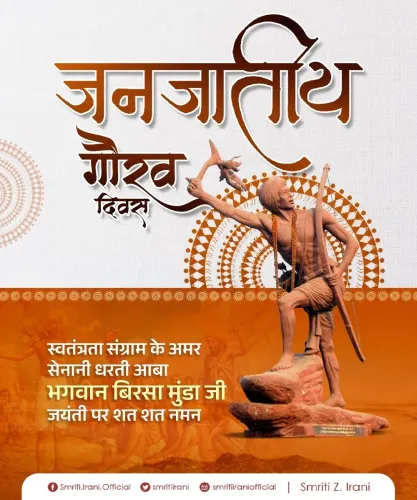
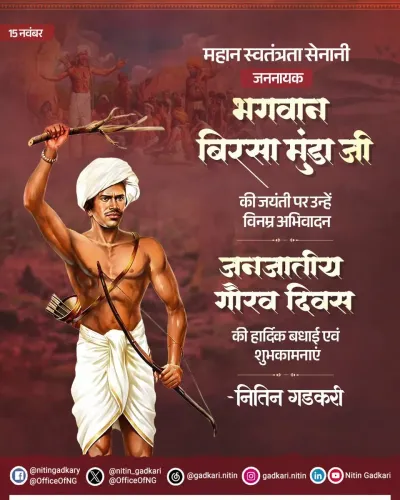
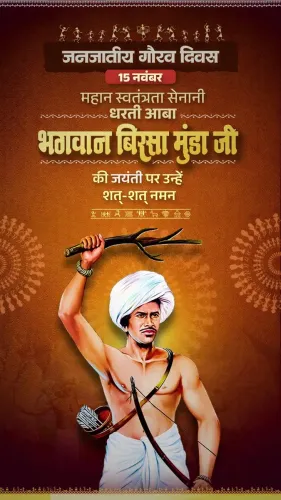
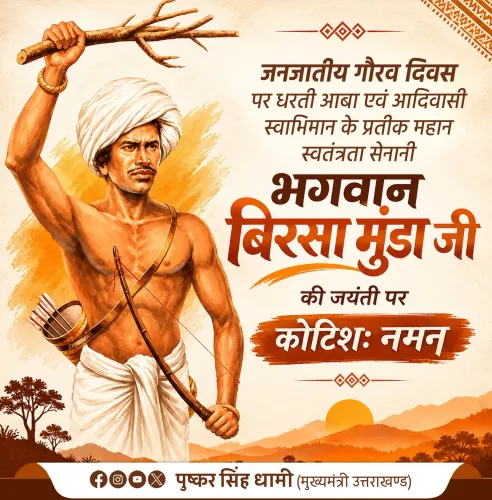
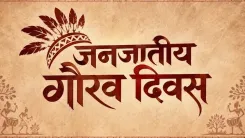
Smriti Irani marks Janjatiya Gaurav Divas, hails tribal freedom fighters
Synopsis
BJP leader Smriti Irani marked Janjatiya Gaurav Divas on 15 November 2026, honouring tribal freedom fighters Birsa Munda, Veer Narayan Singh, and Gundadhur at the Dharamjaigarh, Chhattisgarh observance attended by BJP National President Nitin Nabin and Chief Minister Vishnu Deo Sai.
Key Takeaways
Janjatiya Gaurav Divas is observed on 15 November every year — the birth anniversary of tribal leader Birsa Munda , declared a national observance by the Modi government in 2021 .
The 2026 state-level event was held in Dharamjaigarh, Chhattisgarh , attended by BJP National President Nitin Nabin and CM Vishnu Deo Sai .
Irani's tribute named three tribal freedom fighters: Birsa Munda , Shaheed Veer Narayan Singh (a 1857 martyr from Chhattisgarh), and Veer Gundadhur .
Birsa Munda led the Ulgulan movement against British colonial rule in the Chota Nagpur region in the late 19th century.
The annual observance reflects the BJP-led government's emphasis on integrating tribal histories into India's mainstream independence narrative.
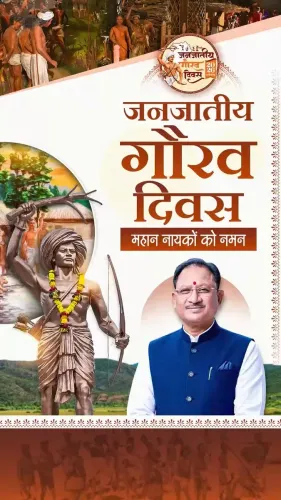
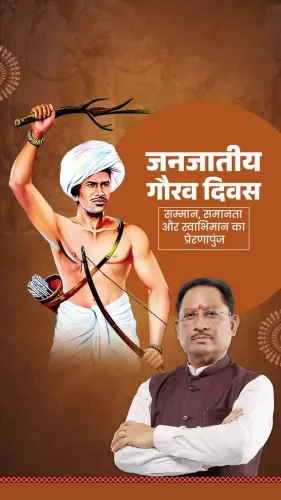
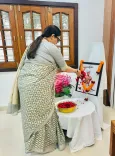
Every year on 15 November, the birth anniversary of Birsa Munda stops being just a date on a calendar — it becomes a reckoning with an entire chapter of India's freedom struggle that textbooks once barely acknowledged. BJP leader Smriti Irani marked Janjatiya Gaurav Divas 2026 with a tribute on X, spotlighting the state-level observance held in Dharamjaigarh, Chhattisgarh, where the courage and sacrifice of India's tribal freedom fighters was formally commemorated.
Irani's post, written in Hindi, notes that the history of India's independence movement stands witness to the bravery, struggle, and sacrifice of tribal heroes — 'भारत के स्वतंत्रता संग्राम में जनजातीय वीरों के साहस, संघर्ष और बलिदान का इतिहास साक्षी रहा है' ('The history of India's freedom struggle bears witness to the courage, sacrifice, and valour of tribal warriors'). She adds that it is to give this 'glorious heritage a national identity' that Prime Minister Narendra Modi's government designated the day as Janjatiya Gaurav Divas.
Dharamjaigarh at the centre of the 2026 observance
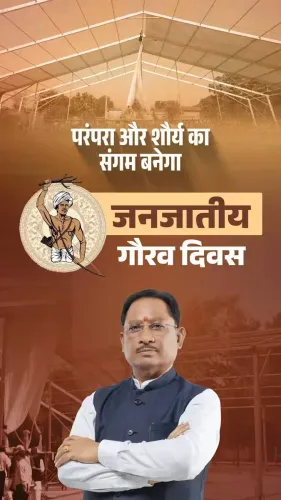
The 2026 state-level programme was held in Dharamjaigarh, a town in Chhattisgarh's Raigarh district with a significant tribal population. Irani noted that BJP National President Nitin Nabin and Chief Minister Vishnu Deo Sai were present at the event, lending it both national party weight and the authority of the state government.
Chhattisgarh is among India's states with the highest proportion of Scheduled Tribe communities — making it a symbolically charged venue for an observance designed to weave tribal histories into the mainstream national narrative. The gathering was described as an occasion to remember the contributions of 'countless heroes' of the tribal freedom movement.
Birsa Munda, Veer Narayan Singh, and Gundadhur — three names, one legacy
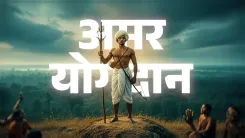
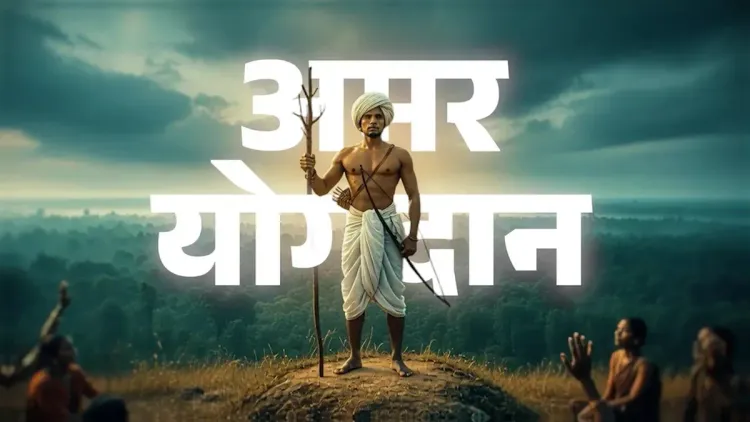
Irani's tribute named three figures in particular. Birsa Munda, born on 15 November 1875, led the Ulgulan ('Great Tumult') movement against British colonial rule and landlord exploitation in the Chota Nagpur region, becoming a defining symbol of Adivasi resistance. Shaheed Veer Narayan Singh was a tribal martyr from Chhattisgarh who participated in the 1857 uprising against the British. Veer Gundadhur, a Bastar leader, led the Bhumkal rebellion of 1910 — another largely unsung chapter of anti-colonial resistance.
Irani wrote that the 'valour and self-respect' of these leaders — 'शौर्य और स्वाभिमान' — will continue to inspire generations to come, and extended greetings to all on the occasion of Janjatiya Gaurav Divas.
From 2021 declaration to annual national observance
The Government of India formally declared 15 November as Janjatiya Gaurav Divas in 2021, under Prime Minister Modi's administration. The move was framed as a corrective to decades of under-representation of tribal contributions in the official telling of India's independence movement. Since then, annual events have been organised in states with substantial Adivasi populations — using the occasion to highlight both historical figures and contemporary development initiatives aimed at tribal communities.
Point of View
A state with deep Adivasi roots and competitive electoral significance, as the venue for the 2026 observance is consistent with the party's strategy of converting historical recognition into political outreach. Senior leaders like Smriti Irani amplifying the event on social media signals that the narrative is intended to reach beyond the event hall. Whether the symbolic investment translates into measurable policy outcomes for tribal communities remains the question the observance must eventually answer.
NationPress
15 Nov 2026
Frequently Asked Questions
What is Janjatiya Gaurav Divas and why is it celebrated on 15 November?
Janjatiya Gaurav Divas is a national observance celebrated on 15 November — the birth anniversary of Birsa Munda , the 19th-century tribal leader who led the Ulgulan uprising against British rule. The Government of India declared the day in 2021 to honour the contributions of tribal communities to the independence movement.
Who was Birsa Munda?
Birsa Munda , born on 15 November 1875 , was a tribal leader from the Munda community who led the Ulgulan ('Great Tumult') movement against British colonial rule and landlord exploitation in the Chota Nagpur region of present-day Jharkhand. He is revered as a folk hero and freedom fighter across tribal communities in central and eastern India.
Where was Janjatiya Gaurav Divas 2026 celebrated?
The 2026 state-level observance was held in Dharamjaigarh, Chhattisgarh , with BJP National President Nitin Nabin and Chief Minister Vishnu Deo Sai in attendance.
Who were Veer Narayan Singh and Veer Gundadhur?
Veer Narayan Singh was a tribal martyr from Chhattisgarh who participated in the 1857 uprising against British rule. Veer Gundadhur was a Bastar leader who led the Bhumkal rebellion of 1910 — both are celebrated as symbols of Adivasi resistance to colonial authority.
What did Smriti Irani say about Janjatiya Gaurav Divas 2026?
Smriti Irani posted a tribute on X saying that India's freedom struggle bears witness to the courage, sacrifice, and valour of tribal warriors, and that the day was declared by PM Modi 's government to give this heritage a national identity. She specifically named Birsa Munda, Veer Narayan Singh, and Veer Gundadhur as leaders whose valour will inspire generations.