Chirag Paswan pays tribute to Birsa Munda on Janjatiya Gaurav Diwas
Synopsis
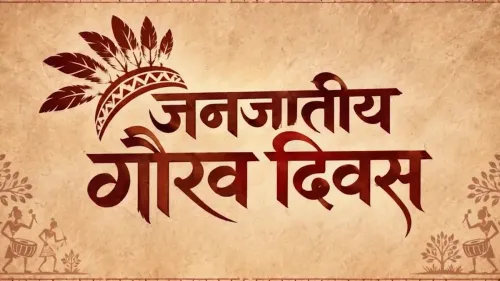
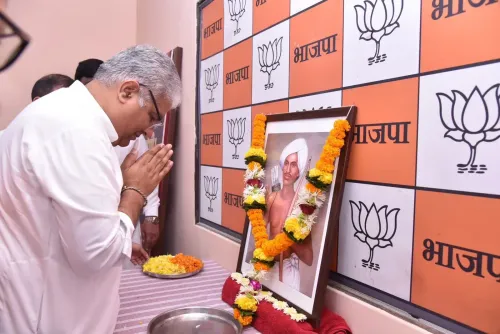
Union Minister Chirag Paswan marked Janjatiya Gaurav Diwas on 15 November 2026 by paying tribute to Birsa Munda — the revered tribal leader known as Dharti Aaba — and extending wishes to India's tribal communities on the national observance first instituted in 2021.
Key Takeaways
Union Food Processing Minister Chirag Paswan posted a tribute on 15 November 2026 marking the birth anniversary of Birsa Munda and Janjatiya Gaurav Diwas .
Birsa Munda , born 15 November 1875 in present-day Jharkhand , led the Ulgulan uprising against British land-dispossession policies and is revered as Dharti Aaba by Adivasi communities.
The Government of India declared 15 November as Janjatiya Gaurav Diwas in 2021 to honour Scheduled Tribe heritage and tribal contributions to India's freedom struggle.
The observance is part of a wider central-government effort to recognise tribal leaders' roles in anti-colonial resistance across states including Jharkhand, Odisha, Chhattisgarh , and Madhya Pradesh .
Paswan is national president of the Lok Janshakti Party (Ram Vilas) and a member of the NDA coalition government.
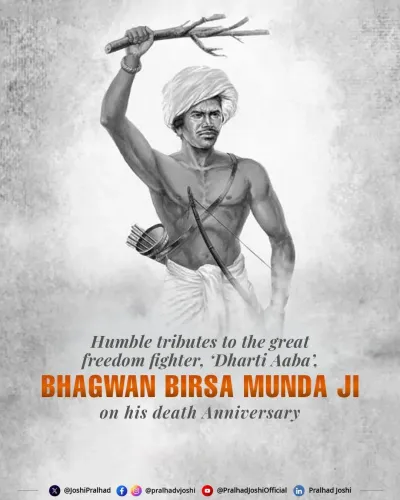
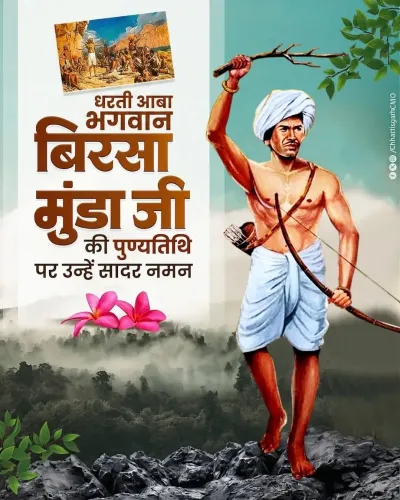
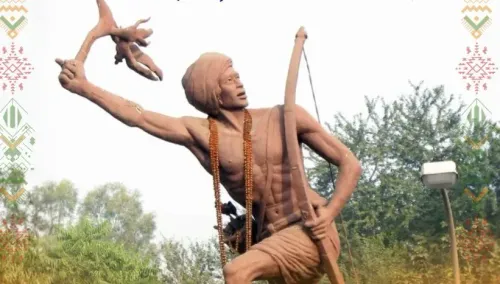
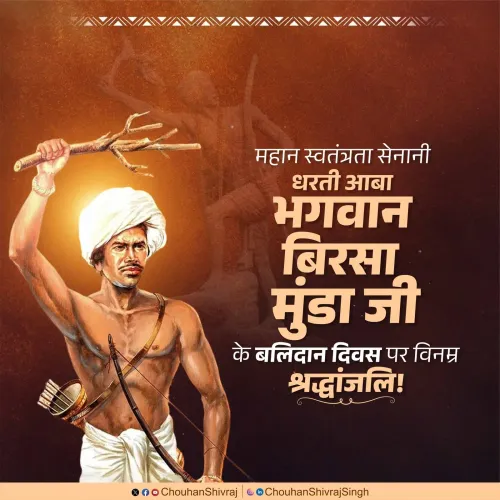
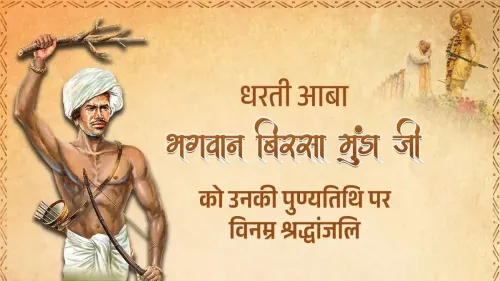
On the birth anniversary of Birsa Munda — the 19th-century tribal leader whom generations of Adivasis call Dharti Aaba (Father of the Earth) — Union Food Processing Minister Chirag Paswan offered his salutations and extended warm wishes to the country on Janjatiya Gaurav Diwas, 15 November 2026.
Posting on X in Hindi, Minister Paswan wrote: 'Dharti Aaba Bhagwan Birsa Munda ji ki jayanti par unhe koti-koti naman tatha aap sabhi ko Janjatiya Gaurav Diwas ki hardik shubhkamnayein' — 'On the birth anniversary of Dharti Aaba Bhagwan Birsa Munda, I offer him countless salutations and extend heartfelt wishes of Janjatiya Gaurav Diwas to all of you.'
Who was Dharti Aaba Birsa Munda
Birsa Munda was born on 15 November 1875 in present-day Jharkhand. He led the Ulgulan — meaning 'the great tumult' — a fierce uprising of the Munda people against British land-dispossession policies in the late 1890s. Revered as a spiritual leader, reformer, and freedom fighter, he remains a towering symbol of Adivasi resistance and pride across India's tribal belt.
How Janjatiya Gaurav Diwas was born
The Government of India formally declared 15 November as Janjatiya Gaurav Diwas in 2021, recognising Birsa Munda's birth anniversary as a national day to honour Scheduled Tribe heritage and highlight the contribution of tribal communities to India's anti-colonial struggle. The observance has since become a fixture in the government calendar, with ministers, chief ministers, and the President joining in tributes each year.
The annual commemoration sits within a broader central-government effort to foreground tribal leaders' roles in India's freedom movement — a push that spans state events, cultural programmes, and welfare announcements across states with significant Adivasi populations, from Jharkhand and Odisha to Chhattisgarh and Madhya Pradesh.
As tributes pour in from across the political spectrum today, the day also shines a light on the continuing policy conversation around Scheduled Tribe welfare, land rights, and cultural recognition — a conversation Birsa Munda's Ulgulan set in motion more than a century ago.
Point of View
Elevating Birsa Munda to the same commemorative tier as other national icons. How that symbolic recognition translates into tangible tribal-welfare outcomes remains the sharper question observers are watching.
NationPress
15 Nov 2026
Frequently Asked Questions
What is Janjatiya Gaurav Diwas and why is it celebrated on 15 November?
Janjatiya Gaurav Diwas is a national observance held every year on 15 November to mark the birth anniversary of tribal leader Birsa Munda and recognise the contributions of Scheduled Tribe communities to India's history. The Government of India formally instituted it in 2021 .
Who was Birsa Munda and why is he called Dharti Aaba?
Birsa Munda was a 19th-century tribal leader born on 15 November 1875 in present-day Jharkhand . He led the Ulgulan — a mass uprising against British land-dispossession policies — and is revered as a spiritual and political icon. Dharti Aaba means 'Father of the Earth' in the Munda language.
What did Chirag Paswan say on Janjatiya Gaurav Diwas 2026?
Chirag Paswan posted on X offering 'countless salutations' to Birsa Munda on his birth anniversary and extending 'heartfelt wishes of Janjatiya Gaurav Diwas' to all citizens of India.
When was Janjatiya Gaurav Diwas officially declared by the Indian government?
The Government of India declared 15 November as Janjatiya Gaurav Diwas in 2021 , coinciding with Birsa Munda's birth anniversary.
What was the Ulgulan movement led by Birsa Munda?
The Ulgulan , meaning 'the great tumult', was a late-19th-century armed uprising led by Birsa Munda among the Munda tribal community in present-day Jharkhand against British land-dispossession policies and the diku (outsider) system that displaced Adivasi communities from their traditional lands.