PM Modi Slams Trinamool: Blocking ED Probe 'Anti-Democratic'
Synopsis
PM Modi at Haripal rally accused Trinamool Congress of systematically obstructing ED, CBI, and central agencies across multiple cases — from I-PAC raids to the RG Kar murder probe — citing Supreme Court rebukes as proof that West Bengal's state government has repeatedly undermined democratic and judicial processes.
Key Takeaways
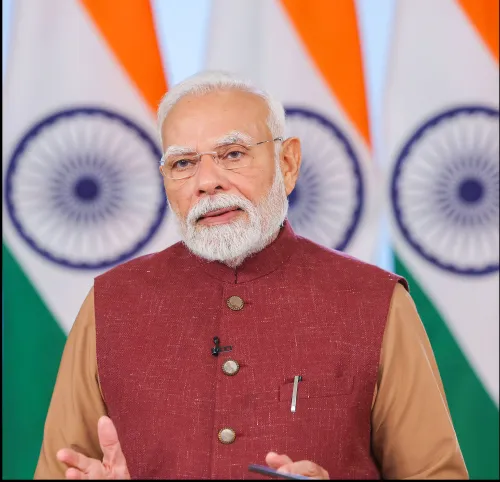
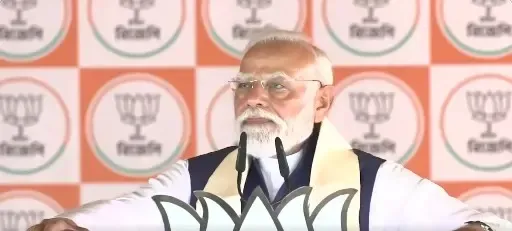
PM Modi addressed a campaign rally at Haripal, Hooghly district, West Bengal on April 26 , launching a multi-point attack on Trinamool Congress .
Modi accused the TMC-led state government of obstructing ED raids on I-PAC and the residence of co-founder Pratik Jain , calling it anti-democratic.
The Supreme Court issued strict orders in the I-PAC ED case and acknowledged that the state's obstruction was detrimental to democracy.
Modi cited the August 2024 RG Kar rape-murder case as another instance where the state allegedly interfered with a CBI probe ordered by the Calcutta High Court .
The 2023 panchayat election violence and the multi-crore school jobs scam were also flagged as cases where courts had to intervene due to alleged state government obstruction.
Modi declared that Trinamool Congress had lost all credibility , framing judicial interventions as proof of governance failure ahead of upcoming West Bengal elections .
Prime Minister Narendra Modi launched a fierce attack on Trinamool Congress (TMC) on Sunday, April 26, accusing the West Bengal state government of deliberately obstructing central investigative agencies and undermining democratic processes. Addressing a campaign rally at Haripal in Hooghly district, Modi cited multiple instances — including the Enforcement Directorate (ED) raids on the Indian Political Action Committee (I-PAC) — where he alleged the state machinery attempted to derail federal investigations.
Modi's Direct Attack on TMC Over ED Raid Obstruction
Without naming West Bengal Chief Minister Mamata Banerjee or I-PAC directly, the Prime Minister made unmistakable references to the ED raids conducted at the I-PAC office and the residence of I-PAC co-founder Pratik Jain in Kolkata earlier this year. The raids had triggered a dramatic standoff between state police and central agency officials.
"Trinamool Congress and the state government tried to create hindrances in the process of investigation by a central investigative agency. There were attempts to destroy the evidence," Modi declared before the rally crowd.
He further noted that the Supreme Court had recently intervened with strict orders in the matter, and that the apex court itself acknowledged the obstruction as harmful to democracy. "The apex court's order was a tight slap for the state government and Trinamool Congress," Modi said.
RG Kar Horror and CBI Probe Cited as Pattern of Interference
The Prime Minister also invoked the deeply disturbing rape and murder of a woman junior doctor at the state-run R.G. Kar Medical College and Hospital in Kolkata in August 2024. The case had triggered nationwide protests and a Calcutta High Court order directing the Central Bureau of Investigation (CBI) to take over the probe.
"Even in this case there was an attempt on part of the state administration to destroy evidence and create hindrance for a smooth probe by a central agency," Modi said, drawing a pattern of alleged interference across multiple high-profile cases.
The RG Kar case remains one of the most politically charged incidents in recent West Bengal history, with the state government facing sustained criticism over its initial handling of the crime scene and subsequent investigation.
2023 Panchayat Violence and School Jobs Scam Also Flagged
Modi further cited the 2023 West Bengal panchayat elections, which were marred by widespread violence and multiple deaths, as another example of state failure. He noted that courts had to order deployment of central security forces after losing confidence in the state administration's ability to ensure free and fair polling.
"Have you seen what happened in 2023? The court felt that the government could not take on the responsibility of security. So the court ordered the deployment of central forces," he said.
On the multi-crore cash-for-school jobs scam — one of West Bengal's biggest corruption controversies involving alleged large-scale irregularities in teacher and non-teaching staff recruitment — Modi accused the state of neither conducting an impartial internal probe nor facilitating a central agency investigation.
"A Minister in the Trinamool Congress Cabinet ruined the future of thousands of youth. If the state government was sensitive, it would have investigated the matter impartially. But the court had to intervene in the matter and order for the central agency probe. The Trinamool Congress had lost all its credibility," Modi said sharply.
Deeper Pattern: Courts Repeatedly Overriding West Bengal Government
What makes Modi's speech politically significant is the consistent thread running through all cited examples: judicial intervention as a corrective to alleged state-level obstruction. In the I-PAC ED case, the RG Kar murder probe, the school jobs scam, and the panchayat election violence — each instance saw either the Supreme Court or Calcutta High Court step in to override or bypass the state government's authority.
Critics of the TMC government argue this pattern reflects a systemic erosion of institutional independence in West Bengal. Supporters of Mamata Banerjee, however, maintain that the central agencies are being weaponised by the BJP-led Union government ahead of elections to destabilise opposition-ruled states — a charge that has also been raised by other non-BJP state governments.
Notably, the I-PAC is a political consultancy firm that has worked with multiple opposition parties, making the ED action particularly politically sensitive. The standoff during the raids — where state police were reported to have blocked ED officials — drew national attention and eventually reached the Supreme Court.
Electoral Context and What Comes Next
Modi's rally at Haripal, Hooghly is part of the BJP's intensified campaign in West Bengal ahead of the upcoming assembly elections. The Hooghly district has historically been a competitive zone between the BJP and TMC.
By invoking court orders, central agency actions, and high-profile criminal cases in a single speech, the Prime Minister appears to be constructing a unified narrative of governance failure and democratic subversion against the Trinamool Congress — a strategy likely to dominate BJP's Bengal campaign messaging in the coming weeks.
With the Supreme Court's orders on the I-PAC ED case still reverberating and the RG Kar CBI probe ongoing, the political and legal battles in West Bengal are far from over. The outcomes of these investigations could significantly shape voter sentiment in one of India's most electorally crucial states.
Point of View
The Calcutta High Court, and the Election Commission all end up correcting the same state administration across education, law enforcement, elections, and criminal justice — it stops being coincidence and becomes a governance crisis. The irony is stark: a party that built its identity on fighting central overreach now stands accused by the nation's highest courts of being the very obstacle to accountability. Whether voters in West Bengal see this as BJP's political offensive or a genuine accountability reckoning will define the next election.
NationPress
28 Sept 2026
Frequently Asked Questions
What did PM Modi say about Trinamool Congress and the ED raids?
PM Modi accused the Trinamool Congress-led West Bengal government of obstructing ED raids on I-PAC and attempting to destroy evidence. He noted that the Supreme Court had issued strict orders in the matter and acknowledged the obstruction as harmful to democracy.
What is the I-PAC ED raid controversy in West Bengal?
The Enforcement Directorate conducted raids on the office of the Indian Political Action Committee (I-PAC) and the residence of its co-founder Pratik Jain in Kolkata. The operation triggered a standoff reportedly involving state police, which eventually reached the Supreme Court.
What is the RG Kar Medical College case Modi referred to?
Modi referenced the rape and murder of a woman junior doctor at R.G. Kar Medical College and Hospital in Kolkata in August 2024. The Calcutta High Court ordered the CBI to take over the probe after allegations that the state administration attempted to interfere with evidence.
What is the West Bengal school jobs scam?
The school jobs scam involves alleged large-scale irregularities in the recruitment of teachers and non-teaching staff in West Bengal government schools, with a TMC cabinet minister among those implicated. Courts ordered central agency investigation after the state government was accused of failing to probe the matter impartially.
Why did courts order central forces for West Bengal panchayat elections 2023?
The 2023 West Bengal panchayat elections were marred by widespread violence and deaths, prompting courts to lose confidence in the state government's ability to maintain security. Judicial orders mandated the deployment of central security forces to oversee the polling process.