Ebola outbreak spreads to 6th province in DR Congo, cases cross 4,600
Synopsis
The DRC's Ebola outbreak caused by the rare Bundibugyo strain has reached a sixth province with 4,665 cases and a 46.8% fatality rate — and there is no licensed vaccine for this strain. Africa CDC is now pushing for emergency deployment of the Zaire-strain Ervebo vaccine on the basis of potential cross-protection, a high-stakes gamble that could set a new precedent in outbreak response.
Key Takeaways
The Ebola outbreak in the DRC has spread to a sixth province , with 4,665 confirmed cases as of 14 August .
2,184 deaths recorded; case fatality rate stands at 46.8% , with 965 recoveries.
Affected provinces: Bas-Uele , Haut-Uele , Ituri , North Kivu , South Kivu , and Tshopo — with Ituri as the epicentre.
The outbreak is caused by the Bundibugyo ebolavirus , for which no licensed vaccine exists.
The DRC has requested 100,000 doses of the Ervebo vaccine, approved for the Zaire strain, for potential cross-protection use.
Africa CDC Director-General Jean Kaseya warned the outbreak 'risks becoming the deadliest the country has faced.'
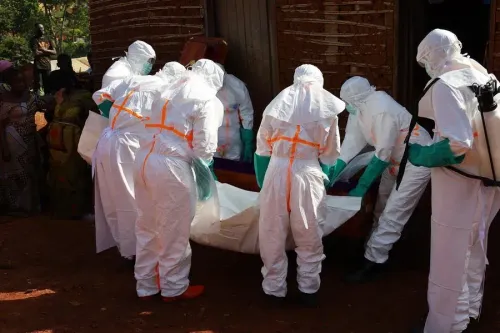
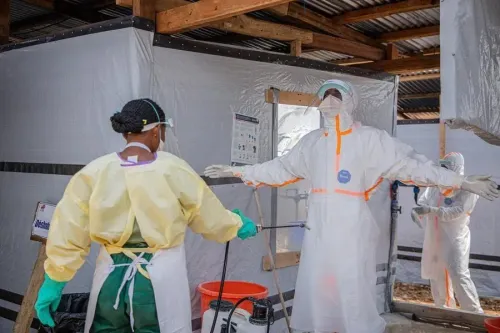
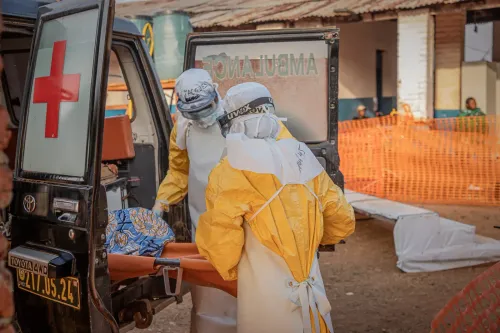
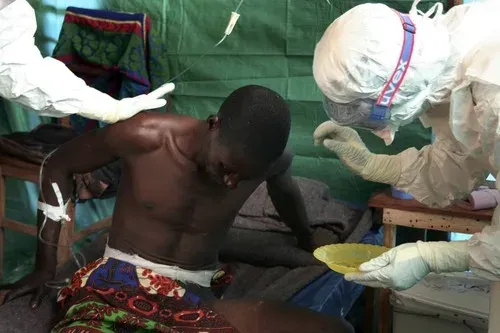
The Ebola outbreak in the Democratic Republic of the Congo (DRC) has spread to a sixth province, with confirmed cases climbing to 4,665 as of 14 August, the country's public health authorities announced. The expansion marks a significant escalation in one of the DRC's most serious Ebola emergencies in recent years.
New Province Affected
The Buta health zone in the northern province of Bas-Uele has been added to the list of affected areas, bringing the total number of affected health zones across the country to 54. The outbreak now spans six provinces — Bas-Uele, Haut-Uele, Ituri, North Kivu, South Kivu, and Tshopo — with the northeastern province of Ituri remaining the primary epicentre.
Death Toll and Case Fatality Rate
A total of 2,184 deaths have been recorded among confirmed cases, placing the overall case fatality rate at 46.8%. Meanwhile, 965 people have recovered since the outbreak was declared. The DRC government first declared this Ebola outbreak — caused by the Bundibugyo ebolavirus — on 15 May.
Vaccine Push Amid Rapid Escalation
The Africa Centres for Disease Control and Prevention (Africa CDC) has called for urgent support to deploy the Ervebo vaccine to help contain what it described as a 'rapidly escalating' outbreak. Africa CDC Director-General Jean Kaseya, speaking during an online briefing on Thursday, called the DRC government's decision to deploy the vaccine 'a big step' in the ongoing response.
The DRC has already submitted a request for 100,000 doses of the Ervebo vaccine to the International Coordinating Group on Vaccine Provision. Kaseya warned that the current emergency 'risks becoming the deadliest the country has faced, and we cannot allow that trajectory to continue.' He said the requested doses would support clinical trials, vaccination of front-line responders, and those in urgent need.
Why the Bundibugyo Strain Complicates the Response
The Bundibugyo ebolavirus is a rare strain for which no licensed vaccines or targeted medical countermeasures currently exist. This absence of approved treatments is a key driver of the disease's rapid spread across parts of the DRC. The Ervebo vaccine — a World Health Organisation (WHO) pre-qualified, single-dose vaccine — was developed for the Zaire Ebola virus strain, which is distinct from Bundibugyo.
Kaseya highlighted Ervebo's potential for cross-protection in the current emergency context, arguing that its deployment is a strategic approach to reduce severe illness and deaths while simultaneously generating evidence needed to guide the broader response. Notably, this is the first time Ervebo is being considered for deployment against the Bundibugyo strain in a large-scale emergency setting.
What Comes Next
With cases spreading across six provinces and a fatality rate approaching 47%, the international health community faces mounting pressure to accelerate both vaccine supply and containment measures. The DRC's request for 100,000 vaccine doses is pending approval from the International Coordinating Group, and the outcome will be closely watched by global health authorities tracking the outbreak's trajectory.
Point of View
Designed for a different Ebola strain, reflects the desperation of the situation as much as scientific confidence in cross-protection. What is missing from the international conversation is accountability for the structural gap: the Bundibugyo strain was first identified in 2007, yet nearly two decades later there is still no approved countermeasure. If this outbreak does become the DRC's deadliest, the failure will not be purely logistical — it will also be a failure of global health investment priorities.
NationPress
29 Sept 2026
Frequently Asked Questions
How many Ebola cases have been confirmed in the DRC?
As of 14 August, the DRC has confirmed 4,665 Ebola cases, with 2,184 deaths and 965 recoveries. The case fatality rate stands at 46.8%.
Which provinces are affected by the Ebola outbreak in DR Congo?
The outbreak spans six provinces: Bas-Uele, Haut-Uele, Ituri, North Kivu, South Kivu, and Tshopo. Ituri remains the primary epicentre, and 54 health zones are currently affected.
What is the Bundibugyo ebolavirus?
The Bundibugyo ebolavirus is a rare strain of Ebola first identified in 2007, for which no licensed vaccine or targeted medical countermeasure currently exists. It is distinct from the more common Zaire strain, which the Ervebo vaccine was designed to combat.
Why is the Ervebo vaccine being considered for a different Ebola strain?
Ervebo is a WHO pre-qualified vaccine for the Zaire Ebola strain, but Africa CDC is advocating its emergency deployment in the DRC due to its potential cross-protection against the Bundibugyo strain. The DRC has requested 100,000 doses to support clinical trials and vaccinate front-line responders while generating evidence on its effectiveness.
When was the current DRC Ebola outbreak declared?
The DRC government declared the Bundibugyo ebolavirus outbreak on 15 May. Since then, it has expanded from its initial epicentre in Ituri to five additional provinces.