DR Congo Ebola outbreak may reach eighth province, 9,066 cases recorded
Synopsis
With 9,066 confirmed cases and a 48.3% fatality rate, the DRC's Ebola crisis is already the country's deadliest on record — and it may now be spreading westward. Two reported cases in Nord-Ubangi Province, far from the eastern epicentre, could mark a dangerous new front in an outbreak that has no strain-specific vaccine and deepening gaps in contact tracing.
Key Takeaways
Two Ebola cases have reportedly been detected in Nord-Ubangi Province , potentially making it the eighth province affected in the DRC.
Former health minister Jean-Jacques Mbungani Mbanda said tests at the National Institute of Biomedical Research in Kinshasa confirmed the infections; official confirmation is pending.
As of 11 October 2026 , the DRC has recorded 9,066 confirmed cases , 4,381 deaths , and a case fatality rate of 48.3% .
The outbreak — caused by the Bundibugyo strain — is the deadliest ever in the DRC and the second-largest globally after the 2014–2016 West Africa epidemic .
WHO Director-General Tedros Adhanom Ghebreyesus warned on 7 October that the epidemic continues to grow in some areas despite slowing in others.
No strain-specific vaccine has been approved; Ervebo is being used under research and compassionate-use protocols for frontline workers.
Two Ebola cases have reportedly been detected in Nord-Ubangi Province in northwestern Democratic Republic of the Congo (DRC), according to a former health minister, raising concerns that the country's devastating outbreak may have spread to an eighth province. The announcement, made on 14 October 2026, comes as the death toll surpasses 4,381 and preparations for a vaccine trial near completion.
What the Former Minister Said
Jean-Jacques Mbungani Mbanda, a former DRC health minister and current member of parliament, stated in a social media post that repeated tests conducted at the National Institute of Biomedical Research in Kinshasa had confirmed the two infections in Nord-Ubangi. He added that the country's health ministry was expected to release an official statement shortly. As of the time of reporting, the cases had not yet been formally announced by health authorities.
Scale of the Outbreak
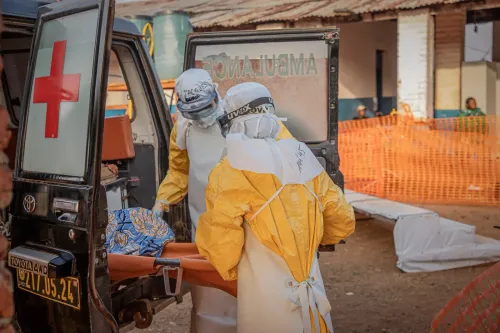
The DRC's Ebola task force released a situation report on Tuesday, 13 October, showing that 9,066 confirmed cases and 4,381 deaths had been recorded as of 11 October, placing the overall case fatality rate at a staggering 48.3%. A total of 2,389 patients have recovered. The outbreak has now affected 65 health zones across seven provinces. The eastern province of Ituri remains the epicentre, accounting for 73.8% of all confirmed cases, while North Kivu Province has recorded the highest case fatality rate at 57.1%.
Mixed Signals From Health Officials
Earlier this month, DRC Health Minister Roger Kamba expressed cautious optimism, noting that the outbreak was becoming increasingly localised, with several affected health zones reporting no new cases for weeks. However, World Health Organisation (WHO) Director-General Tedros Adhanom Ghebreyesus struck a more sobering note on 7 October, warning that while the epidemic was slowing in some areas, it continued to grow in others. He highlighted persistent challenges, including a high proportion of deaths occurring in communities and significant gaps in contact tracing.
The Bundibugyo Strain and the Vaccine Gap
The current outbreak is caused by the Bundibugyo strain of the Ebola virus — making it the deadliest outbreak ever recorded in the DRC and the second-largest globally, surpassed only by the 2014–2016 West Africa epidemic. No vaccine or treatment has yet been specifically approved for this strain. Ervebo, a vaccine approved against the Zaire ebolavirus, is being administered to frontline health workers under research protocols and through compassionate-use arrangements, while clinical trials for a strain-specific treatment remain underway.
What Comes Next
The potential expansion into Nord-Ubangi — a northwestern province geographically distant from the current eastern epicentre — would signal a worrying new trajectory for an outbreak that has already tested the DRC's health infrastructure over many months. Official confirmation from the health ministry is expected imminently, and the WHO's response posture will likely be reassessed depending on whether the Nord-Ubangi cases represent community transmission or isolated importation.
Point of View
Far from the eastern Ituri and North Kivu epicentres, suggesting the virus may be travelling through new vectors rather than fading along existing chains. A 48.3% case fatality rate — nearly one in two confirmed patients dying — is among the highest for any large Ebola outbreak, underscoring how the absence of a Bundibugyo-specific vaccine has left the response exposed. The divergence between the health minister's optimism and the WHO chief's caution reflects a pattern seen in past outbreaks: political pressure to signal control often runs ahead of epidemiological reality. Until contact tracing gaps are closed and community deaths drop sharply, the headline case count will continue to understate true transmission.
NationPress
14 Oct 2026
Frequently Asked Questions
Has Ebola spread to a new province in the DRC?
Two cases have reportedly been detected in Nord-Ubangi Province in northwestern DRC, which would make it the eighth province affected if officially confirmed. As of 14 October 2026, the health ministry had not yet issued a formal announcement.
How severe is the current DRC Ebola outbreak?
As of 11 October 2026, the outbreak has recorded 9,066 confirmed cases, 4,381 deaths, and a case fatality rate of 48.3%. It is the deadliest Ebola outbreak ever recorded in the DRC and the second-largest globally, after the 2014–2016 West Africa epidemic.
Which Ebola strain is responsible for the current DRC outbreak?
The outbreak is caused by the Bundibugyo strain of the Ebola virus, for which no specific vaccine or treatment has been approved. Ervebo, approved for the Zaire strain, is being administered to frontline health workers under research and compassionate-use protocols.
What did the WHO say about the DRC Ebola situation?
WHO Director-General Tedros Adhanom Ghebreyesus warned on 7 October 2026 that while the epidemic was slowing in some areas, it continued to grow in others. He highlighted persistent challenges including community deaths and gaps in contact tracing.
Which province is the epicentre of the DRC Ebola outbreak?
The eastern province of Ituri is the epicentre, accounting for 73.8% of all confirmed cases. North Kivu Province has recorded the highest case fatality rate at 57.1%.