DR Congo Ebola death toll passes 4,000; outbreak easing in some zones
Synopsis
The DRC's Ebola outbreak has claimed 4,018 lives across 8,300 confirmed cases — the deadliest ever on Congolese soil — yet health officials say the epidemic is pulling back from a provincial scale to isolated health zones. MSF warns the true toll is likely higher, and UN officials flag that violence in eastern DRC just destroyed a key patient transit facility, threatening hard-won containment gains.
Key Takeaways
The DRC Ebola outbreak has killed 4,018 people among 8,300 confirmed cases across seven provinces .
The overall case fatality rate stands at 48.4% ; 2,162 patients have recovered.
12 of the 63 affected health zones have reported no new cases for 42 consecutive days .
Health Minister Roger Kamba said the outbreak is now 'concentrated in individual health zones' rather than spreading at provincial level.
Médecins Sans Frontières warned the actual death toll is likely higher due to surveillance and detection gaps.
A patient transit centre at the Kigonze displacement camp in Ituri province was destroyed by fire amid escalating violence, the UN said.
Health authorities in the Democratic Republic of the Congo (DRC) reported on 3 October 2026 that the country's Ebola outbreak is showing signs of localised containment, even as the official death toll crossed 4,000 — making it the deadliest Ebola outbreak ever recorded in the DRC and the second-largest globally. The outbreak was first declared in May.
Key Developments
Official data released on Friday showed that the outbreak has claimed 4,018 lives among 8,300 confirmed cases across seven provinces, yielding an overall case fatality rate of 48.4%. A total of 2,162 patients have recovered. Of the 63 health zones affected since the outbreak began, 12 have now reported no new cases for 42 consecutive days.
What the Government Said
Health Minister Roger Kamba told a press briefing in Kinshasa on Friday that the geographic spread of the outbreak had narrowed significantly. 'We are no longer talking about outbreaks at the provincial level, but outbreaks concentrated in individual health zones,' Kamba said. He added: 'The situation remains highly variable, but we can see that the number of health zones reporting cases has decreased.'
Concerns Over Undercounting
Despite the cautiously positive official signals, international medical charity Médecins Sans Frontières (MSF) warned on Thursday that the actual toll was likely higher than officially reported, citing persistent gaps in disease surveillance and case detection across affected regions. The charity's alert underscores a recurring challenge in DRC Ebola responses — remote geography, limited laboratory capacity, and community mistrust have historically led to significant undercounting.
Violence Undermining the Response
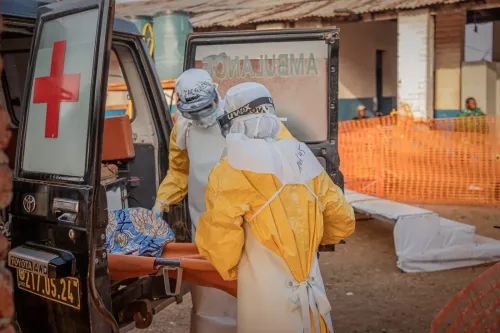
The United Nations flagged a further complication: escalating violence in eastern DRC is actively hampering the Ebola response. A key transit centre for suspected patients was destroyed by fire at the Kigonze displacement camp in Ituri province, severing a critical link in the patient referral chain. The convergence of armed conflict and epidemic has been a defining — and destabilising — feature of this outbreak from the outset.
Historical Scale and What Comes Next
This outbreak now ranks as the second-largest Ebola epidemic ever recorded worldwide, surpassed only by the 2014–2016 West Africa outbreak. The DRC has faced more than a dozen Ebola outbreaks since the virus was first identified there in 1976, but none on this scale within its borders. Health authorities and international partners are expected to maintain an elevated response posture, particularly in the 12 health zones still actively reporting cases. Progress in the stabilised zones will depend on sustaining vaccination coverage, contact tracing, and safe burial practices in the weeks ahead.
Point of View
And the gap between official figures and MSF's surveillance assessment suggests the true human cost remains unknown. The destruction of the Kigonze transit centre is a reminder that this is not just a health emergency — it is an emergency unfolding inside a conflict zone, where containment infrastructure can be erased overnight. The DRC has contained Ebola before, but never simultaneously managing this scale, this geography, and this level of armed disruption. The 42-day no-new-case milestone in 12 zones is real progress; whether it holds depends as much on the security situation as on public health capacity.
NationPress
3 Oct 2026
Frequently Asked Questions
How many people have died in the DRC Ebola outbreak so far?
As of data released on 3 October 2026, the DRC Ebola outbreak has killed 4,018 people among 8,300 confirmed cases, giving an overall case fatality rate of 48.4%. A total of 2,162 patients have recovered.
Is the DRC Ebola outbreak getting better?
Health Minister Roger Kamba said the outbreak is narrowing from a provincial scale to individual health zones, with 12 of the 63 affected zones reporting no new cases for 42 consecutive days. However, Médecins Sans Frontières has warned that the true toll is likely higher than official figures, citing surveillance gaps.
How does this DRC Ebola outbreak compare to previous ones?
This outbreak, declared in May 2026, is the largest and deadliest Ebola outbreak ever recorded within the DRC and the second-largest globally, behind only the 2014–2016 West Africa epidemic. The DRC has experienced more than a dozen Ebola outbreaks since the virus was first identified there in 1976.
What is MSF's concern about the outbreak?
Médecins Sans Frontières warned on Thursday that the official death and case counts likely understate the true scale of the outbreak due to gaps in disease surveillance and case detection, particularly in remote or conflict-affected areas.
How is violence affecting the Ebola response in DRC?
The United Nations reported that a key transit centre for suspected Ebola patients at the Kigonze displacement camp in Ituri province was destroyed by fire amid escalating violence in eastern DRC. This disrupts the patient referral chain and complicates containment efforts in already hard-to-reach areas.