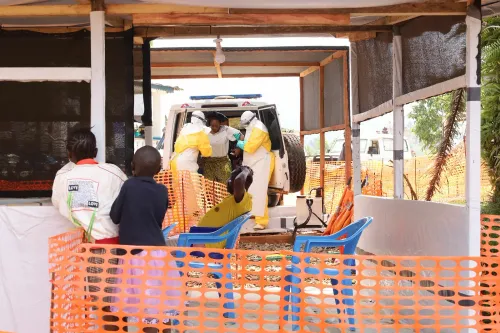
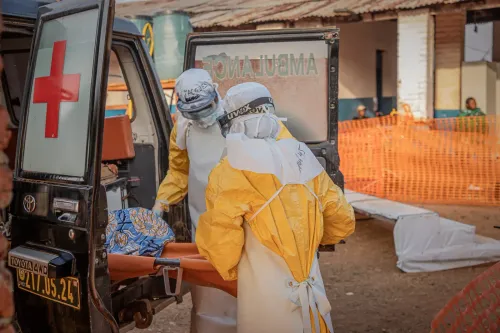
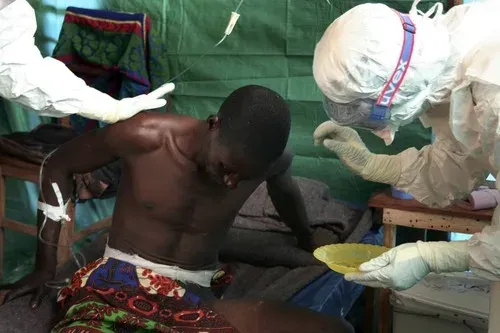
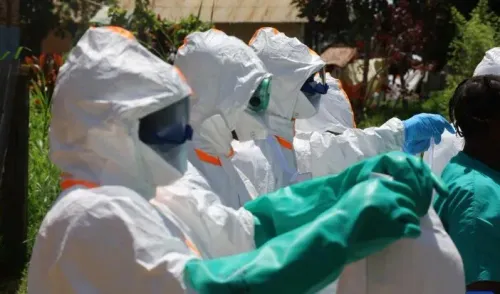
DR Congo Ebola toll crosses 2,000 as outbreak becomes DRC's deadliest
Synopsis
Half of the DRC Ebola outbreak's 2,000-plus deaths came in just the last 20 days — and WHO now says the virus was likely circulating since February, months before officials even knew it existed. With no approved vaccine for the Bundibugyo strain and transmission outpacing response, this is already the worst Ebola outbreak in DRC history.
Key Takeaways
The DRC Ebola death toll has crossed 2,011 , with 4,381 confirmed cases and a fatality rate of 45.9% as of 11 August .
Approximately half of all deaths reportedly occurred within the last 20 days , signalling rapid acceleration.
The outbreak spans five provinces , with Ituri remaining the epicentre.
WHO says genetic sequencing suggests the virus began circulating as early as February , months before the official 15 May declaration.
The causative agent is Bundibugyo ebolavirus , for which no approved vaccine or treatment currently exists.
This is now the largest-ever Ebola outbreak in DRC and the second-largest globally , after the 2014–2016 West Africa epidemic.
The death toll from the Ebola outbreak in the Democratic Republic of the Congo (DRC) has surpassed 2,000, according to figures released on Tuesday, 11 August by the country's public health authorities. The outbreak, declared on 15 May, has now become the largest ever recorded in the DRC and the second-largest Ebola outbreak in history.
Scale of the Outbreak
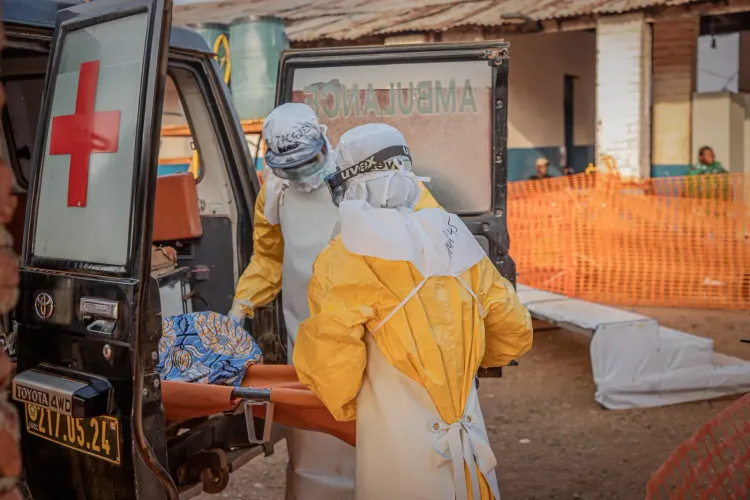
Official data shows the DRC has logged 4,381 confirmed cases, including 2,011 deaths, placing the overall case fatality rate at 45.9 per cent. More than 700 patients remain in isolation or under hospital care, while 869 people have recovered. The figures represent a sharp acceleration — according to UN Senior Ebola Coordinator Julien Harneis, roughly half of all recorded deaths occurred within the last 20 days alone.
Geographic Spread
Cases have been confirmed across five provinces — Ituri, North Kivu, South Kivu, Haut-Uele, and Tshopo. The province of Ituri, whose capital Bunia serves as the operational hub for the international response, remains the epicentre of transmission.
WHO Warning: Virus Was Circulating Months Earlier
A senior World Health Organisation (WHO) official on Monday warned that the outbreak may have begun as early as February — roughly three months before the government's official declaration in May. Speaking at a press conference in Bunia, WHO Regional Director for Africa Mohamed Yakub Janabi said genetic sequencing studies indicated the virus had likely been circulating undetected for months.
'We are chasing the virus. The virus is ahead of us,' Janabi said, underscoring the severity of the delayed detection. He noted that some early infections were reportedly misattributed to other illnesses, including malaria and typhoid, which contributed to delays in recognising the true scale of transmission.
No Approved Vaccine for This Strain
The current outbreak is caused by the Bundibugyo ebolavirus — a species for which there is currently no approved vaccine or specific treatment. Clinical trials of candidate vaccines and therapeutics are underway, but no intervention has yet received regulatory clearance for this strain. This distinguishes the outbreak from past DRC episodes caused by the Zaire strain, for which an approved vaccine exists.
International Response and What Comes Next
Julien Harneis issued an urgent call to action on social media Tuesday, stating: 'All of us in the response, aid workers, organisations, governments, donors, with the community, must do more, and do it today, to save lives and stop Ebola.' The outbreak now surpasses the 2018–2020 Kivu epidemic as the DRC's worst on record and trails only the 2014–2016 West Africa epidemic globally. With transmission still outpacing containment efforts and no approved therapeutic in place, health officials warn the coming weeks will be critical.
Point of View
000-plus deaths in 20 days points to exponential, not linear, spread. The WHO admission that the virus was likely circulating since February — misread as malaria and typhoid — is a systemic surveillance failure, not a one-off diagnostic error. The absence of an approved vaccine for the Bundibugyo strain means the response is relying entirely on containment, a strategy the 2018–2020 Kivu outbreak showed can collapse under conflict and community resistance. The international community's record on DRC Ebola funding is also patchy; Harneis's public appeal suggests the resource pipeline is already under strain.
NationPress
25 Sept 2026
Frequently Asked Questions
How many people have died in the DRC Ebola outbreak?
As of 11 August, the DRC Ebola outbreak has recorded 2,011 deaths out of 4,381 confirmed cases, placing the case fatality rate at 45.9%. It is now the largest Ebola outbreak ever recorded in the country.
Which provinces in the DRC are affected by the Ebola outbreak?
Cases have been confirmed in five provinces: Ituri, North Kivu, South Kivu, Haut-Uele, and Tshopo. Ituri province, with its capital Bunia, is the epicentre of the outbreak.
Is there a vaccine for the current DRC Ebola strain?
No approved vaccine or specific treatment currently exists for the Bundibugyo ebolavirus strain driving this outbreak. Clinical trials of candidate vaccines and therapeutics are underway, but none has yet received regulatory clearance for this strain.
Why was the DRC Ebola outbreak detected so late?
WHO says genetic sequencing indicates the virus was likely circulating since February, roughly three months before the government declared an outbreak on 15 May. Early infections were reportedly misattributed to malaria and typhoid, delaying recognition of Ebola transmission.
How does this outbreak compare to previous Ebola outbreaks?
This is now the largest Ebola outbreak ever recorded in the DRC, surpassing the 2018–2020 Kivu epidemic. Globally, it is the second-largest outbreak in history, behind the 2014–2016 West Africa epidemic.