Nadda in Bareilly: BJP Defends Election Commission's Voter Roll Drive
Synopsis
Union Health Minister and BJP National President J. P. Nadda rallied workers in Bareilly on November 3, 2026, defending the Election Commission's voter-roll revision drive and accusing Congress and the Samajwadi Party of attempting to undermine public trust in India's electoral institutions.
Key Takeaways
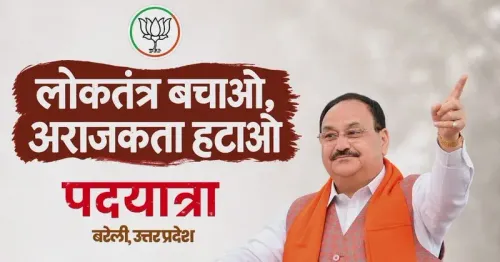
Nadda addressed the BJP UP-organised 'Loktantra Bachao, Arajakta Hatao' programme in Bareilly, Uttar Pradesh on November 3, 2026 .
He accused the INDI Alliance — specifically Congress and Samajwadi Party — of making a 'vile attempt' to destroy public confidence in the Election Commission of India .
Nadda defended the Election Commission's Special Intensive Revision (SIR) of electoral rolls as a bid to make democracy 'transparent, fair, and strong.' He reaffirmed that every BJP worker under PM Narendra Modi's leadership is committed to protecting democratic and constitutional values.
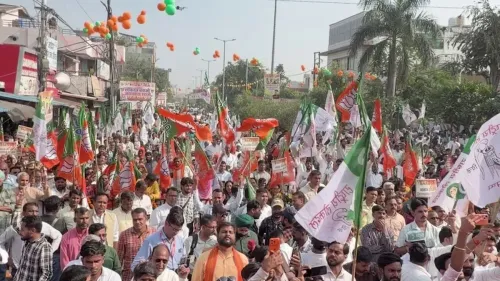
The programme included a padyatra (march) alongside workers, reinforcing a grassroots mobilisation message ahead of ongoing electoral-roll processes.
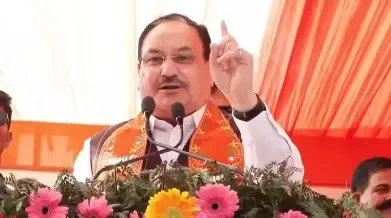
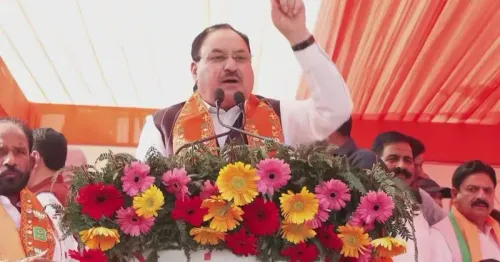
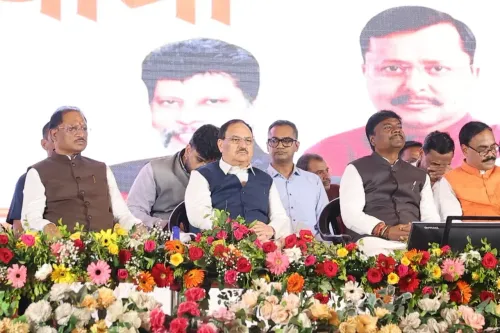
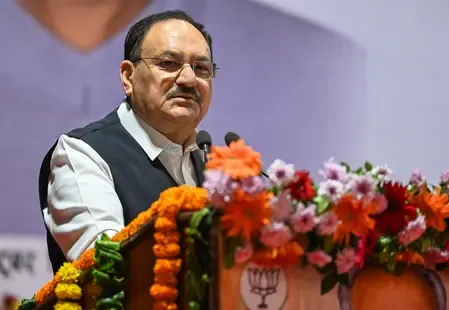
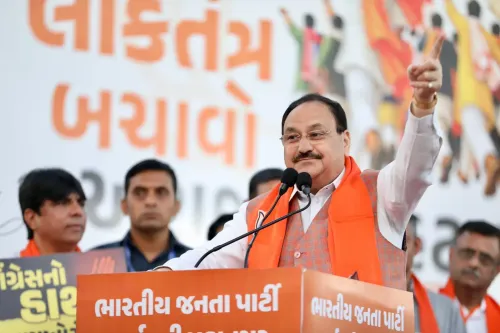
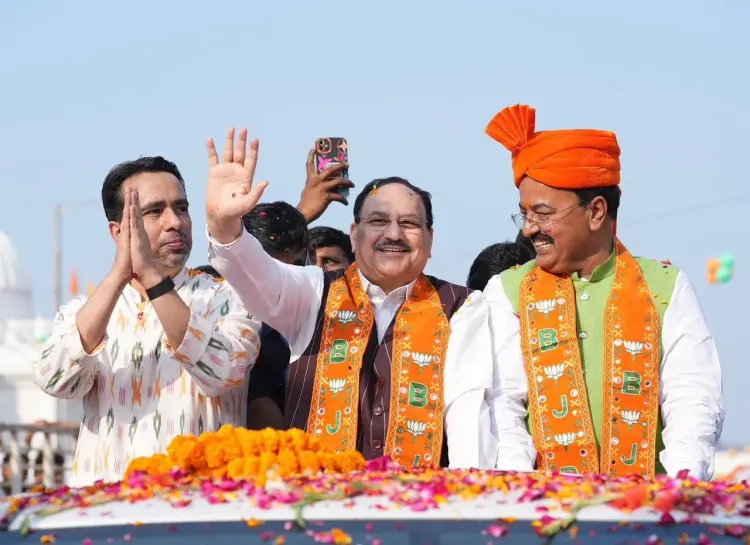
A political battle over India's electoral credibility came to the streets of Bareilly, Uttar Pradesh, on Tuesday, November 3, 2026, as Union Health Minister and BJP National President J. P. Nadda addressed party workers at a BJP UP-organised programme titled 'Loktantra Bachao, Arajakta Hatao' ('Save Democracy, Remove Anarchy') and participated in a padyatra (march) through the city.
Speaking directly to the crowd, Nadda framed the gathering around a pointed accusation: that leaders of the INDI Alliance — specifically the Indian National Congress and the Samajwadi Party — are engaged in a 'kutsit prayas' (vile attempt) to erode public trust in the Election Commission of India. 'India is called the mother of democracy,' he declared. 'Decades of hard work and dedication have given the Election Commission of India a distinct identity in the world.'
SIR Under Fire: The Voter Roll Revision at the Heart of the Dispute
At the centre of the political storm is the Election Commission's Special Intensive Revision (SIR) of electoral rolls — a process Nadda described as 'an important initiative towards making the democratic system transparent, fair, and strong.' The Election Commission of India, empowered under the Representation of the People Act, 1950, periodically undertakes such revisions to maintain the accuracy of voter lists and remove ineligible entries.
Opposition parties in the INDIA bloc have publicly questioned the credibility and intent of this particular exercise, alleging it could be used to disenfranchise eligible voters. Nadda rejected this framing categorically, insisting the drive exists to protect the voting rights of every eligible citizen — not suppress them.
BJP's Bareilly Message: Constitution as Campaign Ground
The choice of Bareilly — a major political centre in western Uttar Pradesh — for this programme underscores the BJP's intent to carry its pro-Election Commission narrative directly to state-level workers and voters, particularly in a state where Congress and the Samajwadi Party are the primary electoral rivals. Nadda invoked Prime Minister Narendra Modi by name, asserting that 'every BJP worker under the leadership of Prime Minister Modi is committed to protecting democratic and constitutional values.'
The event follows a pattern that has intensified since the INDIA bloc's formation: BJP leaders publicly positioning themselves as defenders of autonomous institutions against what they characterise as opposition 'anarchy.' The hashtag #SaveDemocracyRemoveAnarchy reflects an organised messaging push, not a spontaneous reaction.
What Both Sides Are Really Fighting Over
The deeper contest is about narrative ownership of democratic legitimacy. When opposition parties raise doubts about an electoral roll revision, they are not simply critiquing paperwork — they are contesting the neutrality of the process itself. When the BJP organises street-level programmes defending the Election Commission, it signals that it views institutional credibility as political terrain worth fighting for.
Nadda's pledge was unambiguous: 'Our resolve is that the dignity of democracy must be maintained and the voting rights of every eligible citizen must be protected.' The march through Bareilly's streets turned that pledge into a visual — one the party clearly intends to replicate.
With electoral roll revision exercises continuing across states and parliamentary debate on election law amendments on the horizon, the BJP and the opposition are staking out positions that will define the terms of democratic accountability long before the next ballot is cast.
Point of View
The BJP is attempting to pre-empt any opposition narrative that could delegitimise future electoral outcomes in Uttar Pradesh. The 'Save Democracy' framing mirrors a global pattern of ruling parties co-opting pro-institution language when electoral processes become contested. Whether the opposition's critique of the SIR drive gains traction with voters will depend heavily on ground-level perception of the revision's actual impact on voter registration.
NationPress
4 Nov 2026
Frequently Asked Questions
What is the 'Loktantra Bachao, Arajakta Hatao' programme by BJP?
'Loktantra Bachao, Arajakta Hatao' translates to 'Save Democracy, Remove Anarchy' — a BJP-organised programme held in Bareilly, Uttar Pradesh on November 3, 2026, where party leaders including J. P. Nadda addressed workers and participated in a march to defend the Election Commission of India against opposition criticism.
What is the Special Intensive Revision (SIR) of electoral rolls?
The Special Intensive Revision (SIR) is an exercise by the Election Commission of India to thoroughly review and update voter rolls — removing ineligible entries and ensuring all eligible citizens are registered — conducted under the Representation of the People Act, 1950.
Why is the INDI Alliance criticising the Election Commission?
Alliance parties including Congress and the Samajwadi Party have raised concerns about the credibility and intent of the Election Commission's voter-roll revision drive, alleging it could disenfranchise legitimate voters — allegations the BJP has strongly rejected.
What did JP Nadda say about India and democracy at the Bareilly rally?
Nadda stated that India is called the 'mother of democracy' and that decades of hard work have given the Election Commission a distinct global identity, pledging that every BJP worker is committed to protecting democratic and constitutional values under PM Modi's leadership.
What is the political significance of BJP's Bareilly rally on electoral rolls?
The rally signals the BJP's intent to fight the narrative battle over electoral legitimacy at the grassroots level in Uttar Pradesh, a state where Congress and the Samajwadi Party are key rivals, ahead of ongoing voter-roll revision exercises and potential legislative changes to election law.