Nadda rallies BJP workers in Durg for voter-roll drive
Synopsis
Union Health Minister and BJP president J. P. Nadda led a 'Save Democracy' padyatra in Durg on 30 October 2026, calling on workers to support the Special Intensive Revision of electoral rolls and counter opposition attacks on constitutional institutions by highlighting the Congress-era 1975 Emergency.
Key Takeaways
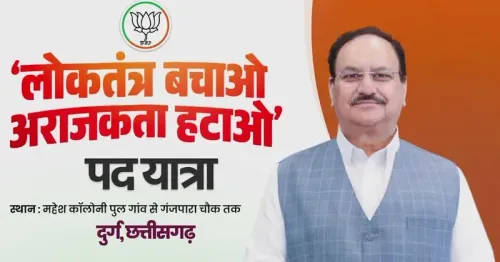
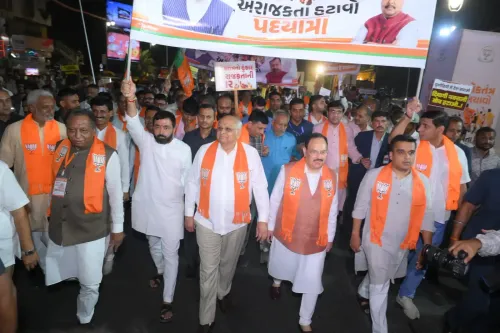
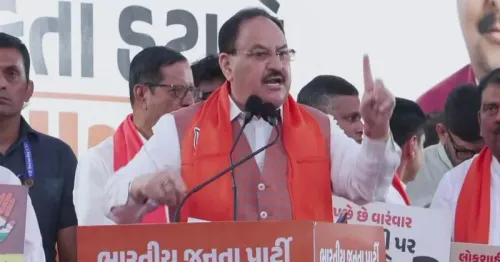
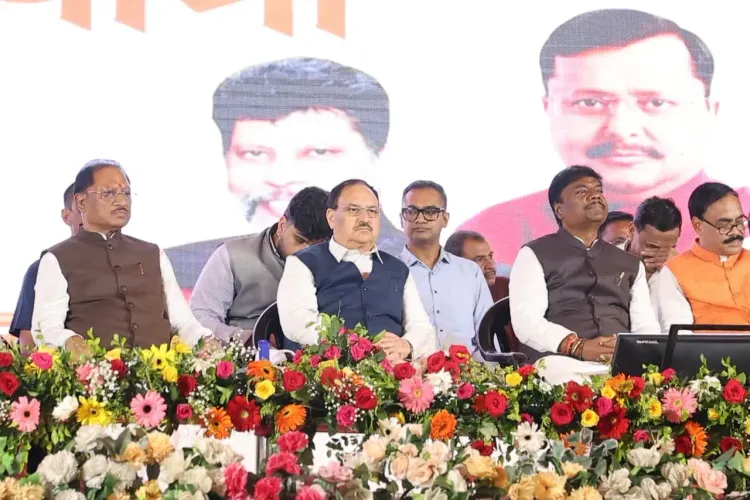
Nadda addressed BJP workers at the 'Loktantra Bachao, Arajkata Hatao' padyatra in Durg, Chhattisgarh on 30 October 2026 .
He urged workers to spread facts about the 1975 Emergency and Congress-era institutional misuse to voters at the grassroots level.
Nadda backed the Special Intensive Revision (SIR) of electoral rolls as a critical step toward voter-list accuracy and democratic integrity.
He accused the opposition of attempting to intimidate the Election Commission of India and the Supreme Court , calling it contrary to democratic values.
India has more than 90 crore registered voters and is described as the 'Mother of Democracy' in the post.
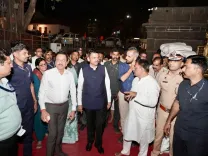
The padyatra was organised by BJP Chhattisgarh and forms part of the party's broader campaign contrasting its institutional record with the Congress legacy.
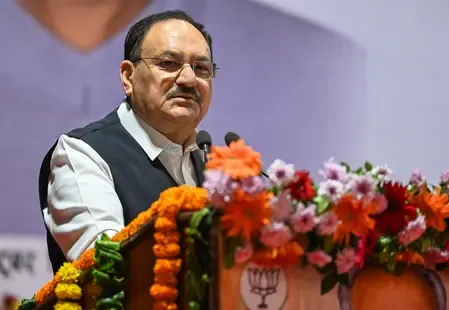
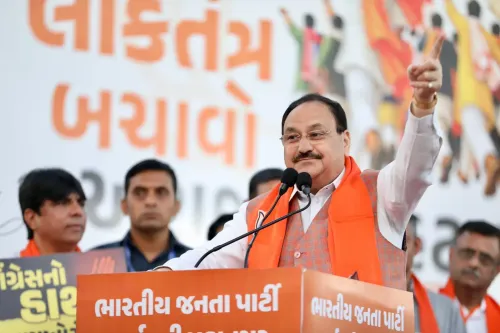
At a padyatra in Durg, Chhattisgarh on Friday, 30 October 2026, Union Health Minister and BJP national president J. P. Nadda threw down a sharp political challenge: take the facts about democratic backsliding — from the 1975 Emergency to alleged vote-list manipulation — directly to every citizen, door by door.
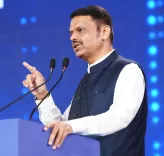
Addressing state BJP workers at the 'Loktantra Bachao, Arajkata Hatao' ('Save Democracy, Remove Anarchy') march organised by @BJP4CGState, Nadda framed the gathering not as a rally but as a voter-education mission. India, he said, is the world's largest democracy and the 'Mother of Democracy', with more than 90 crore registered voters whose electoral process draws global admiration. That stature, he argued, makes any attempt to intimidate the Election Commission of India or the Supreme Court a direct assault on constitutional values.
The SIR exercise and why Nadda says it matters
The centrepiece of Nadda's address was the Special Intensive Revision (SIR) of electoral rolls, which he described as an essential step toward purifying voter lists and safeguarding the mandate. 'Under the leadership of honourable Prime Minister Narendra Modi, cleansing the voter list is necessary to strengthen both national security and democracy — SIR is an important step in that direction, and we must support it,' he told workers.
Periodic electoral-roll revision exercises have long been a feature of Indian election administration, carried out by the Election Commission to weed out duplicate, ghost, or lapsed entries from a voter base that spans the length and breadth of the country. Nadda positioned the current drive as a continuation of that tradition — and a direct counter to what he called opposition attempts to sow confusion about the process.
Emergency shadow and the Congress contrast
The BJP's sharpest political weapon on display in Durg was history. Nadda asked workers to carry the documented record of the 1975 Emergency — imposed by the Congress government, which suspended fundamental rights and subordinated constitutional institutions — to voters as a cautionary tale. The contrast with the current government's posture of institutional deference, he argued, could not be starker.
The 'Loktantra Bachao' messaging fits squarely inside the BJP's long-running campaign to brand itself as the defender of constitutional propriety against what it characterises as Congress's authoritarian legacy. By holding such marches at the district level — Durg is an industrial belt city in Chhattisgarh where the Congress governed the state until its 2023 election loss — the party is also trying to consolidate its organisational footprint in newly won territory.
The opposition's counter and what comes next
Nadda was direct about the political dynamic he sees at play: an opposition that has, in his words, 'lost the trust and mandate of the public' and is now questioning constitutional institutions to remain relevant. The BJP is betting that a fact-first, ground-level counter-campaign — workers armed with history and policy detail rather than slogans alone — can blunt that narrative before it takes hold.
State-wise progress of the SIR exercise and any formal response from opposition parties or judicial commentary will determine whether this padyatra is the opening move in a sustained electoral-integrity push or a one-day mobilisation moment. Either way, the message from Durg was unambiguous: the BJP intends to fight the next battle over democracy's meaning on terrain it has chosen.
Point of View
Tying institutional integrity to the Modi government's governance brand. By invoking the 1975 Emergency at a district-level march, the party is also testing whether a history-first message still activates its base in Chhattisgarh, a state it recaptured only in 2023. The SIR exercise serves a dual purpose: it advances a genuine administrative goal of cleaner voter lists while giving the BJP a ready counter-narrative to opposition charges of electoral manipulation. How the Election Commission publicly handles the SIR rollout will determine whether this political framing holds or becomes a vulnerability.
NationPress
31 Oct 2026
Frequently Asked Questions
What is the 'Loktantra Bachao, Arajkata Hatao' padyatra?
It is a BJP-organised foot march held in Durg, Chhattisgarh on 30 October 2026, aimed at mobilising workers to spread awareness about democratic values, the 1975 Emergency, and the party's support for the Special Intensive Revision of electoral rolls.
What is the Special Intensive Revision (SIR) of electoral rolls?
The SIR is an exercise conducted by the Election Commission of India to clean up voter lists by removing duplicate, ghost, or lapsed entries. J. P. Nadda has publicly backed it as essential for protecting democratic integrity.
Why did Nadda mention the 1975 Emergency at the Durg event?
Nadda used the Congress-imposed 1975 Emergency — which suspended fundamental rights and saw documented misuse of constitutional institutions — as a historical contrast to the BJP's stated commitment to upholding democratic bodies.
What did Nadda say about the Election Commission and Supreme Court?
He said attempts to intimidate or question the Election Commission of India and the Supreme Court are against democratic values, accusing the opposition of spreading confusion about these institutions to serve its own political interests.
How many registered voters does India have?
According to J. P. Nadda's post, India has more than 90 crore (900 million) registered voters, making it the world's largest democracy.