Nadda hails India's democracy as globally recognised under Modi
Synopsis
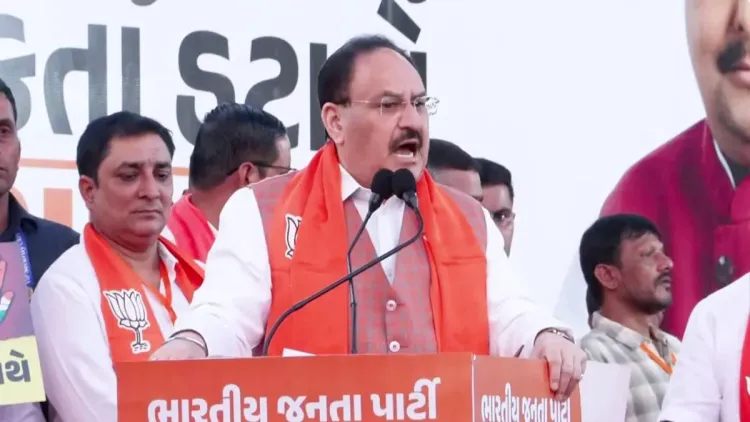
Union Health Minister and BJP president J. P. Nadda praised India's Election Commission, Supreme Court, and constitutional institutions on October 27, 2026, calling their dignified functioning the source of India's global democratic recognition under PM Narendra Modi's leadership.
Key Takeaways
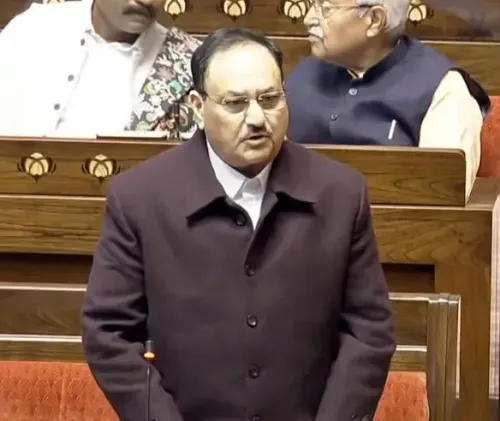
Nadda , BJP national president and Union Health Minister, credited PM Narendra Modi's leadership for India's growing democratic global standing.
He specifically highlighted the Election Commission of India , the Supreme Court , and constitutional institutions as pillars of this recognition.
The post was tagged #SaveDemocracyRemoveAnarchy , signalling a politically charged framing against opposition narratives.
The Election Commission was established under Article 324 of the Constitution in 1950 , and India's first general election was held in 1951–52 .
Nadda's dual role as party president and cabinet minister amplifies the institutional-pride framing for both electoral and governance audiences.
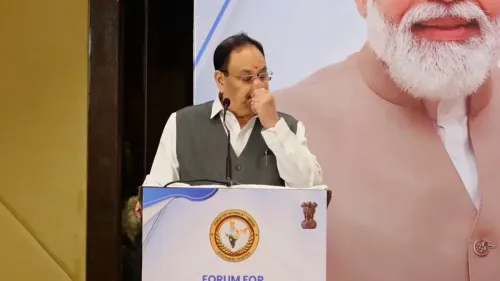
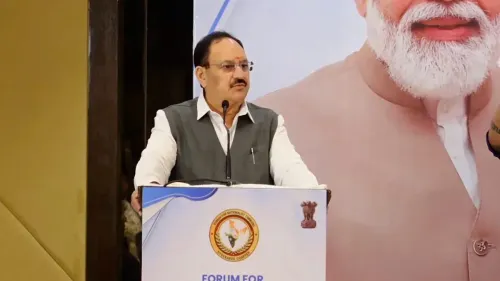
India's democratic institutions — its Election Commission, Supreme Court, and broader constitutional architecture — are earning global recognition, Union Health Minister J. P. Nadda declared on Tuesday, October 27, 2026, crediting the leadership of Prime Minister Narendra Modi for elevating the country's democratic standing on the world stage.
Posting in Hindi on X, Nadda wrote: 'आदरणीय प्रधानमंत्री श्री नरेंद्र मोदी जी के नेतृत्व में आज दुनिया भारत की लोकतांत्रिक शक्ति और विरासत को स्वीकार कर रहा है' — 'Under the respected Prime Minister Narendra Modi's leadership, the world today acknowledges India's democratic strength and heritage.' He added that the 'dignified functioning' of the Election Commission, the Supreme Court, and constitutional institutions had secured India's democracy a global identity.
Pillars that predate any one government
The institutions Nadda invokes carry a lineage that stretches back to 1950, when India's Constitution came into force. Article 324 of that document created an independent Election Commission — a body that has since administered every general and state election across the world's most populous democracy. The Supreme Court of India, established the same year, has over seven decades shaped the constitutional boundaries of electoral law, executive power, and fundamental rights.
India's first general election, held in 1951–52, was itself a statement to a sceptical world: that universal adult franchise could function at continental scale in a newly independent, largely rural nation. Every successive election has deepened that argument. When Indian leaders today point to the Election Commission or the apex court as proof of democratic resilience, they are drawing on that decades-long institutional track record.
The BJP's institutional-pride playbook
Nadda's post, tagged with #SaveDemocracyRemoveAnarchy, reflects a well-worn BJP communication strategy: positioning constitutional institutions as vindication of the party's governance record rather than merely non-partisan infrastructure. The framing — that global acknowledgement of Indian democracy is a leadership dividend — connects institutional credibility to political credit. It is a move that successive governments across the spectrum have made; the BJP under Modi has executed it with particular consistency and scale.
As BJP national president, Nadda occupies the dual role of party head and senior cabinet minister, giving his institutional endorsements both organisational and governmental weight. The post arrives without a specific triggering event that can be independently verified, but its hashtag suggests it is pitched against a political opponent's 'anarchy' narrative — a framing that positions the ruling coalition as the defender of order and constitutional propriety.
Whether the Election Commission or the Supreme Court will respond to such characterisations — as they have occasionally done in the past when their independence has been invoked selectively — is the thread worth watching in the days ahead.
Point of View
The party signals an ongoing contestation over who owns the democratic narrative ahead of potential electoral cycles. The framing is politically potent but double-edged: it invites scrutiny of how those same institutions are treated in practice. Historically, the party in power always benefits from institutional stability; the test is whether the institutions themselves are seen to operate independently of that applause.
NationPress
27 Oct 2026
Frequently Asked Questions
What did J. P. Nadda say about India's democracy?
Nadda said that under PM Narendra Modi's leadership, the world is acknowledging India's democratic strength and heritage, and that the dignified functioning of the Election Commission, Supreme Court, and constitutional institutions has given India's democracy global recognition.
What is the #SaveDemocracyRemoveAnarchy hashtag about?
The hashtag appears to be a BJP political campaign framing that positions the ruling coalition as defenders of constitutional order against what it characterises as 'anarchy' — likely a reference to opposition politics, though the specific immediate trigger in October 2026 is not independently verified.
What is the Election Commission of India and why is it important?
The Election Commission of India is a constitutional body established under Article 324 of the Constitution in 1950. It is responsible for conducting free and fair elections at national and state levels, and has overseen every general election since 1951–52.
What is J. P. Nadda's role in the government and BJP?
J. P. Nadda serves as Union Minister of Health and Family Welfare and Minister of Chemicals and Fertilizers in the central government, and is also the national president of the Bharatiya Janata Party (BJP).
Has India's democracy been internationally recognised?
India is widely cited as the world's largest democracy, and its Election Commission has conducted successive large-scale elections since 1951–52. Indian leaders across governments have referenced this track record in international forums to underscore the country's democratic credentials.