India pushes for sustainable cities at ARISE Forum ahead of COP31

Synopsis
With over 200 delegates from 50 cities already in the room and a Delhi Declaration bound for COP31 in Antalya, the ARISE Cities Forum is positioning India's urban climate experience as a global template. The forum's direct pipeline to international negotiations makes it more than a talking shop — it is a soft-power play to anchor the Global South's voice in the UNFCCC process.
Key Takeaways
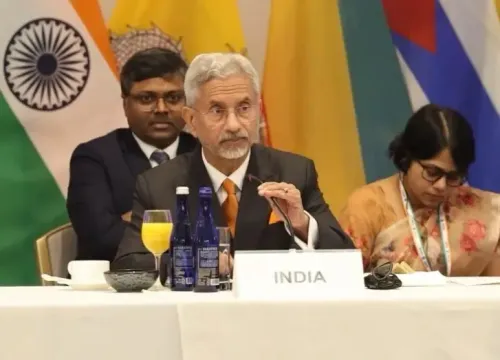
MoS Tokhan Sahu addressed the ARISE Cities Forum 2026 at India Habitat Centre, New Delhi on 27 October 2026 , calling for action-oriented urban sustainability.
The forum drew over 200 delegates from more than 50 cities across 18 countries from the Global South .
The Delhi Declaration on Local Action for Global Climate Goals 2026 is set for adoption on Wednesday and will be presented at COP31 in Antalya, Türkiye .
UN Women India country representative Shoko Ishikawa urged gender-responsive urban planning and women's leadership in climate action.
A Memorandum of Understanding was signed between the Global Buildings Performance Network (GBPN) and ICLEI South Asia on the forum's sidelines.
Day 1 featured 2 plenary sessions and 8 technical sessions spanning water, energy, biodiversity, coastal resilience, and public health.
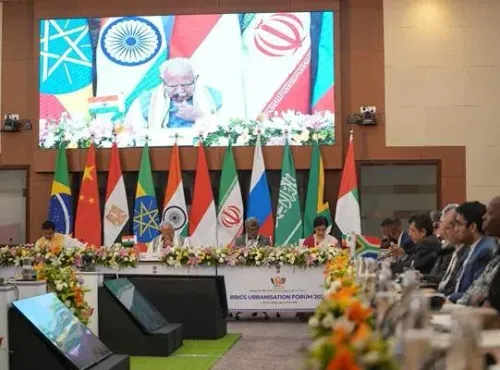
India's Minister of State for Housing and Urban Affairs, Tokhan Sahu, on Tuesday, 27 October 2026, called for coordinated global action to build sustainable cities, framing urban development as central to meeting climate commitments and securing opportunities for future generations. He was speaking at the second edition of the ARISE Cities Forum, held at the India Habitat Centre in New Delhi, which brought together over 200 delegates from more than 50 cities across 18 countries, all representing the Global South.
Minister's Call to Action
Addressing the forum, Sahu outlined a clear operational philosophy for urban climate action. 'From resolve to planning, from planning to implementation, and from implementation to results — that should be our way of working. Our goal is to build cities where development reaches every section of society,' he said. His remarks underscored the Centre's intent to align domestic urban policy with international climate obligations.
Forum's Theme and Agenda
Themed 'From Bharat to Antalya — Commit. Implement. Deliver,' the two-day forum features 3 technical plenaries and 14 technical sessions, focusing on the experiences of local governments across the Global South in advancing urban resilience, low-carbon development, and climate equity. Day 1 featured 2 plenary sessions and 8 technical sessions, covering topics including climate-resilient water management, sustainable energy transition, urban biodiversity, coastal city resilience, and the integration of public health and youth-focused initiatives into urban planning.
Delhi Declaration and COP31 Link
The forum's deliberations are feeding directly into the Delhi Declaration on Local Action for Global Climate Goals 2026, which is scheduled for adoption on Wednesday. The declaration will subsequently be presented at COP31 in Antalya, Türkiye, positioning Indian urban experiences as a reference point for global climate negotiations. Debolina Kundu, Director of the National Institute of Urban Affairs, noted that the theme 'reflects the urgency of moving from climate commitments to action,' adding that city-level solutions must secure a stronger voice in global forums such as the UNFCCC COPs.
Gender-Responsive Urbanism on the Agenda
Shoko Ishikawa, Country Representative of UN Women India, called for gender-responsive and inclusive urban development. She outlined three priorities: integrating gender equality into urban planning, climate policies, and investments; investing in infrastructure that strengthens women's safety, mobility, and economic participation; and institutionalising women's leadership in urban climate action. 'Women and girls help shape the cities of tomorrow,' she said, with UN Women committing to work with the ARISE platform to advance this agenda.
ICLEI's Role and a New MoU
Gino Van Begin, Secretary General of ICLEI, highlighted the growing influence of urban local governments, stating, 'Cities are developing innovative solutions, building functioning partnerships and demonstrating pathways towards more resilient, inclusive and sustainable futures.' Notably, a Memorandum of Understanding was signed between the Global Buildings Performance Network (GBPN) and ICLEI South Asia on the sidelines, signalling a formal commitment to scaling building-level sustainability interventions across the region.
The forum concludes on Wednesday, with the adoption of the Delhi Declaration expected to set the tone for India's urban climate narrative heading into COP31.
Point of View
Inadequate sanitation infrastructure, climate-vulnerable coastlines — are chronically underrepresented in UNFCCC negotiations dominated by developed-nation frameworks. The Delhi Declaration's adoption and its COP31 presentation could, if handled with diplomatic weight, shift the terms of debate on climate finance for urban adaptation. The risk is that it remains a symbolic gesture unless the Centre backs it with verifiable domestic commitments of its own.
NationPress
27 Oct 2026
Frequently Asked Questions
What is the ARISE Cities Forum 2026?
The ARISE Cities Forum 2026 is a two-day international urban climate conference held at India Habitat Centre in New Delhi, bringing together over 200 delegates from more than 50 cities across 18 countries representing the Global South. It focuses on urban resilience, low-carbon development, and translating global climate commitments into city-level action.
What is the Delhi Declaration on Local Action for Global Climate Goals 2026?
It is a declaration being developed through the forum's deliberations and is scheduled for adoption on Wednesday, 28 October 2026. The declaration will be presented at COP31 in Antalya, Türkiye, as a Global South urban climate action framework.
What did India's minister say at the ARISE Cities Forum?
Minister of State for Housing and Urban Affairs Tokhan Sahu called for a results-driven approach to urban development, stating that the goal is to build cities where development reaches every section of society. He emphasised moving from climate resolve to planning to measurable implementation.
Why does the ARISE Cities Forum matter for COP31?
The forum feeds directly into the Delhi Declaration, which will represent Global South urban priorities at COP31 in Antalya. It is an effort to give city governments from developing nations a stronger voice in UNFCCC negotiations, which have historically been shaped by developed-country agendas.
What MoU was signed at the ARISE Cities Forum 2026?
A Memorandum of Understanding was exchanged between the Global Buildings Performance Network (GBPN) and ICLEI South Asia on the sidelines of the forum, aimed at scaling building-level sustainability initiatives across the region.