India's Role in Pioneering Global Climate Solutions: Insights from New Report

Synopsis
Explore how India is at the forefront of innovative climate solutions in a newly released report. With two significant initiatives showcased, discover the transformative potential of urban areas in combating climate change.
Key Takeaways
The report showcases eleven transformative climate solutions from cities worldwide.
India contributes two significant initiatives aimed at reducing carbon emissions.
Cities are responsible for over 70% of global carbon emissions.
The report serves as a practical guide for policymakers and urban leaders.
Successful examples from around the world illustrate the potential for scalable change.
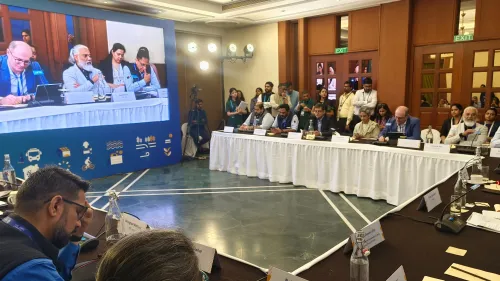
New Delhi, March 26 (NationPress) A new report released on Thursday by the built environment consultancy Arup and backed by The Earthshot Prize highlights eleven innovative, public-sector-led solutions, including two from India, that demonstrate how urban areas can effectively scale climate solutions.
Urban centers are home to over 55% of the world’s population, a figure expected to rise to 68% by 2050. These cities contribute to more than 70% of global carbon dioxide emissions and are responsible for approximately 75% of global energy consumption, positioning them as both significant contributors to the climate crisis and the locations where its consequences are most pronounced.
However, the density, creativity, and governance of cities empower them to be key drivers of climate action, capable of facilitating comprehensive, inclusive, and scalable changes.
The report titled “Champions of Change: How cities and regions are designing a low carbon, climate resilient future” serves as a blueprint for replicating and expanding innovations that yield measurable social, economic, and environmental advantages.
Moving from mere inspiration to actionable strategies, this report provides a pragmatic guide for mayors, city planners, and policymakers eager to forge a sustainable and resilient future.
Globally, urban leaders are already implementing climate innovations that are reducing emissions, safeguarding communities, and creating new economic prospects. Examples include Durban’s Transformative Riverine Management Programme, which has successfully removed almost 58,000 tons of solid waste from rivers, and Bogotá’s Earthshot Prize-winning mobility strategy that has decreased travel times by 20% and lowered air pollution by 24% since 2018.
The Indian initiatives recognized in the Champions for Change report are:
Tamil Nadu’s Climate Action for Resilient Ecosystems and Societies, a government-supported cross-sector climate initiative, has mitigated 3.75 million tons of carbon dioxide and rehabilitated over 200,000 hectares of forests, wetlands, and coastal ecosystems.
Gujarat’s Particulate Cap and Trade System, the world’s first emissions trading scheme for particulate matter, has motivated industries to decrease pollution through a market-driven approach, resulting in a 20-30% reduction in particulate matter emissions.
In response to the report, Jason Knauf, CEO of The Earthshot Prize, noted that over the past five years, they, along with founding partner Arup, have been fostering a network of cities and practitioners who firmly believe that cities are both a major cause of the severe impacts of climate change and an essential part of the solution.
He emphasized that the Champions for Change report brings this conviction to life by showcasing some of the most groundbreaking initiatives currently in action.
Emerging from dynamic insights and practical solutions, this report serves as a manifesto for optimism and a guide for those looking to adopt powerful ideas that will accelerate the journey towards a more prosperous and sustainable future for everyone.
Point of View
It is crucial to recognize the significant strides made by urban regions in addressing climate change. This report underscores the importance of cities as both contributors to and solutions for the climate crisis, showcasing innovative strategies that could serve as models for global replication.
NationPress
24 Sept 2026
Frequently Asked Questions
What is the focus of the Champions of Change report?
The report focuses on showcasing innovative, public-sector-led climate solutions implemented by cities and regions around the world, emphasizing their potential for scalable impact.
Which Indian initiatives are highlighted in the report?
The report highlights Tamil Nadu’s Climate Action for Resilient Ecosystems and Societies and Gujarat’s Particulate Cap and Trade System as significant initiatives from India.
How do urban areas contribute to climate change?
Urban areas contribute to climate change by accounting for over 70% of global carbon dioxide emissions and consuming around 75% of global energy.
What are the expected population trends for cities by 2050?
Cities are expected to house 68% of the global population by 2050, increasing from 55% currently.
What role does The Earthshot Prize play in this report?
The Earthshot Prize supports the report by highlighting and promoting innovative climate solutions that can create a sustainable and resilient future.