Gujarat CM Launches Book Transforming Climate Risks into Urban Green Opportunities
Synopsis
In a significant development, Gujarat's CM Bhupendra Patel has launched a visionary book that explores how urban areas can leverage climate risks to foster sustainable growth. This essential read highlights innovative strategies for future city planning amidst the challenges of urbanization.
Key Takeaways
The book emphasizes transforming climate risks into opportunities.
It advocates for sustainable, climate-resilient urban planning.
Urbanization presents both challenges and opportunities for economic growth.
Innovative financing is essential for sustainable city development.
Local governance capacity must be strengthened for effective urban management.
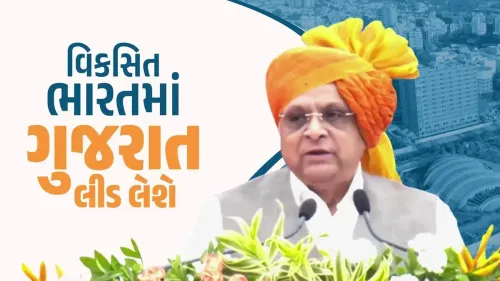
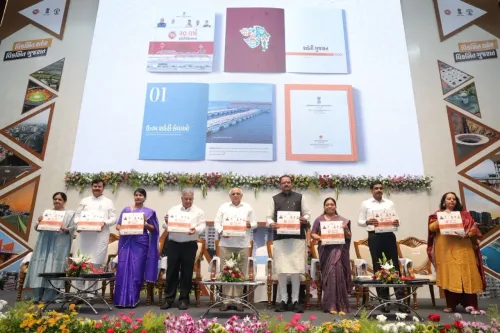
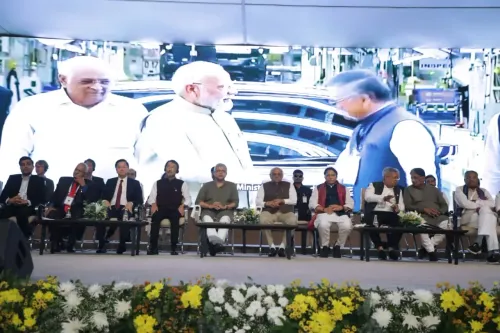
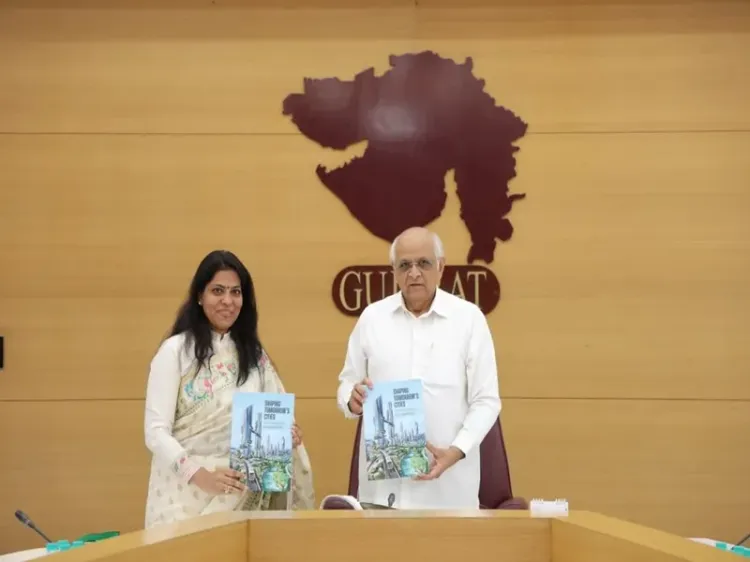
Gandhinagar, March 5 (NationPress) The Chief Minister of Gujarat, Bhupendra Patel, unveiled a groundbreaking book on Thursday that delves into how urban areas can transform climate challenges into avenues for sustainable development. This event took place in Gandhinagar, amidst rising concerns regarding the rapid pace of urbanization and its ecological consequences.
Titled “Shaping Tomorrow’s Cities – From Climate Risk to Green Opportunities,” the book investigates methods for creating sustainable and resilient cities as urban populations are set to grow globally.
The author, Shalini Agrawal, who serves as the Managing Director of Gujarat Urja Vikas Nigam Limited, draws inspiration from Prime Minister Narendra Modi’s vision of converting rapid urbanization challenges into opportunities for sustainable progress.
The text emphasizes that urbanization, a major force shaping contemporary societies, can be addressed through thoughtful planning and the development of climate-resilient infrastructures instead of merely being seen as a problem.
The book evaluates global trends in urban development and suggests a vision for future city planning that is both innovative and environmentally conscious.
As urban populations grow, the book warns of the accompanying environmental and social strains that necessitate proactive planning and policy measures.
It discusses the potential consequences of escalating energy demands, increased resource consumption, and rising greenhouse gas emissions linked to urban growth, while also proposing strategies to alleviate the impacts of climate change.
The publication highlights that urbanization in India is on the rise and is anticipated to experience significant growth by 2047, positioning cities as key players in the nation’s economic advancement.
It underscores that burgeoning urban populations will heighten the demand for infrastructure, housing, water resources, and other essential services, making comprehensive urban planning and sustainable development imperative.
Additionally, the book details financing models that could facilitate sustainable development projects and climate-resilient infrastructure, including green bonds, public-private partnerships, carbon markets, and climate finance to attract investment for urban initiatives.
Moreover, it underscores the necessity of enhancing the financial capabilities of local self-governments and improving municipal finance systems, enabling cities to effectively generate and manage the funds needed for essential services and infrastructure development.
The publication argues for a paradigm shift in viewing cities not only as sites of challenges but as platforms where social, economic, and environmental solutions can emerge through careful planning, technological innovation, and sustainable policy frameworks.
Frequently Asked Questions
What is the main theme of the book launched by Gujarat CM?
The book explores how cities can transform climate risks into opportunities for sustainable growth and development.
Who is the author of the book?
The book is authored by Shalini Agrawal, Managing Director of Gujarat Urja Vikas Nigam Limited.
What is the expected impact of urbanization in India by 2047?
Urbanization in India is expected to significantly increase by 2047, making cities crucial to the country's economic growth.
What strategies does the book propose to manage urban challenges?
The book proposes sustainable planning, climate-resilient infrastructure, and innovative financing mechanisms to address urban challenges.
How does the book suggest financing sustainable projects?
It suggests using green bonds, public-private partnerships, and climate finance to mobilize investments for urban development.