Amit Shah chairs 31st Southern Zonal Council meet in Kovalam; Vijay among CMs attending
Synopsis
The Southern Zonal Council is reconvening for the first time since 2022, with Home Minister Amit Shah chairing a high-stakes meeting that brings together six southern Chief Ministers — including Tamil Nadu's C. Joseph Vijay. The Cauvery water dispute between Tamil Nadu and Karnataka is set to dominate a packed agenda covering everything from infrastructure to crime coordination.
Key Takeaways
Union Home Minister Amit Shah arrived in Chennai on 19 August to chair the 31st Southern Zonal Council meeting at Kovalam, Chengalpattu on Thursday.
Six leaders confirmed to attend: Tamil Nadu CM C.
Joseph Vijay , Karnataka CM D.K.
Shivakumar , Kerala CM V.D.
Satheesan , Telangana CM A.
Revanth Reddy , Andhra Pradesh CM N.
Chandrababu Naidu , and Puducherry CM N.
This is the first Southern Zonal Council meeting since 2022 — a nearly three-year gap.
The Cauvery River water-sharing dispute between Tamil Nadu and Karnataka is expected to be a central issue.
Agenda covers interstate cooperation, infrastructure, healthcare, IT, disaster management, and law-enforcement coordination.
Heavy security deployed at Chennai airport , along East Coast Road , and at the conference venue.
Union Home Minister Amit Shah arrived in Chennai on Wednesday evening, 19 August to preside over the 31st Southern Zonal Council meeting at Kovalam in Chengalpattu district on Thursday. Tamil Nadu Chief Minister C. Joseph Vijay is among the southern state heads confirmed to attend the high-level inter-governmental conference.
Who Is Attending
The meeting, scheduled at a luxury hotel on East Coast Road, Kovalam, will bring together the Chief Ministers of all major southern states and the Union Territory of Puducherry. Confirmed attendees include Karnataka Chief Minister D.K. Shivakumar, Kerala Chief Minister V.D. Satheesan, Telangana Chief Minister A. Revanth Reddy, Andhra Pradesh Chief Minister N. Chandrababu Naidu, and Puducherry Chief Minister N. Rangasamy. Chief secretaries, home secretaries, and other senior officials from all participating states and the Union Territory are also expected to be present.
Shah's Travel and Security Arrangements
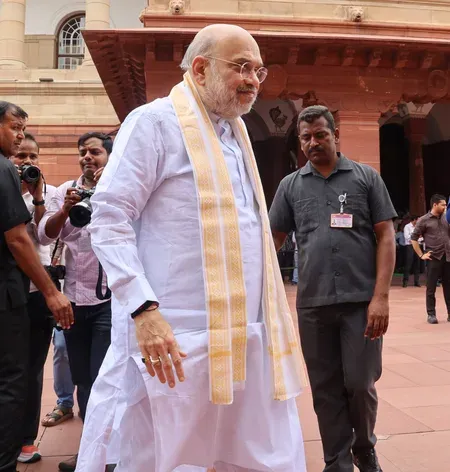
Shah departed New Delhi aboard a special aircraft at 4.50 pm, landing at Chennai airport at 7.40 pm IST. Senior government officials and Bharatiya Janata Party (BJP) functionaries received him at the airport. He subsequently travelled by road to Kovalam, where he stayed overnight ahead of Thursday's deliberations. Security has been significantly tightened along his convoy route, at the airport, and around the conference venue, with police personnel deployed at strategic points on East Coast Road and traffic arrangements closely monitored.
Why This Meeting Matters
The Union Ministry of Home Affairs typically convenes the Southern Zonal Council annually to foster interstate cooperation and address region-specific concerns. Notably, the last such meeting was held in 2022 — making Thursday's session the first in nearly three years and lending it added weight. The agenda is expected to cover interstate cooperation, economic development, industrial investment, infrastructure expansion, water-sharing arrangements, education, healthcare, information technology, and disaster management. Crime prevention and coordination among law-enforcement agencies are also likely to feature prominently.
Cauvery Water Dispute in Focus
The conference assumes particular significance given the ongoing differences between Tamil Nadu and Karnataka over the sharing of Cauvery River water. The meeting is expected to provide both states an opportunity to present their respective positions and explore avenues for improved coordination under the Centre's supervision. Officials are also expected to review the implementation of decisions adopted at previous council meetings and identify issues requiring coordinated action between the Union and state governments.
What Comes Next
The outcomes of Thursday's deliberations will be closely watched, particularly on the Cauvery dispute and any agreed framework for inter-state law-enforcement cooperation. With the council reconvening after a near three-year gap, pressure is high on all sides to produce actionable outcomes rather than procedural resolutions.
Point of View
Particularly between the BJP-led Centre and opposition-governed states like Tamil Nadu, Kerala, and Telangana. Bringing six Chief Ministers to the same table, including Tamil Nadu's C. Joseph Vijay whose party controls a state in frequent friction with the Centre over fiscal transfers and gubernatorial appointments, is itself a political signal. The Cauvery dispute is the most combustible item on the agenda: both Tamil Nadu and Karnataka have dug-in electoral constituencies on the issue, and any Centre-brokered 'coordination framework' risks being read as interference. The real measure of this meeting's success will not be the joint communiqué — it will be whether the decisions from the 2022 meeting were actually implemented, a question officials are reportedly expected to answer Thursday.
NationPress
19 Aug 2026
Frequently Asked Questions
What is the Southern Zonal Council meeting in Kovalam about?
The 31st Southern Zonal Council meeting, chaired by Union Home Minister Amit Shah, is a high-level inter-governmental conference bringing together Chief Ministers of southern states and Puducherry to discuss interstate cooperation, infrastructure, water-sharing, law enforcement, and economic development. It is the first such meeting since 2022.
Which Chief Ministers are attending the Kovalam meeting?
Tamil Nadu CM C. Joseph Vijay, Karnataka CM D.K. Shivakumar, Kerala CM V.D. Satheesan, Telangana CM A. Revanth Reddy, Andhra Pradesh CM N. Chandrababu Naidu, and Puducherry CM N. Rangasamy are all scheduled to attend. Chief secretaries and home secretaries from each state will also be present.
Why is the Cauvery water dispute significant at this meeting?
The ongoing disagreement between Tamil Nadu and Karnataka over Cauvery River water sharing is one of the most sensitive items on the agenda. The council meeting is expected to give both states a platform to present their positions under the Centre's supervision, though a binding resolution is not anticipated.
When was the last Southern Zonal Council meeting held?
The last Southern Zonal Council meeting was held in 2022. The nearly three-year gap has made Thursday's session particularly significant, as a backlog of interstate issues and unreviewed decisions from past meetings are expected to be taken up.
What security arrangements are in place for Amit Shah's visit to Chennai?
Security has been tightened at Chennai airport, along Shah's convoy route to Kovalam, and around the conference venue on East Coast Road. Police personnel have been deployed at strategic locations and traffic arrangements are being closely monitored.