CM Fadnavis pays tribute to Sant Tulsidas on Jayanti
Synopsis
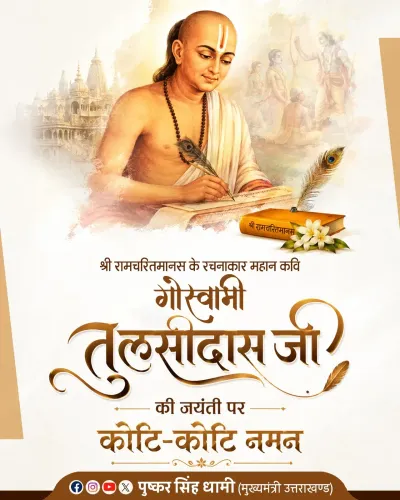
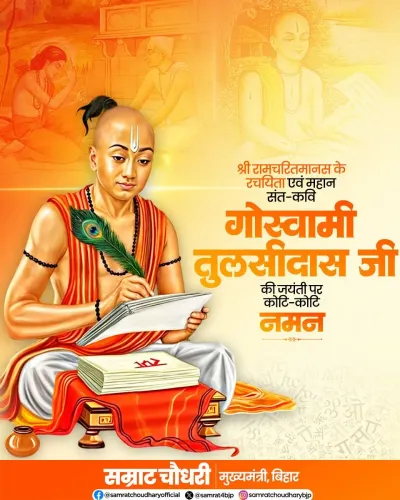
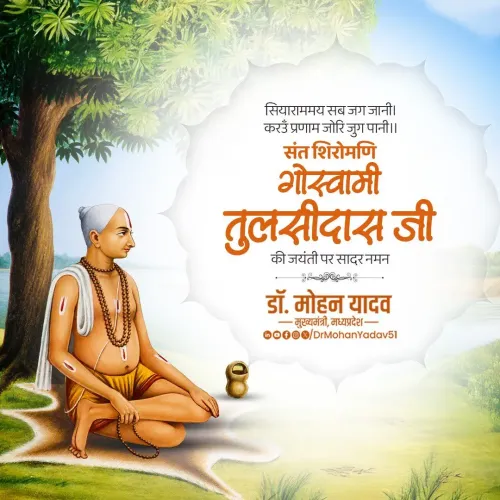
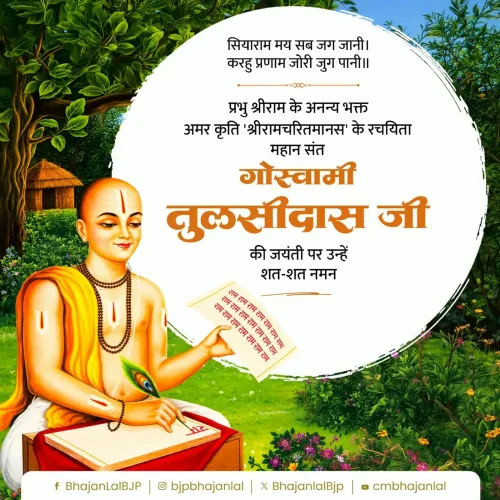
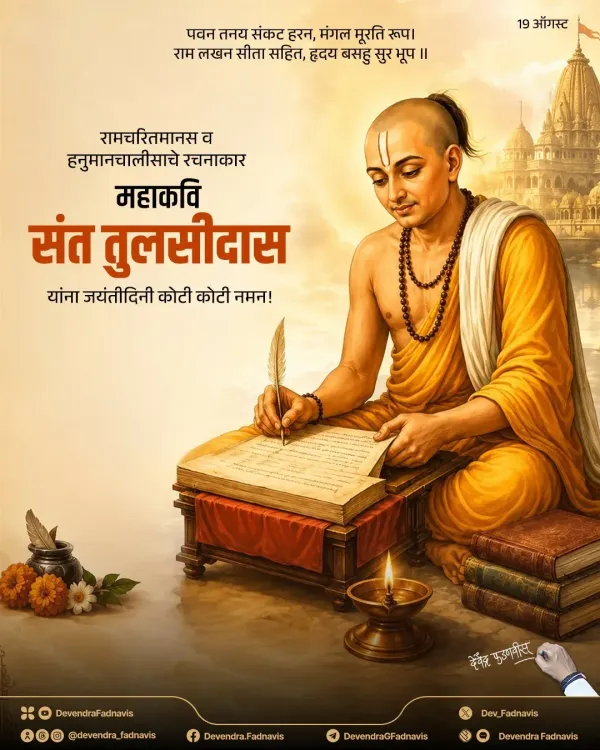
Maharashtra Chief Minister Devendra Fadnavis marked Tulsidas Jayanti on 19 August 2026 by reciting a doha from the Ramcharitmanas and paying tribute to the 16th-century poet-saint, composer of the Ramcharitmanas and Hanuman Chalisa, calling his verses timeless carriers of devotion across generations.
Key Takeaways
Maharashtra CM Devendra Fadnavis posted a tribute to Sant Tulsidas on Tulsidas Jayanti, 19 August 2026 .
He recited the doha beginning 'Pawan tanay sankat haran' from the Ramcharitmanas .
Fadnavis described Tulsidas as a 'great devotee of Prabhu Shri Ram' and credited him as the creator of both the Ramcharitmanas and the Hanuman Chalisa .
Sant Tulsidas was a 16th-century poet-saint of the Bhakti movement who composed in vernacular Awadhi , making devotional literature accessible to ordinary people.
The tribute was posted in Hindi, Marathi, and English , reflecting the multilingual public address typical of Maharashtra's political communication.
On the birth anniversary of one of India's most revered poet-saints, Maharashtra Chief Minister Devendra Fadnavis paused to honour the man whose words have shaped devotion for nearly five centuries. On Wednesday, 19 August 2026, the Chief Minister posted a heartfelt tribute to MahaKavi Sant Tulsidas on the occasion of Tulsidas Jayanti, reciting a verse from the Ramcharitmanas and calling for remembrance of the saint's timeless legacy.
Fadnavis opened his tribute with a celebrated doha (couplet) from the Ramcharitmanas: 'Pawan tanay sankat haran, mangal moorti roop. Ram Lakhan Sita sahit, hriday basahu sur bhoop.' — invoking Hanuman, the son of the wind god, as the remover of sorrows, and praying that he dwell in the heart alongside Ram, Lakhan, and Sita. The Chief Minister then paid his respects in Marathi and English, offering 'koti koti naman' — salutations in the millions — to the great saint.
The poet who gave India its most-read scripture
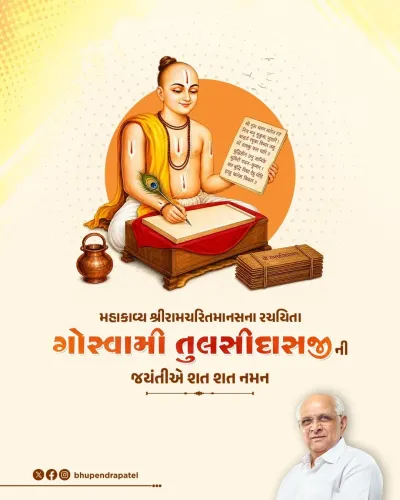
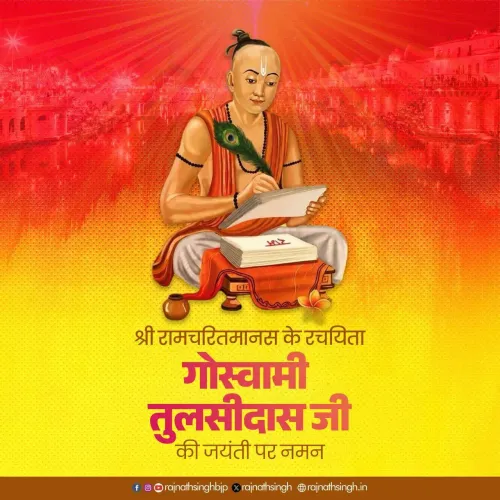
Sant Tulsidas, the 16th-century poet-saint, is widely regarded as one of the greatest figures in the Bhakti movement. His magnum opus, the Shri Ramcharitmanas — a retelling of the Ramayana in the vernacular Awadhi language — brought the story of Prabhu Shri Ram directly to ordinary people at a time when Sanskrit scholarship was the preserve of the few. He is also the composer of the Hanuman Chalisa, the forty-verse hymn to Hanuman that remains among the most recited devotional texts in the world today.
Tulsidas is believed to have been born in Rajapur (in present-day Uttar Pradesh) and spent much of his life in Varanasi and Ayodhya. His verses, composed in a language the common person could hear and sing, democratised devotion — a contribution Fadnavis acknowledged directly: 'His timeless verses continue to spread the values of devotion across generations.'
Jayanti observed across Maharashtra and the nation
Tulsidas Jayanti, observed on the Saptami tithi of Shravana Shukla Paksha according to the Hindu lunar calendar, draws tributes from political leaders, religious institutions, and cultural organisations every year. For a Chief Minister of Maharashtra — a state with a deep tradition of the Varkari saint-poet lineage — marking the occasion publicly carries both cultural and political resonance. Fadnavis's post, tagged with #TulsidasJayanti and #Maharashtra, situates the tribute firmly within the state's public discourse.
Point of View
Marathi, and English — is a deliberate act of cultural positioning, aligning the BJP-led Maharashtra government with the Bhakti saint tradition that enjoys deep popular reverence across caste and class lines. Invoking Tulsidas, the poet who democratised Ram devotion through vernacular verse, carries particular weight in the current political climate where Ayodhya and Ram bhakti remain central to the BJP's cultural identity. For a Chief Minister governing Maharashtra, a state with its own rich saint-poet tradition from Dnyaneshwar to Tukaram, the gesture also signals an attempt to bridge the pan-Indian Vaishnava devotional stream with local Varkari sensibilities. The post is ceremonial in nature but not politically neutral — it is a quiet, consistent thread in a larger cultural narrative the ruling party has woven over several years.
NationPress
3 Oct 2026
Frequently Asked Questions
Why is Tulsidas Jayanti celebrated?
Tulsidas Jayanti marks the birth anniversary of Sant Tulsidas , the 16th-century poet-saint who composed the Shri Ramcharitmanas and the Hanuman Chalisa . It is observed on the Saptami tithi of Shravana Shukla Paksha in the Hindu lunar calendar and is marked with recitations, prayers, and public tributes across India.
Who wrote the Hanuman Chalisa?
The Hanuman Chalisa was composed by Sant Tulsidas , the same poet-saint who wrote the Ramcharitmanas . It is a forty-verse hymn in praise of Hanuman and remains one of the most widely recited devotional texts in the world.
What did CM Devendra Fadnavis post on Tulsidas Jayanti 2026?
Maharashtra Chief Minister Devendra Fadnavis posted a tribute on 19 August 2026 reciting a doha from the Ramcharitmanas and offering 'koti koti naman' to Sant Tulsidas in Hindi, Marathi, and English, honouring him as a great devotee of Prabhu Shri Ram.
What language did Tulsidas write in?
Sant Tulsidas primarily composed in Awadhi , a vernacular language of northern India, which allowed his works — especially the Ramcharitmanas — to reach ordinary people who did not have access to Sanskrit scholarship.
What is the doha 'Pawan tanay sankat haran' about?
The doha 'Pawan tanay sankat haran, mangal moorti roop. Ram Lakhan Sita sahit, hriday basahu sur bhoop' is a verse from the Ramcharitmanas invoking Hanuman — son of the wind god — as the remover of sorrows, praying that he dwell in the devotee's heart alongside Ram, Lakhan, and Sita .