Gujarat CM Patel Launches Green Tech Road Upgrade Worth ₹1,147 Cr
Synopsis
The Chief Minister's Office of Gujarat announced a ₹1,147 crore budget provision under CM Bhupendra Patel to upgrade 20 road stretches using climate-resilient green technology, recycling old pavement material to cut costs, boost durability, and promote eco-friendly construction across the state.
Key Takeaways
₹1,147 crore has been allocated in Gujarat's current-year budget for climate-resilient and green-technology road construction.
Work is set to begin on 20 road stretches spread across various districts of Gujarat.
The construction method involves recycling old pavement material from existing roads, reducing the need for fresh raw materials.
The approach is expected to lower construction costs while simultaneously improving road strength and durability.
The initiative is framed as aligned with PM Narendra Modi 's vision of speed and scale in India's road network development.
Gujarat's model mirrors a national shift toward circular-economy practices in public infrastructure, consistent with the National Green Highways Policy .
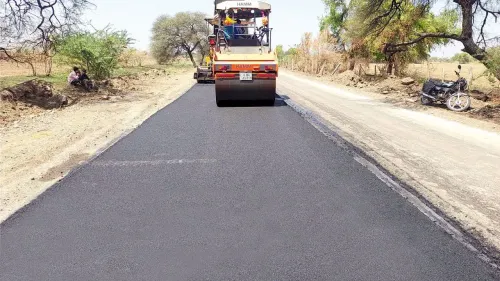
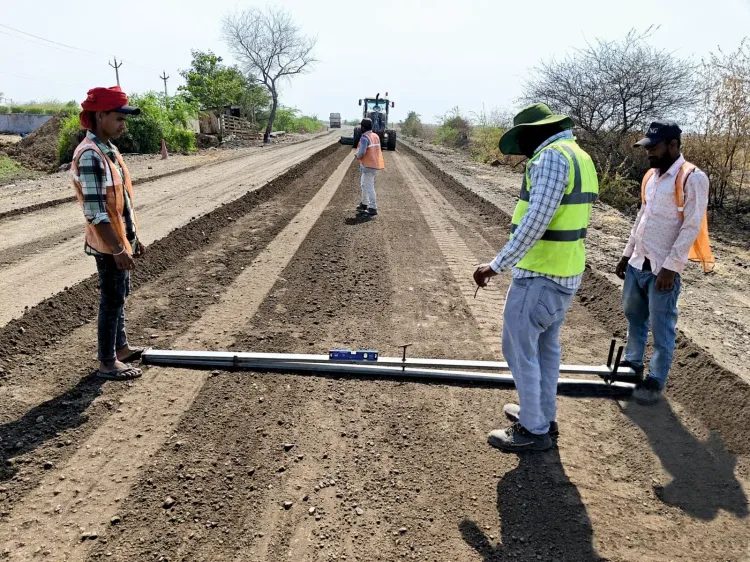
The Chief Minister's Office of Gujarat announced on Saturday, 23 May 2026 that the state government, under Chief Minister Bhupendra Patel, has allocated ₹1,147 crore in this year's budget to build climate-resilient roads using green technology across 20 road stretches in various districts of Gujarat.
Context
The CMO Gujarat post, written in Gujarati, is headlined 'ગ્રીન ટેક્નોલોજીથી ગુજરાતના માર્ગોની કાયાપલટ' — 'Transformation of Gujarat's Roads Through Green Technology.' It states that work on the 20 identified roads is about to commence, using a method that recycles old pavement material from existing roads to construct the new surface.
The post frames this initiative as aligned with Prime Minister Narendra Modi's vision of developing India's road network at speed and scale. According to the announcement, the approach simultaneously reduces construction costs, improves road strength, and promotes environmentally friendly practices.
Policy Backdrop
India's push for green road construction has a clear national lineage. The National Green Highways Policy, introduced in 2015, encouraged states to adopt eco-friendly materials and climate-resilient design in road projects. Gujarat's current initiative draws directly on this framework by mandating the reuse of existing pavement material — a circular-economy practice that reduces the demand for fresh raw materials and lowers the overall carbon footprint of road construction.
The broader Bharatmala Pariyojana, launched in 2015, has also been instrumental in accelerating national highway development, with Gujarat being a key beneficiary state. The state's current budget allocation of ₹1,147 crore for climate-resilient road construction signals an attempt to embed sustainability into routine state-level infrastructure spending, not just central flagship programmes.
Stakeholders and Impact
The primary beneficiaries are road users across the multiple districts of Gujarat where the 20 stretches are located. For the state's construction sector, the shift to recycled pavement material requires adoption of new techniques and machinery, creating both a compliance challenge and a potential technology upgrade opportunity.
From a public-finance perspective, the reuse of old road material is expected to lower per-kilometre construction costs compared to conventional methods. If durability holds through monsoon stress — a critical test for Indian roads — the model could justify wider replication across the state's road network in subsequent budget cycles.
What's Next
With work on the 20 road stretches described as about to begin, the immediate milestone is the formal commencement of construction across the identified districts. State infrastructure officials and policy observers will watch for mid-term evaluations of cost savings and road durability, particularly after the first full monsoon season following completion.
Gujarat's green road model, if it demonstrates measurable savings and resilience, could serve as a template for other states looking to reconcile rapid infrastructure expansion with India's broader climate commitments under its nationally determined contributions.
Point of View
147 crore green road allocation is more than a budgetary line item — it is a deliberate attempt to institutionalise circular-economy principles within routine state infrastructure spending. By anchoring the announcement to PM Modi's 'speed and scale' vision, the CMO is also signalling political alignment with the Centre at a time when states compete for Bharatmala funds and central infrastructure grants. The recycled-pavement approach, if it survives monsoon scrutiny, could give Gujarat a replicable template that other BJP-governed states may adopt as a showcase of sustainable governance. The real test, however, lies in independent verification of cost and durability outcomes — metrics the state has yet to publish.
NationPress
10 Oct 2026
Frequently Asked Questions
What is Gujarat's green technology road construction plan?
Gujarat has budgeted ₹1,147 crore to build roads using climate-resilient green technology across 20 stretches in various districts, recycling old pavement material to cut costs and reduce environmental impact.
Which roads in Gujarat will get green technology treatment?
The announcement covers 20 road stretches across multiple districts of Gujarat; the state government has not yet published a district-wise list of the specific roads in the public announcement.
How does recycled pavement road construction work?
Old material from existing road surfaces is processed and reused as the base or surface layer of the new road, reducing the need for fresh aggregates, lowering costs, and decreasing construction waste.
What is the National Green Highways Policy?
Introduced in 2015 , the National Green Highways Policy encourages states to use eco-friendly materials and climate-resilient design in road construction, forming the national policy backbone for initiatives like Gujarat's current programme.
How does Gujarat's road plan connect to Bharatmala Pariyojana?
Bharatmala Pariyojana , launched in 2015 , accelerated national highway development in Gujarat and other states; Gujarat's green road initiative builds on that momentum by adding sustainability mandates to state-funded road projects.