Gujarat green road tech: ₹1,147 crore project to rebuild 20 roads across state
Synopsis
Gujarat is not just fixing roads — it is rebuilding them from the ground up using a material-reuse method that cuts costs and emissions simultaneously. With ₹1,147 crore sanctioned across 20 roads in 17 districts, this is the state's most geographically widespread sustainable road programme yet, and a potential blueprint for India's climate-resilient infrastructure push.
Key Takeaways
The Gujarat government has sanctioned a ₹1,147 crore programme to reconstruct 20 roads across 17 districts using green technology.
The construction method reuses old pavement material, soil, and metal, reducing costs and lowering carbon emissions.
A Stress Absorbing Membrane Interlayer (SAMI) fibre sheet is applied after a seven-day curing period to prevent cracking and extend road lifespan.
The largest single project is the Jambusar-Tankali-Deola road in Bharuch , approved at ₹50 crore .
Project scope includes road widening, four-laning, white topping, glass grid technology, and RCC gutter lines.
The state government has indicated this model could become the standard for future road infrastructure upgrades in Gujarat.
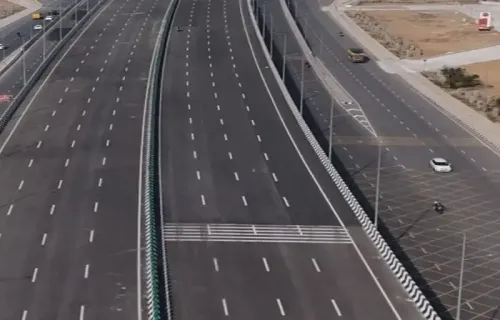
The Gujarat government has sanctioned a ₹1,147 crore initiative to reconstruct 20 roads across multiple districts using climate-resilient green technology, marking one of the state's most ambitious sustainable infrastructure drives to date. The projects, spanning cities and districts from Kutch to Surat, will reuse old road materials to cut costs and lower carbon emissions.
What the Green Technology Involves
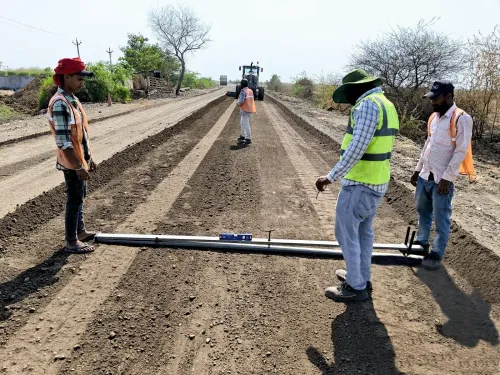
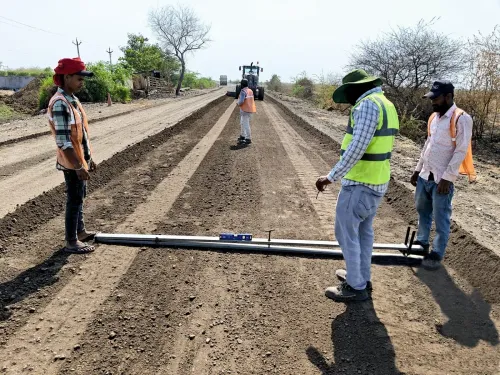
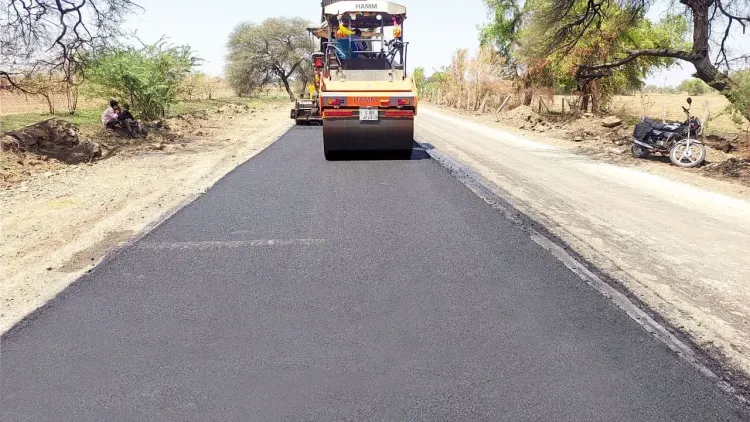
Under the construction method being deployed, existing road surfaces are excavated and treated with lime before being pulverised, rolled, and chemically stabilised. Old pavement material, soil, and metal are reused rather than discarded, reducing both waste and procurement costs.
After a seven-day curing period, a Stress Absorbing Membrane Interlayer (SAMI) — a high-tech fibre sheet — is applied before the final asphalt layer. The SAMI layer is designed to prevent cracking, absorb vehicular pressure, and extend road lifespan. Modern machinery handles levelling and compaction throughout the process.
The project scope includes road widening, resurfacing, RCC gutter lines, four-laning, earthworks, side shoulders, rumble strips, road furniture, white topping, and glass grid technology.
Key Projects Sanctioned Across Districts
The single largest approved project is the Jambusar-Tankali-Deola road in Bharuch district, cleared at ₹50 crore. Other roads under the programme span a wide geographic footprint:
Patan district will see work on the Lanwa-Manund-Sander-Balisana Road and the Radhanpur-Mashali-Madhapura Road. Gir Somnath gets the Bhidiya Somnath Road; Mahisagar the Santrampur-Jalod Road; and Morbi the Morbi-Nani Vavdi-Baghthala Road.
Further approvals cover the Surendranagar Bypass Road in Surendranagar; the Dindoli-Karadwa-Iklera Road in Surat; the Manglej-Nareshwar Road and Karjan-Amod Road in Vadodara; the Kosindra-Bhakha Road in Chhota Udepur; the Isarwada-Undel Road and Vadtal-Jol-Bakrol Road in Anand; the Valam-Kadi Road and Peplu-Kapra Road in Mehsana; the Luni-Gundala-Patri-Tappar-Babiya Road in Kutch; the Talaja-Gopnath Road in Bhavnagar; the Kalavad-Jamvanthali-Fala Road in Jamnagar; and the Kothara Approach Road in Narmada district.
Why It Matters for Sustainability and Cost
According to experts cited by the state government, the green construction approach lowers carbon emissions and conserves natural resources by minimising fresh material extraction. The reuse of existing pavement material also reduces construction costs compared with conventional road-building methods.
Officials note that the improved road base resulting from lime stabilisation and SAMI application is expected to increase durability and reduce the frequency of repairs — a persistent cost burden on state road budgets. This comes amid a broader national push to align infrastructure spending with climate resilience goals.
What Comes Next
With approvals in place for all 20 roads across 17 districts, ground-level work is set to commence. The state government has positioned this programme as a template for future road construction, signalling that green technology could become the default standard for Gujarat's road infrastructure upgrades going forward.
Point of View
147 crore green road programme is notable less for its scale than for its method — reusing existing pavement material is a structural departure from the extract-and-lay approach that has made Indian road maintenance a recurring budget drain. The SAMI technology is proven in higher-income markets but remains underdeployed in India, so this rollout across 17 districts will serve as a real-world stress test. The harder question is execution: green road techniques require tighter quality control than conventional methods, and India's track record on infrastructure quality assurance at district level is uneven. If the durability gains materialise, the cost-per-kilometre argument alone could push other states to follow.
NationPress
24 Sept 2026
Frequently Asked Questions
What is Gujarat's ₹1,147 crore green road project?
It is a state government initiative to reconstruct 20 roads across 17 districts of Gujarat using climate-resilient green technology, at a total outlay of ₹1,147 crore. The programme reuses old road materials and applies a Stress Absorbing Membrane Interlayer (SAMI) to improve durability and reduce carbon emissions.
What is the green technology being used for road construction in Gujarat?
The method involves excavating existing road surfaces, treating them with lime, pulverising and chemically stabilising the material, then compacting it with modern machinery. After seven days, a SAMI fibre sheet is laid before the final asphalt application to prevent cracking and extend road life.
Which districts are covered under the Gujarat green road project?
The project spans 17 districts including Bharuch, Patan, Gir Somnath, Mahisagar, Morbi, Surendranagar, Surat, Vadodara, Chhota Udepur, Anand, Mehsana, Kutch, Bhavnagar, Jamnagar, and Narmada, among others.
What is a Stress Absorbing Membrane Interlayer (SAMI) and why is it used?
A SAMI is a high-tech fibre sheet laid between the road base and the asphalt surface layer. It is designed to absorb vehicular pressure, prevent crack propagation, and significantly extend the lifespan of the road, reducing the need for frequent repairs.
How does green road technology reduce construction costs?
By reusing existing pavement material, soil, and metal rather than procuring fresh raw materials, the green method lowers both material and transportation costs. It also reduces long-term maintenance expenditure by improving road durability and lowering the frequency of repair cycles.