Trump Pauses Canada Tariffs, Signals Keystone XL Revival

Synopsis
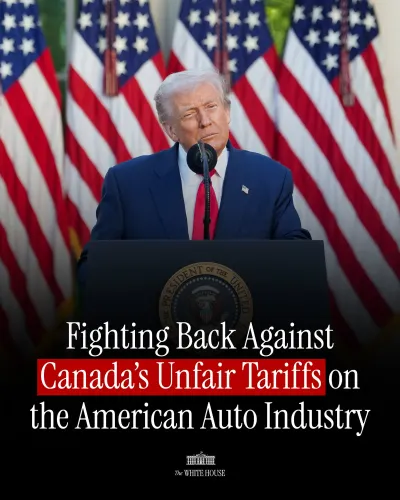
President Trump has paused 50% tariffs on Canada for three days, citing a near-final bilateral deal. He also signalled a possible revival of the Keystone XL Pipeline, cancelled by President Biden in 2021, framing it as part of the emerging US-Canada arrangement.
Key Takeaways
President Trump announced a three-day pause on 50% tariffs against Canada that were set to begin the following morning.
The pause is contingent on 'the finalization of documents,' meaning no deal has been formally signed yet.
Trump explicitly referenced the Keystone XL Pipeline — cancelled by President Biden on January 20, 2021 — as potentially being 'awoken from the grave.' Canada is one of the United States' largest trading partners , making a 50% tariff regime a major threat to integrated North American supply chains.
The 72-hour window is the critical timeline: a completed deal averts the tariffs; a breakdown reinstates them in full.
A trade war ceasefire — and a ghost from the pipeline past. President Donald J. Trump announced on Wednesday, August 19, 2026 that he has paused the 50% tariffs on Canada for a three-day window, citing a near-finalised deal between Washington and Ottawa — and in the same breath, resurrected the spectre of the Keystone XL Pipeline, the continent's most politically charged infrastructure project.
The tariff pause and what it means for the deal
Trump stated the pause is contingent on 'the finalization of documents,' making clear that the deal is not yet signed. The 50% tariff rate — an extraordinarily steep levy on a neighbour and treaty partner — had been set to take effect the following morning, giving both sides a narrow three-day corridor to close the agreement. The announcement signals that negotiations had reached a point of sufficient confidence for Trump to stand down the tariff clock, but the outcome remains tied to paperwork.
Canada is one of the United States' largest trading partners, with bilateral trade running into hundreds of billions of dollars annually. A 50% tariff regime, had it kicked in, would have sent shockwaves through integrated North American supply chains — from auto manufacturing to agriculture to energy.
Keystone XL: the pipeline Trump wants to wake from the dead
The more electric line in Trump's post may be the one about Keystone XL. The pipeline, designed to carry crude oil from Alberta's oil sands to refineries in the United States Gulf Coast, was cancelled by President Joe Biden on his first day in office in January 2021 — a move Trump has long condemned. Trump's framing — 'long ago killed by Sleepy Joe Biden, may be awoken from the grave' — is a direct political signal to Canada's energy sector and to domestic fossil-fuel constituencies that Keystone XL could be back on the table as part of any bilateral arrangement.
The pipeline had been a years-long flashpoint: environmentalists argued it locked in decades of high-emission oil-sands extraction; proponents said it meant thousands of construction jobs and North American energy security. Its revival, even as a negotiating chip, would mark one of the most consequential energy-policy reversals in recent US-Canada history.
What the three-day clock means for both capitals
With documents still being finalised, the next 72 hours are the story. A completed deal would represent a significant diplomatic win for both governments — averting a tariff shock to a deeply intertwined economy. A breakdown would snap the tariffs back into place with full force. The Keystone XL reference suggests energy access and cross-border infrastructure are on the table, not just tariff schedules — meaning whatever emerges could reshape the US-Canada economic relationship well beyond trade duties.
The world is watching Washington and Ottawa race a self-imposed deadline. Three days to seal it — or feel it.
Point of View
And the three-day pause is now the closing mechanism. The Keystone XL reference is not incidental: it signals that energy infrastructure concessions may be the currency Canada is paying for tariff relief, tying a trade dispute to a decade-old pipeline battle in a single post. For India and other economies watching US trade tactics, the episode is a live demonstration of how Washington uses punishing tariff threats as negotiating instruments — and how quickly they can be dialled back once a deal is in sight. The outcome of this 72-hour window will test whether Trump's tariff brinkmanship produces durable agreements or merely temporary de-escalations.
NationPress
3 Oct 2026
Frequently Asked Questions
Why did Trump pause the 50% tariffs on Canada?
Trump paused the tariffs for three days because the United States and Canada are close to finalising a deal, with documents still being completed. The pause gives both sides a narrow window to seal the agreement before the tariffs take effect.
What is the Keystone XL Pipeline and why does it matter?
The Keystone XL Pipeline was a proposed infrastructure project to transport crude oil from Alberta, Canada, to US Gulf Coast refineries. It was cancelled by President Biden on his first day in office in January 2021. Trump has now signalled it could be revived as part of the US-Canada deal.
Is the US-Canada deal finalised?
No. Trump stated the deal is 'subject to the finalization of documents,' meaning it is not yet signed. The three-day tariff pause is intended to allow both governments to complete the paperwork.
What happens if the US-Canada deal is not signed in three days?
If documents are not finalised within the three-day window, the 50% tariffs on Canada would be expected to snap back into place, potentially delivering a major shock to North American trade and supply chains.
How do Trump's Canada tariffs affect India?
While the tariffs directly target Canada, disruption to North American supply chains — particularly in energy, auto, and agriculture — can ripple into global commodity prices and trade flows that affect India's import costs and export competitiveness.