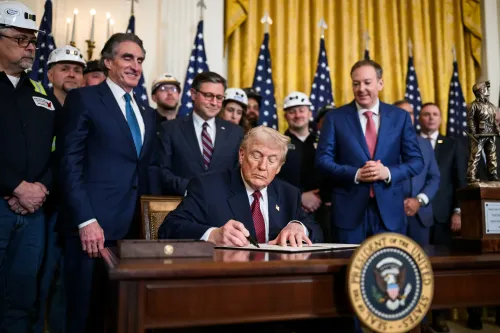
Trump approves transborder pipeline permit, eyes North American energy dominance

Synopsis
President Trump's approval of a transborder pipeline permit — explicitly likened to the cancelled Keystone XL — signals the most assertive US energy infrastructure move in years. With global markets volatile and the Biden-era energy rollbacks now being reversed, the decision could reshape North American oil and gas flows and reignite a fierce environmental debate.
Key Takeaways
President Donald Trump approved a presidential permit for a major transborder pipeline on 1 May .
White House Staff Secretary Will Scharf compared the project to the cancelled Keystone XL pipeline.
The administration says the pipeline will "significantly expand" the ability to move oil and gas across North America .
Trump cited job creation and manufacturing revival as key economic benefits of the approval.
The project comes amid volatile global energy markets and is expected to face environmental scrutiny similar to Keystone XL .
US President Donald Trump on 1 May approved a presidential permit for a major transborder pipeline project, signalling a renewed push for energy infrastructure expansion and deeper North American supply integration. The move marks one of the most significant energy infrastructure decisions of Trump's current term.
What the Pipeline Project Involves
White House Staff Secretary Will Scharf described the project as "a transborder pipeline similar to the old Keystone XL pipeline." He added that it "will significantly expand our ability to move oil and gas around North America." Scharf further called it "a huge deal in terms of long-term energy dominance and energy security."
Trump himself drew a sharp contrast with previous administrations' energy decisions. "They wouldn't sign a pipeline deal. We have pipelines going up," he said. He also argued that pipelines are a more efficient and safer mode of transport compared to road or rail alternatives. "As opposed to trucking it or training it… they're great," he said.
Jobs and Economic Rationale
The administration has framed the approval partly around employment benefits. "A lot of jobs, too," Trump noted, linking energy infrastructure expansion to broader industrial revival. He pointed to increased manufacturing activity as evidence of momentum, stating, "We have auto plants being built all over the country."
Trump also highlighted a surge in foreign investment inflows, citing companies returning or expanding from Canada, Germany, Japan, and South Korea as part of what he described as a wider economic resurgence.
Political and Environmental Context
Pipeline projects have historically been among the most politically contentious infrastructure decisions in the United States, with debates centring on environmental risks, indigenous land rights, and long-term climate commitments. The original Keystone XL pipeline — to which this project has been compared — was cancelled by the Biden administration in 2021 after years of legal and political battles.
This approval comes at a time when global energy markets remain volatile, shaped by ongoing geopolitical conflicts and persistent supply chain disruptions. Critics are likely to raise environmental objections similar to those that dogged the Keystone XL project, though the administration has not yet detailed the specific route or capacity of the new pipeline.
Broader Impact on Global Energy Markets
Shifts in US energy infrastructure policy carry significant weight for global markets, particularly for countries that rely heavily on energy imports. A more integrated North American energy grid — connecting US, Canadian, and potentially Mexican supply chains — could influence oil and gas pricing benchmarks worldwide.
The administration is expected to release further details on project timelines, environmental reviews, and regulatory approvals in the coming weeks, as the pipeline moves from permit approval toward active development.
Point of View
And this permit is the most visible signal yet. But the Keystone XL comparison cuts both ways: that project spent over a decade in legal and political limbo before being cancelled, and a similar fate is plausible here if environmental groups mount a coordinated legal challenge. The administration's framing around jobs and energy security is politically potent, but without route disclosures, capacity figures, and environmental impact assessments, the announcement remains a headline more than a project. The real test will be whether this pipeline reaches a shovel in the ground — or joins the long list of US energy infrastructure promises that stalled between permit and pipe.
NationPress
19 Sept 2026
Frequently Asked Questions
What pipeline did Trump approve on 1 May 2025?
President Trump approved a presidential permit for a major transborder pipeline project on 1 May, described by White House Staff Secretary Will Scharf as similar to the cancelled Keystone XL pipeline. The project is intended to expand the movement of oil and gas across North America.
How does this pipeline compare to Keystone XL?
White House Staff Secretary Will Scharf explicitly likened the new project to the Keystone XL pipeline, which was cancelled by the Biden administration in 2021. Like Keystone XL, the new pipeline is a transborder project aimed at integrating North American energy supply, though specific route and capacity details have not yet been disclosed.
Why is the pipeline approval significant?
The approval signals a major shift in US energy infrastructure policy, reversing the direction set by the previous administration. It could expand North American oil and gas supply capacity, influence global energy markets, and create jobs — though it is also expected to face significant environmental opposition.
What are the likely objections to the pipeline?
Pipeline projects of this scale have historically faced opposition centred on environmental risks, climate concerns, and indigenous land rights. The Keystone XL faced over a decade of legal battles before being cancelled, and critics are likely to mount similar challenges against this new project.
What happens next after the permit approval?
The administration is expected to release further details on project timelines, environmental review processes, and additional regulatory approvals in the coming weeks. Moving from a presidential permit to active construction will require clearing several further legal and regulatory hurdles.