Central teams begin Karnataka drought survey; crop losses may hit ₹60,000 crore
Synopsis
Karnataka's drought is shaping up as one of the state's costliest agricultural crises, with estimated losses of up to ₹60,000 crore across 217 taluks. Three central teams are now in the field to verify the damage — their findings will determine the size of the relief package the Centre is willing to release.
Key Takeaways
Three central teams began field drought assessment in Karnataka on 3 October 2026 , covering Tumakuru-Chitradurga-Davanagere, North Karnataka, and Mysuru zones.
Total crop and related losses are estimated at ₹50,000 crore to ₹60,000 crore , according to Deputy CM G.
Karnataka has declared 217 of its 240 taluks drought-hit; losses in 177 taluks already assessed at approximately ₹46,000 crore .
The state has submitted two memoranda to the Centre; a third and final memorandum will follow once all 217 taluks are assessed.
Recent rainfall will not alter the drought assessment, as most crop damage predates the rains, Parameshwara said.
FIRs registered over alleged bulk deletion of eligible voters from electoral rolls via Form-7 applications; Parameshwara called for an impartial probe.
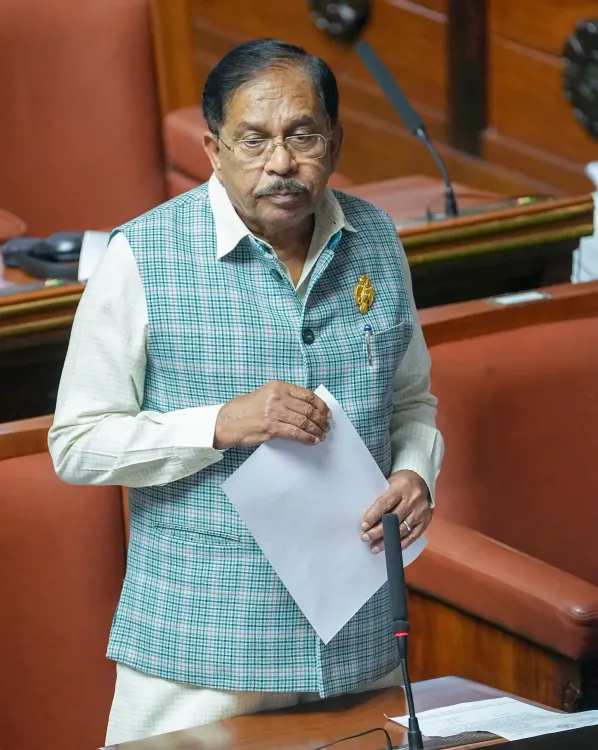
Three central government teams have begun field assessments of the drought situation across Karnataka, with the state government estimating total crop and related losses at between ₹50,000 crore and ₹60,000 crore. Deputy Chief Minister and Revenue Minister G. Parameshwara announced on Saturday, 3 October 2026, that the state would submit a final memorandum seeking drought relief from the Centre once the full assessment is completed.
Scope of the Central Assessment
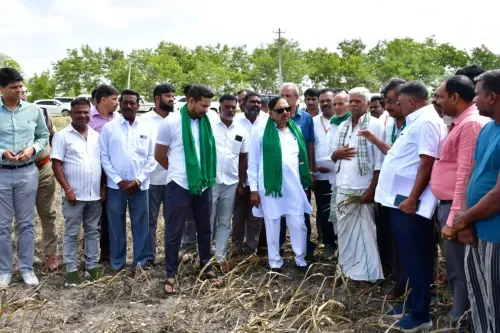
The three central teams comprise officials drawn from multiple Union ministries, including the Agriculture Ministry and the Environment Ministry. Each team has been assigned a specific zone: one will cover Tumakuru, Chitradurga, and Davanagere; a second will traverse North Karnataka; and the third will inspect the Mysuru region. Before field visits begin, the teams will be briefed by state officials and will interact with deputy commissioners and local administrators to cross-verify the information Karnataka has already submitted to the Centre.
Scale of Drought Damage
Karnataka has declared 217 of its 240 taluks drought-hit — among the largest drought declarations the state has made in recent memory. Crop losses across 177 taluks have already been assessed at approximately ₹46,000 crore, a figure included in the state's second memorandum to the Centre. The remaining 40 taluks — declared drought-hit on 1 October 2026 — are still being assessed. Once all 217 taluks are covered, total losses are projected to climb to between ₹50,000 crore and ₹60,000 crore, according to Parameshwara.
The state has now submitted two memoranda to the Centre seeking relief. A third and final memorandum covering all 217 drought-affected taluks will be filed after the central teams conclude their field assessment and the outstanding loss estimates are finalised.
Recent Rainfall Will Not Alter Assessment
Parameshwara addressed concerns that recent rains could undermine the drought classification. He clarified that while the rainfall may ease drinking water shortages in some areas, it would not substantially benefit crops that had already suffered irreversible damage during the critical May–September period. 'The drought situation will not be assessed only on the basis of the recent rainfall,' he said. For the 22 taluks not yet declared drought-hit, ground-truthing will determine whether they qualify; certain taluks in the coastal region may not meet the required criteria, he noted.
Electoral Roll Deletions: Parallel Controversy
Separately, Parameshwara addressed allegations that eligible voters had been removed from electoral rolls through Form-7 applications. He confirmed that FIRs have already been registered at several locations in connection with these applications. He alleged that Form-7 applications were collected, signed, and submitted in bulk bundles — some containing applications for 50 to 60 people from the same community — raising questions about how applicants obtained others' personal and electoral data. 'Where were these applications printed? Who printed them? How did the people submitting them obtain all this information?' he asked, alleging a coordinated effort behind the deletions.
He rejected Bharatiya Janata Party (BJP) criticism that Congress leaders had staged a protest at the Chief Electoral Officer's office, saying the delegation had gone there only to submit a memorandum seeking action. He called for an impartial investigation and said the government would accept its findings. 'If the investigation establishes that no wrongdoing took place, we are ready to accept it. But our allegation is that there was wrongdoing, and we will provide the evidence,' he said. The Election Commission has been requested to initiate criminal proceedings wherever warranted, he added.
With the central teams' field visits expected to conclude shortly, all eyes are now on the final memorandum and the Centre's response on drought relief quantum.
Point of View
000 crore drought damage estimate from a single state is extraordinary, and the Centre's eventual relief quantum will be a test of federal fiscal federalism. Karnataka's Congress government has been aggressive in documenting losses — submitting two memoranda already and preparing a third — which signals political urgency as much as administrative thoroughness. The unresolved question is whether the Centre will match the state's own estimates or apply its standard SDRF/NDRF formula, which historically disburses far less than what states claim. The parallel controversy over electoral roll deletions risks muddying the drought narrative and becoming a flash point ahead of upcoming electoral cycles.
NationPress
3 Oct 2026
Frequently Asked Questions
Why have central teams arrived in Karnataka?
Three central government teams are conducting field assessments to verify drought conditions and crop losses across Karnataka after the state declared 217 of its 240 taluks drought-hit. Their findings will inform the Centre's decision on how much drought relief to disburse.
How large are Karnataka's drought-related crop losses?
The state estimates total crop and related losses at between ₹50,000 crore and ₹60,000 crore. Losses in 177 taluks have already been assessed at around ₹46,000 crore, while the remaining 40 taluks declared drought-hit on 1 October are still being counted.
Will recent rains change the drought assessment outcome?
No, according to Deputy CM G. Parameshwara. The rainfall may help with drinking water availability but will not reverse damage to crops that already failed during the May–September period. The assessment will be based on rainfall and drought data from those five months.
What is the next step after the central teams complete their visit?
Karnataka will submit a third and final memorandum to the Centre covering all 217 drought-hit taluks once the central teams finish their assessment and the remaining loss estimates are compiled. The Centre will then determine the relief package.
What are the allegations about Form-7 electoral roll deletions?
Deputy CM Parameshwara alleged that eligible voters were removed from electoral rolls through bulk Form-7 applications — some bundles allegedly covering 50 to 60 people from the same community. FIRs have been registered at several locations, and the Election Commission has been asked to initiate criminal proceedings where warranted.