Nadda fires at Congress over 2013 ordinance tear and EC law
Synopsis
Union Health Minister J. P. Nadda has attacked Congress over democratic credibility, citing Rahul Gandhi's 2013 public tearing of a UPA ordinance and contrasting it with the Modi government's 2023 law that gave the Leader of Opposition a statutory role in appointing Election Commissioners.
Key Takeaways
Nadda posted on 30 October 2026 accusing Congress of hypocrisy on constitutional values under the hashtag #SaveDemocracyRemoveAnarchy .
In September 2013 , Rahul Gandhi publicly tore a copy of the UPA government's ordinance on the Representation of the People Act, prompting its swift withdrawal.
The Chief Election Commissioner and Other Election Commissioners Act, December 2023 , mandates the inclusion of the Leader of Opposition in the selection committee for Election Commissioners.
The Supreme Court had in March 2023 directed inclusion of the Chief Justice of India in the selection panel pending parliamentary legislation.
Nadda frames the contrast as evidence of a gap between Congress's stated democratic principles and its actual conduct in government.
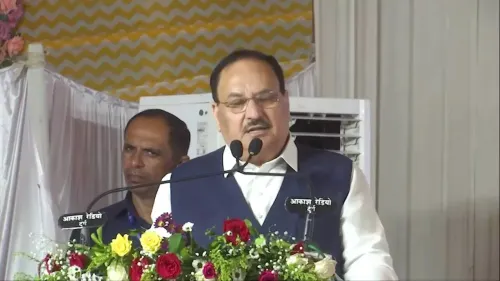
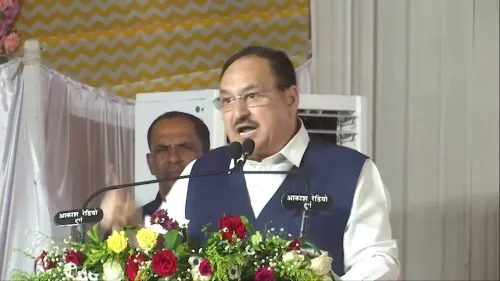
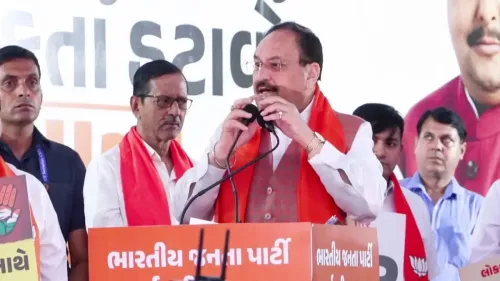
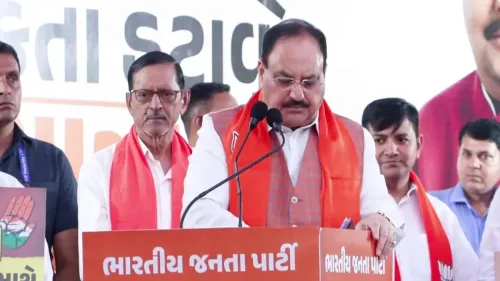
A pointed accusation of democratic double standards — and a 13-year-old episode involving a torn document — is back at the centre of India's political arena. Union Health Minister J. P. Nadda took to X on Friday, 30 October 2026, invoking Rahul Gandhi's 2013 public tearing of a government ordinance and contrasting it with the Modi government's 2023 election-commissioner appointment law to charge Congress with hypocrisy on constitutional values.
Posting under the hashtag #SaveDemocracyRemoveAnarchy, Nadda wrote: 'Congress today swears by the Constitution and democracy, yet Rahul Gandhi publicly tore up an ordinance of the Manmohan Singh government, insulting his own government and Parliament. Meanwhile, the Modi government in 2023 included the Leader of Opposition in the election commissioners' appointment process. This is the difference between Congress's words and deeds.'The 2013 press-conference moment Congress would rather forget
The episode Nadda references is etched in Indian political memory. In September 2013, the UPA government promulgated an ordinance seeking to amend the Representation of the People Act — the change would have allowed convicted legislators to retain their seats pending appeal, a provision critics called a shield for lawmakers facing criminal conviction.
At a press conference, Rahul Gandhi — then the Congress vice-president — called the ordinance 'complete nonsense' and tore up a copy of it in front of cameras. The optics were dramatic: an heir-apparent publicly demolishing his own ruling government's legislative instrument. Prime Minister Manmohan Singh, who was on an overseas trip at the time, returned to a cabinet that swiftly withdrew the ordinance. The episode triggered a fierce debate about party discipline, institutional respect, and inner-party democracy.
The 2023 Election Commissioner appointment law and the Opposition's seat at the table
Nadda's second exhibit is the Chief Election Commissioner and Other Election Commissioners (Appointment, Conditions of Service and Term of Office) Act, 2023. The road to that law ran through the Supreme Court: in March 2023, the Court directed that the Chief Justice of India be included in the selection panel for Election Commissioners while Parliament had yet to legislate on the matter.
When Parliament did act, in December 2023, the enacted law reconstituted the selection committee to include the Leader of Opposition — giving the principal opposition party a formal, statutory voice in picking the officials who run India's elections. Nadda's argument is that this structural inclusion of the opposition contradicts any narrative that the BJP undermines democratic institutions.
The partisan framing of constitutional bodies
Nadda's post lands in a well-worn groove of Indian political contest: each major party accusing the other of weaponising constitutional bodies while claiming principled high ground. The Election Commission of India, as the constitutional body that conducts the world's largest democratic exercise, sits at the heart of that argument.
What makes the exchange sharper now is the proximity to electoral cycles, where control of the narrative around institutional integrity carries direct political weight. By anchoring his charge to a specific, televised act — a document torn in front of cameras — Nadda aims to make the contrast visceral rather than merely rhetorical.
The Congress party's response, if any, is yet to come. But the BJP's consistent revival of the 2013 ordinance episode signals it remains one of the sharpest instruments in the party's rhetorical toolkit against its oldest rival.
The real test of either party's democratic credentials, observers note, will come not in press conferences or social-media posts but in how future Election Commissioner appointments under the 2023 Act actually unfold — and whether the opposition's statutory seat at the table translates into genuine institutional balance.
Point of View
Visually memorable act — a leader tearing government paperwork on camera — the BJP sidesteps abstract constitutional argument and goes straight for recorded contradiction. The inclusion of the 2023 Election Commissioner appointment law as a counter-example is significant: it attempts to flip the institutional-integrity narrative by pointing to a legislative act that structurally empowered the opposition. Whether the argument gains traction depends on how much public memory of 2013 survives and whether the 2023 Act's real-world implementation matches its statutory promise.
NationPress
31 Oct 2026
Frequently Asked Questions
Why did Rahul Gandhi tear the ordinance in 2013?
In September 2013 , Rahul Gandhi publicly tore a copy of a UPA government ordinance that sought to protect convicted legislators from disqualification pending appeal, calling it 'complete nonsense.' The ordinance was subsequently withdrawn by the cabinet.
What is the Chief Election Commissioner appointment law 2023?
The Chief Election Commissioner and Other Election Commissioners (Appointment, Conditions of Service and Term of Office) Act, 2023 , enacted in December 2023, reconstituted the selection committee for Election Commissioners to include the Leader of Opposition , giving the principal opposition party a statutory role in the appointments.
What did the Supreme Court say about Election Commissioner appointments?
In March 2023 , the Supreme Court directed that the Chief Justice of India be part of the selection panel for Election Commissioners until Parliament enacted a law on the matter. Parliament subsequently passed the 2023 Act.
What was the UPA 2013 ordinance about?
The September 2013 UPA ordinance proposed amending the Representation of the People Act to allow legislators convicted by courts to retain their parliamentary or assembly seats while their appeals were pending — a move widely criticised as protecting politicians with criminal convictions.
What is JP Nadda's current role in BJP and government?
J. P. Nadda is the Union Minister of Health and Family Welfare and Minister of Chemicals and Fertilizers, and also serves as the national president of the Bharatiya Janata Party (BJP) .