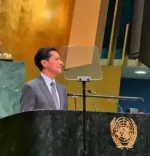
Nadda targets Rahul Gandhi, calls him democracy's misfortune
Synopsis
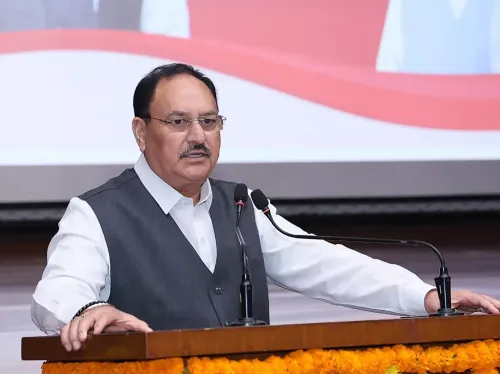
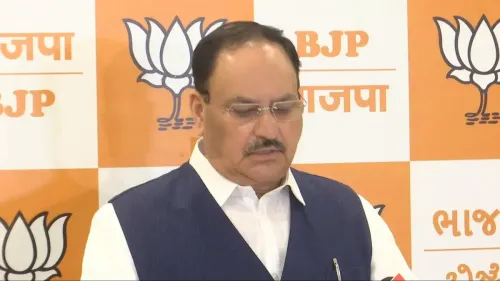
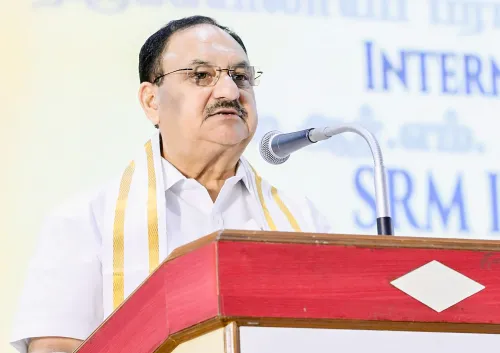
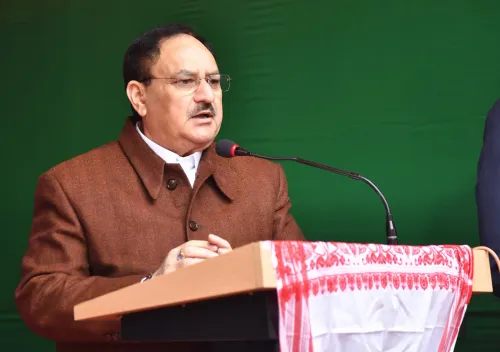
Union Health Minister and BJP president J. P. Nadda, posting on X on 14 August 2026, called Rahul Gandhi's position as Leader of Opposition a misfortune for Indian democracy and suggested Congress itself should feel sorrow at having Gandhi as its leader.
Key Takeaways
Nadda , Union Health Minister and BJP national president, attacked Rahul Gandhi in a Hindi post on X on 14 August 2026 .
Nadda called Gandhi's role as Leader of Opposition a 'misfortune for this country's democracy.' He framed the criticism as painful not just for the nation but for the Indian National Congress itself.
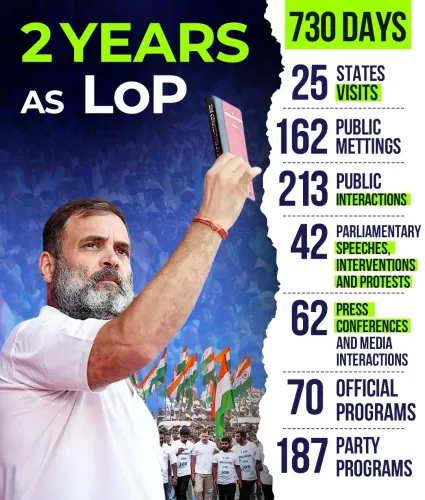
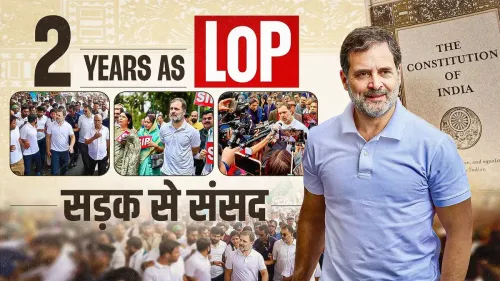
Rahul Gandhi was formally recognised as Leader of Opposition in the Lok Sabha after the 2024 general elections — the first time the post was filled in a decade.
BJP leaders have consistently questioned Gandhi's leadership credentials since 2014 , making this part of a long-running pattern of partisan positioning.
A sharp political salvo landed on the morning of 14 August 2026 — the eve of Independence Day — when Union Health Minister and BJP national president J. P. Nadda took direct aim at Rahul Gandhi, questioning his fitness to lead the opposition in India's parliament.
Posting in Hindi on X, Nadda wrote: 'ऐसा विपक्ष का नेता देखना ही बाक़ी रह गया था, ये देश के लोकतंत्र का दुर्भाग्य है।' — 'Such a leader of the opposition was yet to be seen; it is a misfortune for this country's democracy.' He added that even for the Congress, there could be no greater sorrow than having to accept Rahul Gandhi as their leader.
Nadda's two-pronged attack: democracy and Congress alike
The post is pointed in its construction: Nadda does not merely criticise Gandhi — he frames the critique as a problem for the nation first, and for Gandhi's own party second. By invoking democracy itself, the BJP chief elevates the charge beyond routine inter-party sparring into a question of institutional credibility. The implication is that the office of Leader of Opposition carries a weight Nadda believes Gandhi cannot bear.
Rahul Gandhi was formally recognised as Leader of Opposition in the Lok Sabha following the 2024 general elections — the first time the post was filled in a decade, after the Congress-led opposition crossed the numerical threshold required under parliamentary convention.
A familiar BJP playbook, sharpened for the occasion
Attacks on Rahul Gandhi's leadership credentials have been a recurring feature of BJP communication since 2014. What marks this particular post is its timing — the eve of Independence Day — and its unusual inclusion of Congress itself as a co-sufferer, a rhetorical move designed to deepen the sense of institutional embarrassment rather than simply score a partisan point.
The broader pattern is well established: BJP office-bearers have consistently used Gandhi's public appearances, parliamentary interventions, and foreign visits as occasions to question his suitability as opposition face. Nadda, as both a cabinet minister and the party's national president, carries the full institutional weight of that tradition.
With Parliament's next session on the horizon, Congress is likely to respond — in the House and in public. The question is whether Gandhi's own counter-punch, when it comes, reframes the exchange or simply extends it.
Point of View
He attempts to shift the attack from the partisan to the institutional register. The timing — Independence Day eve — amplifies the rhetorical stakes, framing the opposition's leadership as a national, not merely electoral, liability. The inclusion of Congress as a co-victim is a newer wrinkle in the standard BJP playbook, designed to deepen the sense of internal embarrassment within the opposition camp. Whether this lands as a serious indictment or routine political noise will depend heavily on how Gandhi and Congress respond in the next parliamentary session.
NationPress
28 Sept 2026
Frequently Asked Questions
What did J. P. Nadda say about Rahul Gandhi on 14 August 2026?
Nadda posted in Hindi on X calling Rahul Gandhi's position as Leader of Opposition a 'misfortune for democracy' and said even Congress should feel sorrow at having Gandhi as its leader.
Why is Rahul Gandhi the Leader of Opposition?
Rahul Gandhi was formally recognised as Leader of Opposition in the Lok Sabha following the 2024 general elections, when the Congress-led opposition crossed the numerical threshold required under parliamentary convention — the first time the post was filled in ten years.
Is J. P. Nadda the BJP president?
Yes. J. P. Nadda is the national president of the Bharatiya Janata Party and also serves as Union Minister of Health and Family Welfare and Minister of Chemicals and Fertilizers.
Why did Nadda post this on Independence Day eve?
The post was made on 14 August 2026, the day before Independence Day. The research does not confirm a specific trigger; the timing amplifies the rhetorical weight of framing the opposition leadership as a national concern.
How has BJP historically criticised Rahul Gandhi's leadership?
Since 2014, BJP leaders have repeatedly questioned Rahul Gandhi's suitability as an opposition face, using his parliamentary interventions, public appearances, and foreign visits as occasions for criticism. Nadda's post continues that pattern.