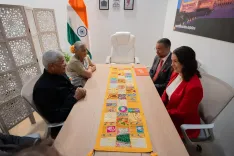
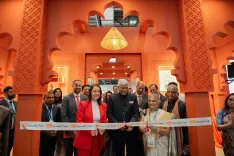
Goyal meets Denmark's Trade Minister, eyes deeper India-Denmark ties
Synopsis
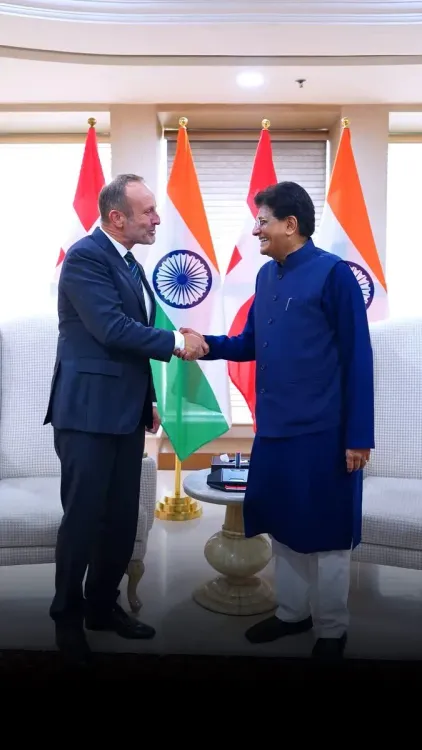
Commerce Minister Piyush Goyal met Denmark's Business and Competitiveness Minister Martin Lidegaard on November 3, 2026, reaffirming the India-Denmark Green Strategic Partnership and exploring expanded trade, investment, and industrial collaboration across key sectors.
Key Takeaways
Piyush Goyal held a bilateral meeting with Martin Lidegaard , Denmark's Minister for Business and Competitiveness, on November 3, 2026 .
Discussions centred on trade, investment, and industrial collaboration across 'key sectors'.
Both sides reaffirmed commitment to deepening bilateral economic engagement under the India-Denmark Green Strategic Partnership , launched in 2020 .
Denmark is a significant partner for India in green technology, including wind energy and clean-tech manufacturing.
The meeting is part of India's broader strategy of bilateral European economic diplomacy, running parallel to EU-India FTA negotiations.
Follow-up sector-specific working groups or joint investment statements would mark the next concrete step.
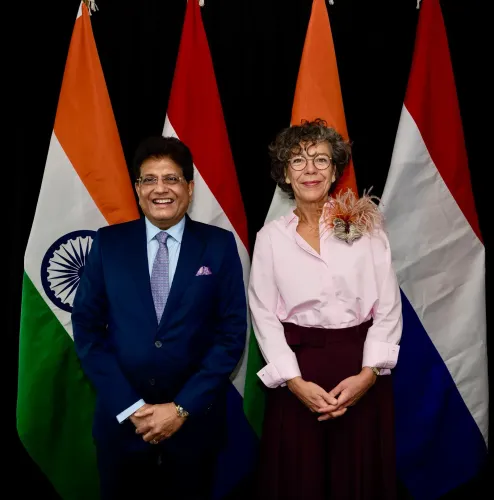
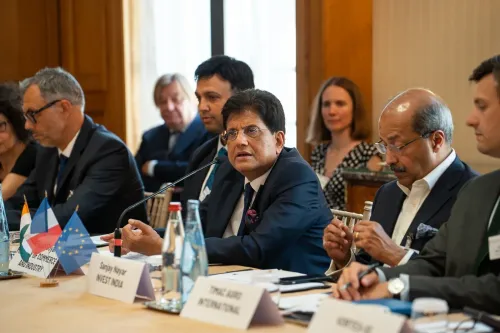
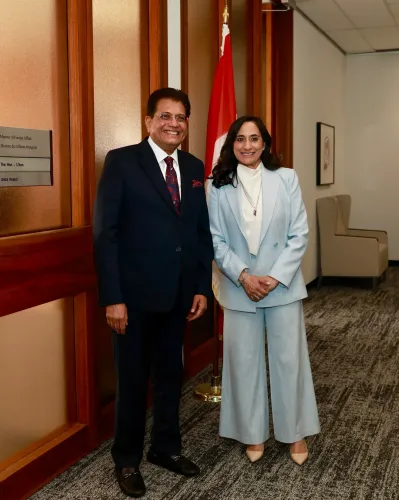
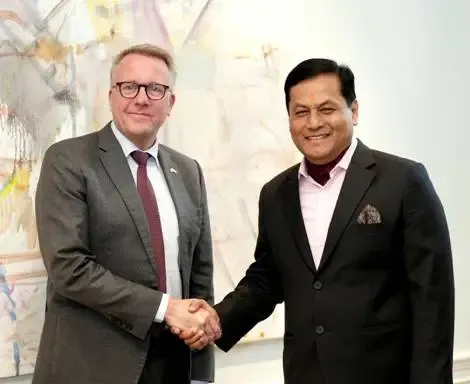
A bilateral meeting between two commerce ministers — one from the world's largest democracy, the other from a Nordic powerhouse in green technology — quietly signals how India is stitching together its economic future, one partnership at a time. Union Commerce and Industry Minister Piyush Goyal met Martin Lidegaard, Denmark's Minister for Business and Competitiveness, on Tuesday, November 3, 2026, with trade, investment, and industrial collaboration topping the agenda.
What the two ministers put on the table
Goyal described the meeting as 'productive', with discussions ranging across 'key sectors' for greater trade, investment, and industrial collaboration. Both sides reaffirmed their commitment to deepening bilateral economic engagement and building 'mutually beneficial partnerships' — language that signals institutional intent rather than a one-off diplomatic courtesy call.
Lidegaard, as Denmark's minister responsible for trade and industrial policy, brings direct authority over business facilitation — making this the kind of dialogue that can translate into on-ground investment pipelines rather than staying at the level of communiqués.
The Green Strategic Partnership: the architecture behind this meeting
This engagement does not exist in a vacuum. India and Denmark launched the Green Strategic Partnership in 2020 — a bilateral framework built around green transition, sustainable energy, trade, and research and innovation cooperation. That partnership gave the relationship a structural backbone that successive ministerial meetings can build upon.
Denmark's reputation as a global leader in wind energy, maritime technology, and clean-tech manufacturing makes it a particularly relevant partner for India as it scales up its own green transition. For Danish companies, India's vast infrastructure build-out and manufacturing ambitions represent a market of compounding opportunity.
India's European outreach: a consistent diplomatic drumbeat
Tuesday's meeting fits a pattern that New Delhi has been deliberate about: conducting targeted bilateral engagements with European partners outside the slower track of EU-wide free trade agreement negotiations. These country-by-country meetings allow India to move faster — locking in investment facilitation understandings, sector-specific working arrangements, and business-to-business bridges without waiting for a comprehensive EU-India deal to land.
For Indian exporters and manufacturers — especially in sectors like pharmaceuticals, engineering goods, and green energy components — these bilateral channels create early-mover advantage. For Denmark, deeper ties with India's growing economy offer export and investment diversification away from a turbulent global trade environment.
The next test: whether sector-specific working groups or joint investment facilitation statements follow this meeting in the weeks ahead — that is when diplomatic intent becomes economic momentum.
Point of View
Giving the 2020 Green Strategic Partnership renewed relevance as both economies seek to diversify supply chains. For Goyal, who has been driving India's trade outreach across multiple continents, this meeting adds another node to an expanding European network. The real signal will come if follow-up working groups are announced — that is when ministerial chemistry converts to measurable trade architecture.
NationPress
3 Nov 2026
Frequently Asked Questions
Who is Martin Lidegaard?
Martin Lidegaard is Denmark's Minister for Business and Competitiveness, responsible for trade and industrial policy. He met Indian Commerce Minister Piyush Goyal on November 3, 2026, to discuss bilateral trade and investment opportunities.
What is the India-Denmark Green Strategic Partnership?
The India-Denmark Green Strategic Partnership was launched in 2020 as a bilateral framework to deepen cooperation in green energy transition, trade, research, and innovation between the two countries.
What did Piyush Goyal and Martin Lidegaard discuss?
The two ministers discussed opportunities for greater trade, investment, and industrial collaboration across key sectors, and reaffirmed their commitment to deepening bilateral economic engagement between India and Denmark.
Why does India engage bilaterally with European countries separately from EU negotiations?
India conducts targeted bilateral meetings with individual European nations to move faster on trade and investment facilitation, without being bound by the slower pace of EU-wide free trade agreement negotiations.
What sectors connect India and Denmark economically?
Denmark is a global leader in wind energy, maritime technology, and clean-tech manufacturing — sectors that align with India's green transition goals. Pharmaceuticals and engineering goods are among Indian export interests in the Danish market.