Goyal meets Dutch Minister, eyes chip and green hydrogen ties
Synopsis
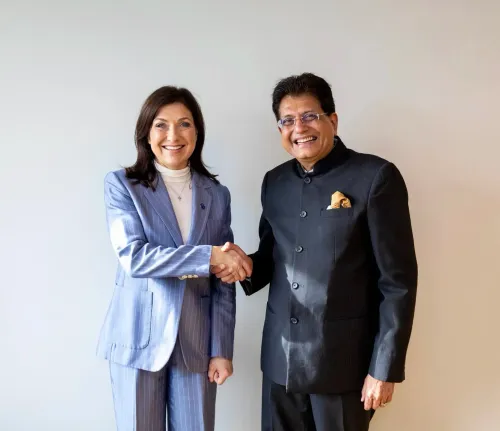
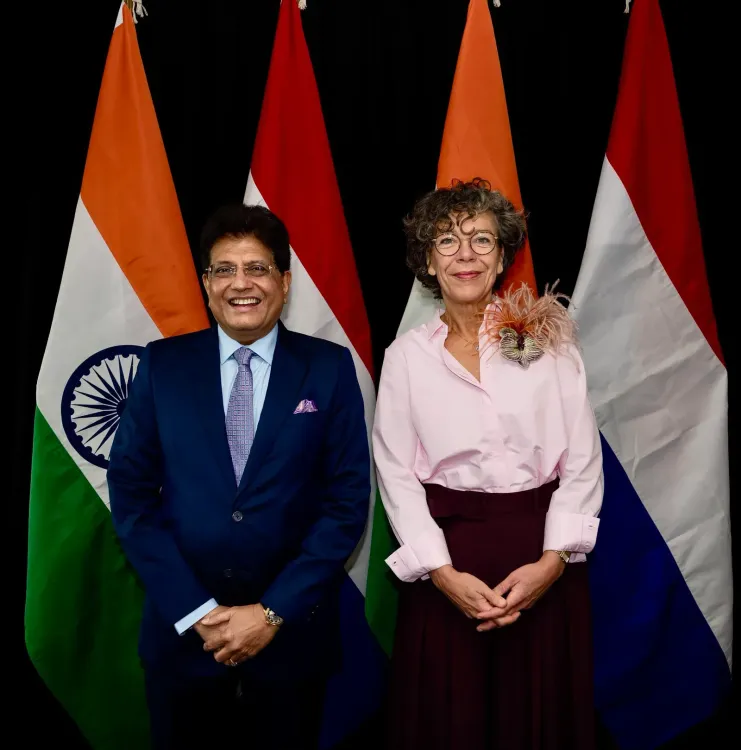
Union Commerce Minister Piyush Goyal met Dutch Minister Heleen Herbert on 26 October 2026, exploring cooperation in semiconductors, green hydrogen, critical minerals, and leveraging the India-EU FTA to expand trade and build resilient supply chains.
Key Takeaways
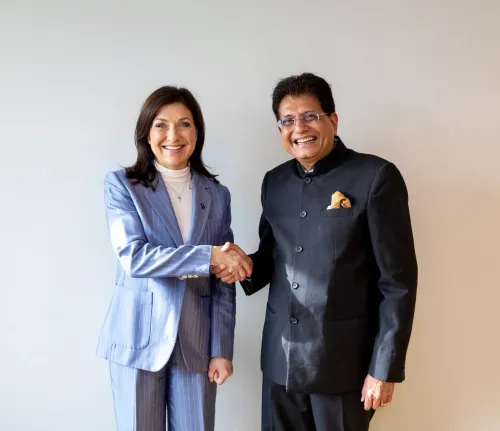
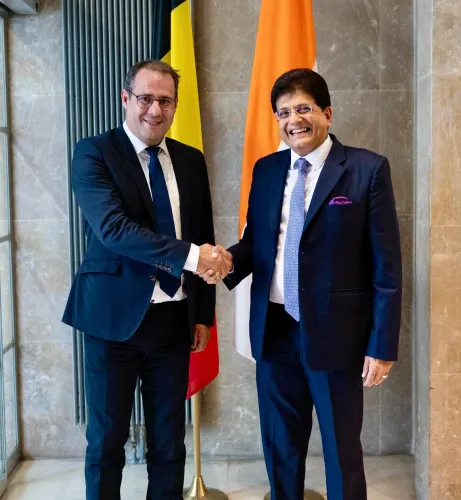
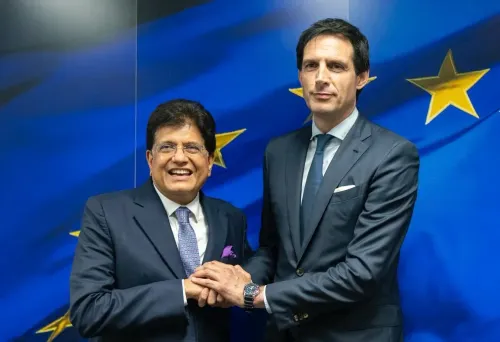
Piyush Goyal held a bilateral meeting with Netherlands Minister Heleen Herbert on 26 October 2026 .
Key sectors on the agenda: semiconductors, green hydrogen, clean energy, critical minerals, and advanced manufacturing .
Both sides discussed using the India-EU Free Trade Agreement (BTIA) to expand trade and build resilient supply chains.
The Netherlands is home to ASML , the world's only maker of extreme ultraviolet lithography machines, making it a critical partner for India's semiconductor ambitions.
India and the EU resumed BTIA negotiations in 2022 after a hiatus since 2013, and member-state bilateral meetings feed momentum into those talks.
The meeting fits India's broader pattern of locking in technology and supply-chain partnerships with individual EU nations ahead of a bloc-wide trade deal.
Semiconductors, green hydrogen, and the long-pending India-EU trade deal were at the centre of a high-stakes bilateral conversation on Monday, 26 October 2026, when Union Commerce and Industry Minister Piyush Goyal held talks with Ms. Heleen Herbert, Netherlands Minister of Economic Affairs and Climate Policy — signalling that India's push for diversified, technology-intensive supply chains is accelerating on the European front.
What Goyal and Herbert put on the table
Goyal described the meeting as 'productive', flagging five specific priority areas: semiconductors, green hydrogen, clean energy transition, critical minerals, and advanced manufacturing. The breadth of that list is telling — it maps almost perfectly onto India's twin imperatives of tech self-reliance and net-zero transition, and onto the Netherlands' own strengths in high-tech manufacturing, port logistics, and climate policy.
Both sides also discussed harnessing the India-EU Free Trade Agreement (FTA) — formally the Broad-based Trade and Investment Agreement (BTIA) — to expand bilateral trade flows and build 'resilient supply chains'. The choice of phrase matters: 'resilient supply chains' is diplomatic shorthand for reducing over-dependence on any single geography, a preoccupation shared by both New Delhi and Brussels in the post-pandemic, post-Ukraine era.
Why the Netherlands, why now
The Netherlands punches well above its geographic weight in sectors India cares about most. It is home to ASML, the sole manufacturer of extreme ultraviolet lithography machines that are essential to advanced chip fabrication — making Dutch goodwill strategically significant to India's semiconductor ambitions. India launched the India Semiconductor Mission in 2021, committing substantial incentives to attract chip-making investments, and bilateral engagement with key European technology capitals has been a steady drumbeat since.
On the clean energy side, the Netherlands has been a European leader in offshore wind and hydrogen infrastructure, areas where Indian industry is rapidly scaling. A bilateral partnership here could bring both technology and financing pipelines that complement India's National Green Hydrogen Mission.
The India-EU FTA as the larger frame
The bilateral meeting does not exist in isolation. India and the EU resumed BTIA negotiations in 2022 after a nine-year stalemate, and every ministerial-level engagement with an EU member state now feeds into the larger architecture of that deal. The Netherlands — as an EU member with one of Europe's largest trade and investment footprints in Asia — carries significant weight in shaping the bloc's overall negotiating posture.
By explicitly naming the FTA in his post, Goyal flagged that this was not just a courtesy call. It was a brick laid in the broader wall of a comprehensive trade framework that could, once concluded, reshape tariff structures across goods, services, and investment for decades.
India's pattern of bilateral engagements with individual EU nations — Germany on engineering, France on defence and nuclear, and now the Netherlands on chips and green energy — suggests a deliberate strategy: lock in sectoral momentum at the member-state level to build political momentum for the bloc-wide deal.
Point of View
The Green Hydrogen Mission) and Europe's own supply-chain diversification imperative post-Ukraine. The Netherlands' centrality to global chip manufacturing through ASML gives this bilateral an outsized strategic weight that goes beyond its trade volume. If India can convert ministerial-level goodwill into concrete MoUs on chips or hydrogen infrastructure, it would also strengthen New Delhi's negotiating hand in the broader FTA talks by demonstrating credible, technology-rich deliverables.
NationPress
26 Oct 2026
Frequently Asked Questions
What did Piyush Goyal discuss with the Dutch minister in October 2026?
Goyal met Netherlands Minister of Economic Affairs and Climate Policy Heleen Herbert on 26 October 2026 to explore cooperation in semiconductors, green hydrogen, clean energy transition, critical minerals, and advanced manufacturing, as well as leveraging the India-EU FTA to expand trade.
What is the India-EU FTA or BTIA?
The India-EU Broad-based Trade and Investment Agreement (BTIA) is a comprehensive free trade deal under negotiation between India and the European Union, aimed at cutting tariffs and deepening economic ties. Negotiations resumed in 2022 after being paused since 2013.
Why is the Netherlands important for India's semiconductor plans?
The Netherlands is home to ASML, the world's only manufacturer of extreme ultraviolet lithography machines that are essential for producing advanced semiconductors, making Dutch cooperation strategically significant for India's Semiconductor Mission.
What is India's India Semiconductor Mission?
Launched in 2021, the India Semiconductor Mission provides financial incentives and policy support to attract domestic and foreign investment in chip design and fabrication, aiming to reduce India's dependence on semiconductor imports.
How does the Netherlands fit into India's green hydrogen goals?
The Netherlands has significant expertise in offshore wind energy and hydrogen infrastructure, areas directly relevant to India's National Green Hydrogen Mission, which aims to scale up domestic green hydrogen production and exports.