Goyal meets Germany's Economy Minister on AI, green hydrogen, India-EU FTA
Synopsis
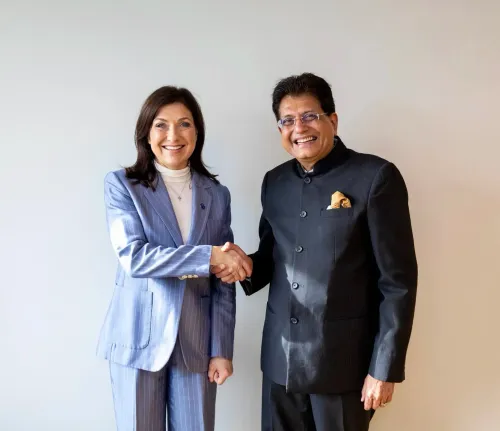
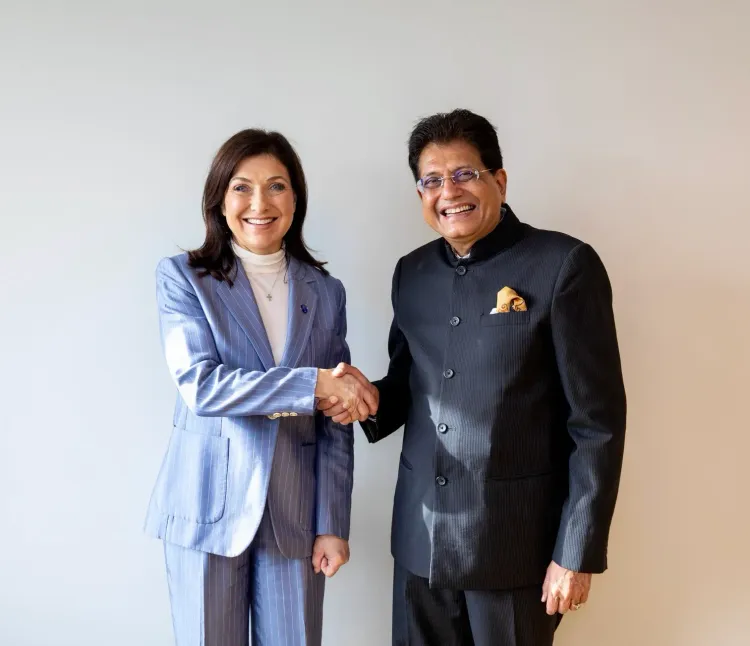
Commerce Minister Piyush Goyal met Germany's Federal Economy Minister Katherina Reiche on 22 October 2026, discussing cooperation in AI, semiconductors, green hydrogen, critical minerals, and resilient supply chains, while calling the India-EU FTA a potential game-changer for bilateral business.
Key Takeaways
Piyush Goyal met Germany's Economy and Energy Minister Katherina Reiche on 22 October 2026 for a bilateral economic cooperation meeting.
Talks covered seven strategic sectors : AI, semiconductors, advanced manufacturing, critical minerals, green hydrogen, renewable energy, and energy storage.
Both sides discussed increasing German investment in India's industrial and digital ecosystems .
The India-EU FTA , whose negotiations were relaunched in June 2022 after a near-decade hiatus, was described by Goyal as a 'game-changer' for Indian and German businesses.
India is pursuing a dual-track EU strategy: advancing the multilateral FTA while securing bilateral technology and supply-chain commitments with individual member states including France, the Netherlands, and Germany .
The next formal India-EU FTA negotiating round and the upcoming India-EU Summit are the immediate milestones to watch.
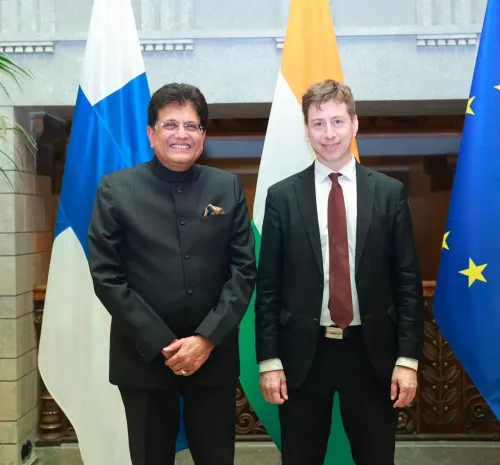
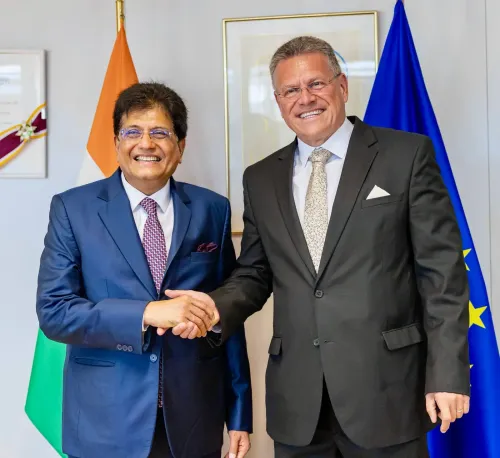
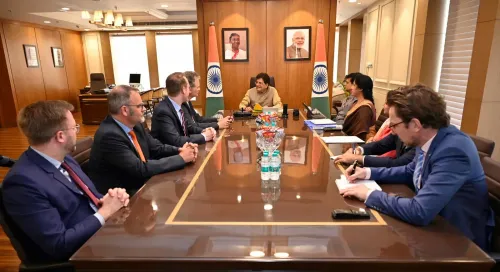
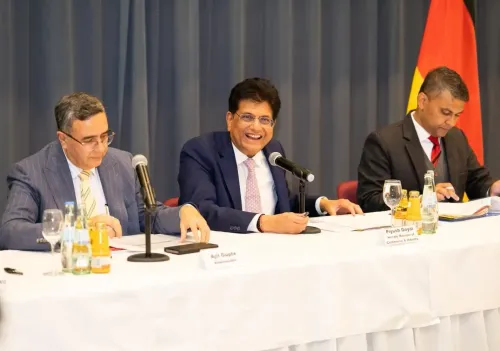
Union Commerce and Industry Minister Piyush Goyal sat down with Germany's Federal Minister for Economic Affairs and Energy, Katherina Reiche, on Thursday, 22 October 2026, for a wide-ranging bilateral meeting that put two of the world's most ambitious industrial economies on the same page — from semiconductors to green hydrogen to the long-awaited India-EU Free Trade Agreement.
Seven sectors, one strategic conversation
The agenda read like a blueprint for the next decade of global economic competition. Goyal and Reiche exchanged views on cooperation in artificial intelligence, semiconductors, advanced manufacturing, critical minerals, green hydrogen, renewable energy, and energy storage — a suite of technologies that sit at the intersection of industrial competitiveness and national security for both nations. They also discussed building resilient supply chains and expanding investment into India's industrial and digital ecosystems.
Germany is India's largest trading partner within the European Union and brings unmatched depth in precision engineering, automotive manufacturing, and clean-energy technology. For India, the partnership offers a credible alternative sourcing corridor at a time when supply-chain concentration — particularly in semiconductors and critical minerals — has become a strategic liability.
The India-EU FTA: why both sides are calling it a game-changer
The centrepiece of the political signal was the India-EU Free Trade Agreement. Goyal described it as a 'game-changer that would help businesses in both India and Germany realise their full potential.' That phrase carries weight: after the original negotiations collapsed in 2013, talks were formally relaunched in June 2022 with a renewed mandate covering tariffs, services, and investment protection. Progress has been incremental but real, and bilateral ministerial-level meetings like this one are widely understood to build the political momentum that formal negotiating rounds alone cannot generate.
India has in parallel intensified its one-on-one economic outreach to individual EU member states — France, the Netherlands, and others — a deliberate dual-track strategy: keep the multilateral FTA talks moving while locking in technology and supply-chain commitments bilaterally so no round of negotiations can unravel them entirely.
Green hydrogen and critical minerals: the new frontier
Of all the sectors on the table, green hydrogen and critical minerals signal the sharpest strategic pivot. India has set an ambitious target-driven domestic green hydrogen mission, and Germany — navigating its own post-fossil-fuel energy transition — is among the world's most motivated buyers and co-developers of green hydrogen infrastructure. Critical minerals, meanwhile, have become the defining supply-chain anxiety of the semiconductor and clean-energy era; India's geology and Germany's processing expertise make them natural partners in building alternatives to concentrated sourcing from a handful of countries.
The next milestone to watch: the forthcoming formal round of India-EU FTA negotiations and any joint statement expected at the upcoming India-EU Summit. Meetings like today's are where the political will is manufactured — and that will, once made, tends to outlast any single negotiating session.
Point of View
Semiconductors, and critical minerals — not just tariff schedules — at the centre of the conversation, New Delhi is framing the relationship as a strategic technology partnership, not merely a market-access negotiation. This matters because Germany's domestic political economy, particularly its industrial lobbies, has historically been a swing factor inside the EU on trade deal timelines. Winning Berlin's active enthusiasm could accelerate Brussels' negotiating posture considerably.
NationPress
22 Oct 2026
Frequently Asked Questions
What did Piyush Goyal discuss with Germany's Economy Minister?
Goyal met Germany's Federal Economy and Energy Minister Katherina Reiche on 22 October 2026 to discuss cooperation in AI, semiconductors, advanced manufacturing, critical minerals, green hydrogen, renewable energy, energy storage, resilient supply chains, and increased German investment in India's industrial and digital sectors. They also discussed the India-EU Free Trade Agreement.
What is the India-EU FTA and where do negotiations stand?
The India-EU Free Trade Agreement is a comprehensive trade deal covering tariffs, services, and investment between India and the European Union. Original talks collapsed in 2013 and were formally relaunched in June 2022. Negotiations are ongoing, with bilateral ministerial engagements helping build political momentum between rounds.
Why is Germany important for India's trade and technology strategy?
Germany is India's largest trading partner within the EU and a global leader in precision engineering, advanced manufacturing, and clean-energy technology. Cooperation with Germany gives India access to key technologies in semiconductors, green hydrogen, and critical-mineral processing while diversifying supply chains away from concentrated sourcing.
What is India's green hydrogen partnership with Germany about?
India has a domestic green hydrogen mission aimed at scaling up production, while Germany seeks to secure green hydrogen imports as part of its own energy transition away from fossil fuels. The two countries are exploring co-development of green hydrogen infrastructure and investment flows in the sector.
What comes next after the Goyal-Reiche meeting?
The key milestones to watch are the next formal round of India-EU FTA negotiations and any joint statement expected at the upcoming India-EU Summit. Bilateral ministerial meetings like this one are designed to build the political will that drives those larger multilateral processes forward.