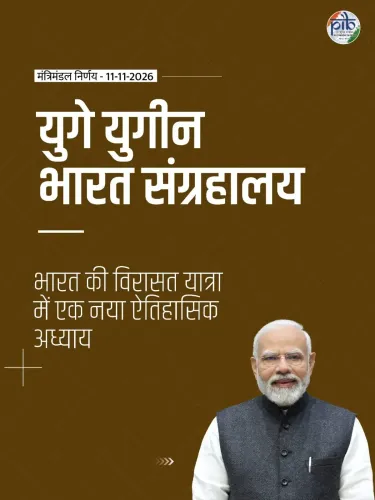
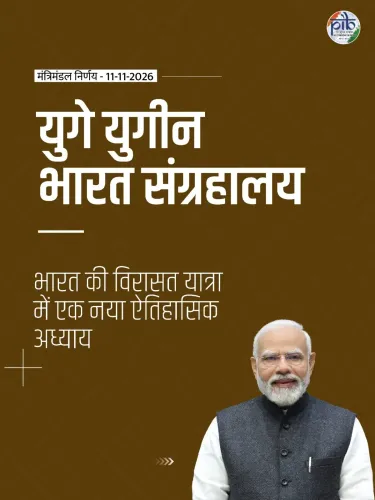
Nadda: Cabinet clears ₹3,230 cr Yuge Yugeen Bharat Museum
Synopsis
The Cabinet Committee on Economic Affairs, chaired by PM Modi, has approved the ₹3,230 crore Yuge Yugeen Bharat Museum at New Delhi's North and South Block Complex, envisioned as the world's largest museum by display area, showcasing India's civilisational heritage.
Key Takeaways
The CCEA , chaired by PM Narendra Modi , approved the Yuge Yugeen Bharat Museum on 11 November 2026 .
Estimated project cost is ₹3,230 crore .
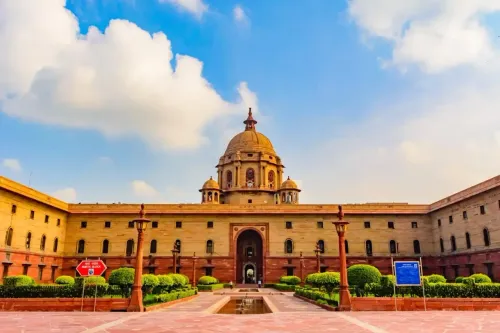
The museum will be housed in the historic North and South Block Complex in New Delhi .
It is envisioned as the world's largest museum by display area .
The museum will present an integrated narrative of India's tangible and intangible cultural heritage .
The project is part of the broader Central Vista redevelopment approved in 2019 , which involves relocating ministries from the two Blocks.
At a stroke of ₹3,230 crore, India's most storied administrative address is about to become its most ambitious cultural one. The Cabinet Committee on Economic Affairs (CCEA), chaired by Prime Minister Narendra Modi, on Wednesday, 11 November 2026, approved the development of the Yuge Yugeen Bharat Museum inside the historic North and South Block Complex in New Delhi — a project envisioned as the world's largest museum by display area. Union Health Minister and BJP national president J. P. Nadda announced the Cabinet decision on X, calling it 'a proud initiative to preserve our civilisational legacy.'
From seat of government to shrine of civilisation
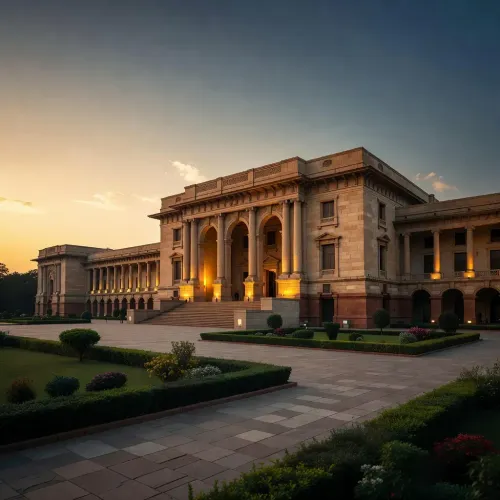
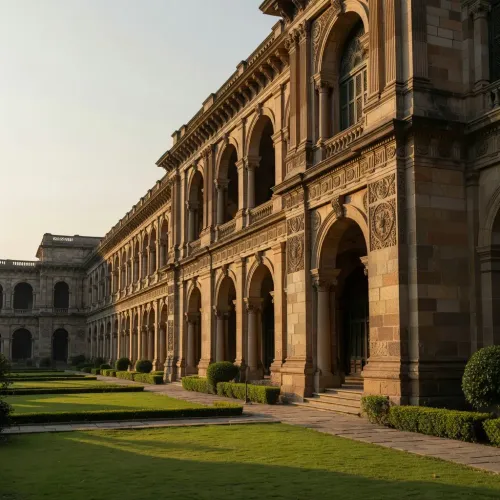
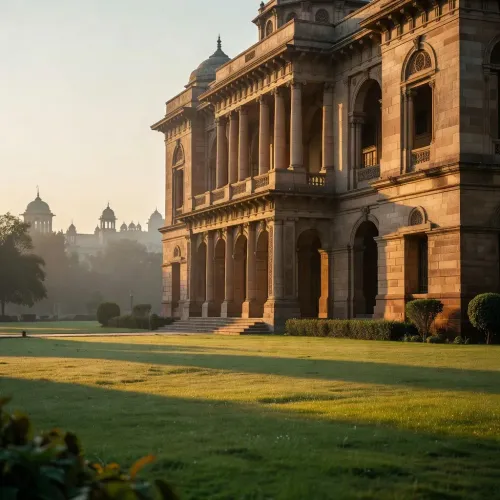
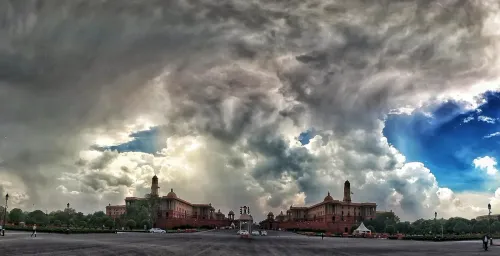
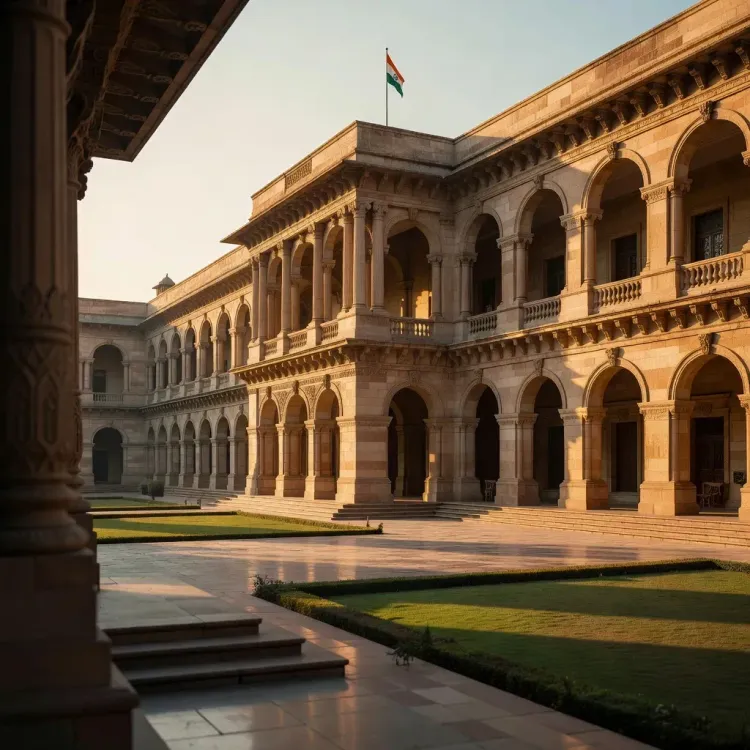
The North and South Blocks — the buff-sandstone sentinels that have flanked Rajpath (now Kartavya Path) since the early twentieth century — have housed the offices of the Finance Ministry, Home Ministry and other marquee departments for over a hundred years. Their transformation into a museum is a direct consequence of the Central Vista redevelopment programme, approved in 2019, which planned to consolidate ministries into a new common secretariat complex, freeing the heritage buildings for public use. The CCEA approval now converts that architectural promise into a funded, named project.
Once vacated, the two Blocks will together form the shell of the Yuge Yugeen Bharat Museum — a name that roughly translates as 'India across the ages.' The museum is designed to present what the Cabinet decision describes as 'an integrated narrative' of Bharat's tangible and intangible cultural legacy: artefacts and objects alongside oral traditions, performing arts, and living heritage forms that cannot be pinned to a glass case.
Scale that sets a world record as the ambition
The 'world's largest museum by display area' claim is the headline number — and it sets the bar deliberately high. For context, the Louvre in Paris spans roughly 72,000 square metres of exhibition space; the State Hermitage Museum in St Petersburg covers around 66,000 square metres. Project architects and curators will need to fill the sprawling North-South Block footprint — across multiple floors and courtyards — with narrative coherence, not just square footage. The ₹3,230 crore outlay will fund the adaptive reuse of a heritage precinct, which typically involves more complex and costly conservation work than a greenfield build.
A pattern of turning history into public space
This is not the government's first move to redeploy iconic administrative real estate as cultural infrastructure. The Central Vista project has already delivered a redesigned Kartavya Path, a new Parliament building, and plans for a Prime Minister's Museum at Teen Murti Estate. The Yuge Yugeen Bharat Museum fits neatly into that arc — heritage corridors, revamped ghats, and museum upgrades have been a recurring signature of cultural policy since 2014. What distinguishes this announcement is its sheer scale and the symbolic weight of the specific address: the buildings where independent India's economic and security decisions were made for eight decades will now be asked to tell a far older story.
The next critical milestones will be the release of a detailed project report, the tendering process, and any heritage-body or municipal clearances required before construction can begin inside a gazetted heritage precinct. How the government balances the conservation obligations of a protected colonial-era structure with the engineering demands of a record-breaking museum fitout will be the real test of the ambition behind the announcement.
India has long complained that its civilisational depth is under-represented in the world's great museums. If the Yuge Yugeen Bharat Museum is built as described, that argument will be hard to make from New Delhi ever again.
Point of View
Translating a decade of heritage-corridor policy into a single flagship institution. By anchoring the project inside two of independent India's most recognisable buildings, the government is making a deliberate argument about continuity — administrative history giving way to civilisational memory. The 'world's largest by display area' framing is as much a diplomatic statement as a curatorial one, positioning India as a peer of the Louvre and Hermitage rather than a destination for diaspora nostalgia tourism. The real measure of success, however, will come in the execution: conservation constraints, tendering integrity, and the intellectual rigour of the curatorial vision will determine whether the museum becomes a world-class institution or a monument to its own ambition.
NationPress
11 Nov 2026
Frequently Asked Questions
What is the Yuge Yugeen Bharat Museum?
The Yuge Yugeen Bharat Museum is a proposed national museum to be built inside the historic North and South Block Complex in New Delhi, approved by the Cabinet Committee on Economic Affairs in November 2026 at an estimated cost of ₹3,230 crore. It is designed to showcase India's civilisational heritage through an integrated narrative of tangible and intangible cultural legacy.
Where will the Yuge Yugeen Bharat Museum be located?
The museum will be located in the North and South Block Complex in New Delhi — the iconic early-twentieth-century buildings that currently house the Finance and Home Ministries — which are being vacated as part of the Central Vista redevelopment.
What is the cost of the Yuge Yugeen Bharat Museum?
The Cabinet Committee on Economic Affairs approved the project at an estimated cost of ₹3,230 crore .
Why is the Yuge Yugeen Bharat Museum significant?
It is envisaged as the world's largest museum by display area, aiming to present India's civilisational heritage — spanning both tangible artefacts and intangible cultural traditions — to Indian and global audiences from a single, landmark address in the national capital.
What is the Central Vista project and how does it relate to this museum?
The Central Vista redevelopment, approved in 2019, involves rebuilding parts of New Delhi's central administrative precinct, including relocating ministries to a new common secretariat. Vacating North and South Blocks was always part of this plan; the CCEA approval now confirms they will be converted into the Yuge Yugeen Bharat Museum.