EC refutes 2024 Haryana poll rigging claims with constituency-level data
Synopsis
The Election Commission has dismantled vote-rigging allegations in the 2024 Haryana polls with a single correction: critics were reading total registered electors as votes polled. Constituency-by-constituency data — from Badkhal to Mumbai North — shows the numbers reconcile perfectly once that confusion is cleared up. It is a reminder that electoral misinformation can travel faster than the official records that refute it.
Key Takeaways
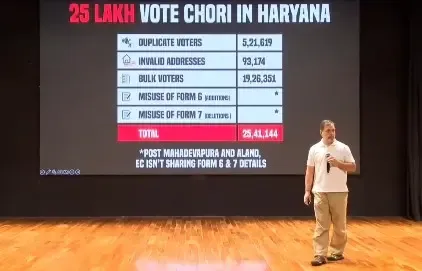
The Election Commission of India has rejected allegations of vote mismatches and rigging in the 2024 Haryana Assembly elections .
ECI sources say the claims stem from confusing total registered electors with actual votes polled — a fundamental misreading of official records.
In Badkhal (AC 87) , the electoral roll listed 3,32,253 electors; only 1,60,553 voted, yielding 1,58,475 valid votes — figures that reconcile completely.
The Mumbai North Parliamentary constituency allegation of 7.78 lakh uncounted votes is similarly refuted: the 18.11 lakh figure was the electorate size, not votes cast.
Statewide, Haryana recorded 1,39,13,879 voters out of 2,04,63,841 electors ( 67.99% turnout); valid votes totalled 1,38,37,980 .
The commission noted that large unexplained gaps would have triggered a statutory probe under the Conduct of Election Rules — no such gaps were found.
The Election Commission of India (ECI) has firmly rejected allegations of vote mismatches and systemic rigging in the 2024 Haryana Assembly elections, stating that widely circulated claims of massive gaps between votes cast and votes counted stem from a fundamental misreading of official electoral records. The clarification, issued by ECI sources, cites authenticated constituency-wise data to dismantle each specific allegation point by point.
The Core Confusion: Electors vs Votes Cast
At the heart of the controversy, according to ECI sources, is a recurring error: critics allegedly mistook the total number of registered electors on the electoral rolls for the number of votes actually polled. This single misreading, the commission argues, is responsible for the artificial and alarming-sounding discrepancies that have circulated online and in opposition circles.
In Badkhal (AC 87), for instance, the electoral roll listed 3,32,253 total electors. Of these, 1,60,553 actually voted — a poll percentage of 48.32%. After accounting for 26 rejected postal votes, 543 EVM-rejected votes, and 1,509 NOTA votes, exactly 1,58,475 valid votes were recorded. The oft-cited figure of '3.32 lakh votes polled' was, the commission clarified, simply the size of the electoral roll — not turnout.
Constituency-by-Constituency Breakdown
ECI sources walked through the data for several other contested seats. In Ellenabad (AC 46), 1,95,868 electors were registered and 1,58,707 voted, recording a poll percentage of 81.03%. Valid votes stood at 1,57,909 after deducting 253 rejected postal votes and 545 NOTA votes.
In Gurgaon (AC 77), an urban constituency with lower turnout, 4,43,593 electors were on the rolls, of whom 2,30,147 voted (51.88%). Valid votes came to 2,29,029 after standard deductions. In Badshahpur (AC 76), 5,21,969 electors produced 2,83,131 votes polled (54.24%) and 2,80,482 valid votes. In Kalka (AC 1), 2,02,394 electors yielded 1,45,961 votes (72.12%) and 1,45,220 valid votes.
Mumbai North Mismatch Claim Also Refuted
Allegations of the largest discrepancy surfaced around Mumbai North Parliamentary constituency in Maharashtra, where reports claimed 18.11 lakh votes were polled but only 10.33 lakh were counted — implying a staggering 7.78 lakh uncounted votes, or 42.8% of all votes polled.
ECI sources attributed this claim to the same underlying error. The constituency had 18.12 lakh registered electors on its rolls. Of these, 10.33 lakh actually voted, recording a turnout of approximately 57%. The figure of '18.11 lakh votes polled' was, the commission stated, simply the total electorate — not the votes cast. Valid votes matched the polled figures after routine deductions for NOTA and rejections, with no discrepancy between votes polled and votes counted.
Statewide Haryana Numbers and Legal Framework
At the statewide level, Haryana recorded 2,04,63,841 total electors and 1,39,13,879 who voted, for an overall turnout of 67.99%. Valid votes totalled 1,38,37,980 after all rejections and NOTA tallies. These figures, ECI sources noted, are drawn directly from authenticated returns filed by Returning Officers.
The commission acknowledged that minor differences between the number of electors who entered polling booths and the final valid vote count are routine and legally accounted for — covering voters who enter but do not vote, invalidated postal ballots, and test votes. Notably, the commission pointed out that large unexplained gaps of the kind alleged would have triggered a statutory investigation under the Conduct of Election Rules — and no such gaps exist in the Haryana data.
ECI sources reiterated that Form 17C — the primary record filed at each polling station — remains the sole authoritative source of electoral data, and that constituency-level figures continue to be publicly accessible through official ECI channels for independent verification.
What Happens Next
The commission's point-by-point rebuttal places the burden of proof squarely back on those who made the original allegations. With authenticated Returning Officer data now on record, any further legal challenges to the 2024 Haryana Assembly results would need to demonstrate errors in the official Form 17C filings themselves — a significantly higher evidentiary bar than secondary analyses of publicly available data.
Point of View
Rather than in response to viral allegations, would significantly narrow the window for misinformation to take root. The confusion between electorate size and turnout is not a sophisticated statistical trick; it is an elementary one — which raises the question of whether the original claims were made in good faith or for political effect. Either way, the ECI's data-first response sets a useful precedent for rebutting electoral misinformation with auditable records rather than blanket denials.
NationPress
11 Nov 2026
Frequently Asked Questions
What were the allegations of vote mismatch in the 2024 Haryana elections?
Critics alleged that in several Haryana Assembly constituencies, the number of votes polled far exceeded the number counted on EVMs, implying large-scale rigging. The ECI has stated these claims were based on a misreading of official records, where the total number of registered electors was mistakenly treated as the number of votes actually cast.
How did the Election Commission explain the apparent discrepancy in Badkhal constituency?
In Badkhal (AC 87), the electoral roll listed 3,32,253 registered electors — the figure critics cited as 'votes polled'. Of these, only 1,60,553 actually voted (48.32% turnout). After routine deductions for rejected postal ballots, EVM-rejected votes, and NOTA, valid votes came to 1,58,475. The ECI says the numbers reconcile completely.
What about the Mumbai North vote count allegation?
Reports alleged that 18.11 lakh votes were polled in Mumbai North but only 10.33 lakh were counted — implying 7.78 lakh uncounted votes. The ECI says the 18.11 lakh figure was simply the total electorate on the rolls, not votes cast. Actual turnout was 10.33 lakh (around 57%), and valid votes matched polled figures after standard deductions.
What is Form 17C and why does it matter?
Form 17C is the primary record filed at each polling station documenting the number of votes cast on the EVM. The ECI has identified it as the sole authoritative source for electoral data. The commission has stated that constituency-level Form 17C data is publicly accessible through official ECI channels for independent verification.
Would genuine large-scale vote mismatches have gone undetected under election law?
No, according to the ECI. Large unexplained gaps between votes polled and votes counted would have triggered a mandatory statutory investigation under the Conduct of Election Rules. The commission states no such gaps exist in the authenticated Haryana 2024 data, and no statutory probe was initiated.