CM Bhajan Lal bets on women's empowerment as Rajasthan's foundation
Synopsis
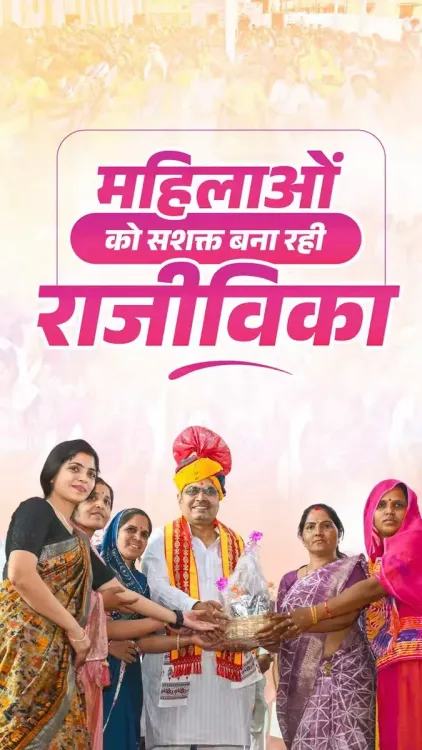
Rajasthan Chief Minister Bhajan Lal Sharma on November 11, 2026, declared women's empowerment the foundation of a developed Rajasthan, pledging that the BJP's double engine government would work with full commitment toward women's all-round economic self-reliance.
Key Takeaways
Rajasthan CM Bhajan Lal Sharma posted on November 11, 2026 that women's empowerment is the 'strong foundation' of a developed Rajasthan.
He called for every woman in the state to become self-reliant and economically empowered — not just a welfare recipient.
The post invokes the BJP's 'double engine government' model of coordinated central-state governance as the delivery mechanism.
Sharma has been Rajasthan Chief Minister since December 2023 , following the BJP's state assembly election win.
No specific new scheme or budget figure was announced; the statement is a commitment-framing ahead of potential policy or budget announcements.
Women's self-reliance, not just welfare handouts — that is the frame Rajasthan Chief Minister Bhajan Lal Sharma is placing at the centre of the state's development story. On Wednesday, November 11, 2026, the BJP leader posted a pointed assertion on X: that empowering women is the strongest foundation a 'developed Rajasthan' can be built on.
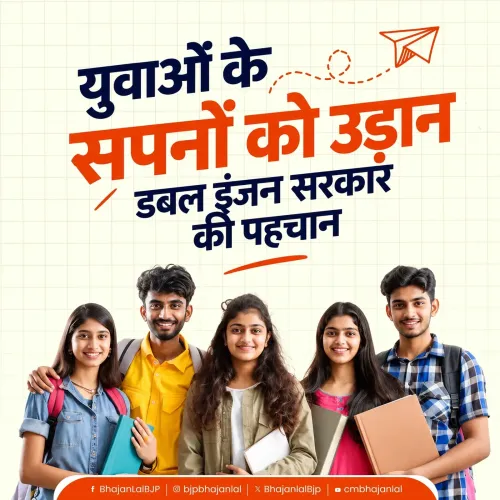
Sharma's post, originally in Hindi, reads: 'Mahilaon ka sashaktikaran hi viksit Rajasthan ki mazboot neenv hai' — 'Women's empowerment is the strong foundation of a developed Rajasthan.' He added that the state government's goal is for every woman in Rajasthan to become self-reliant, economically strong, and capable of realising her own dreams. The vehicle for this, he underlined, is the 'double engine government' — the BJP's phrase for its model of coordinated rule at both the state and central levels — working with 'full commitment' toward the all-round development of women.
What the 'double engine' model means for Rajasthan's women
The 'double engine' framing has been a signature of BJP governance since 2014, used to argue that states ruled by the BJP can unlock faster social progress by aligning seamlessly with central government schemes. For women's welfare, this alignment typically means state machinery amplifying national programmes on financial inclusion, skill development, and self-help group formation, while adding state-specific top-ups or delivery mechanisms.
Sharma took charge of Rajasthan in December 2023 after the BJP's victory in state assembly elections, inheriting a western Indian state where rural women's economic participation has long been a policy flashpoint. His framing — economic empowerment and self-realisation, rather than just social protection — signals an intent to position Rajasthan women as economic agents, not merely beneficiaries.
A pattern bigger than one post
The statement fits a broader, deliberate BJP communications rhythm: state chief ministers periodically anchor their governance narrative on women's development, particularly ahead of budget sessions or scheme reviews. The language of aatmanirbharta (self-reliance) in the context of women directly echoes Prime Minister Narendra Modi's national messaging, suggesting a tightly coordinated ideological register across the party's leadership ladder.
What the post does not do is name a specific scheme, announce a new budget outlay, or set a measurable target — markers that would sharpen the pledge into a deliverable. The absence of those details keeps this in the territory of commitment-signalling, though Sharma's office and the upcoming Rajasthan assembly sessions would be the place to watch for concrete follow-through.
Rajasthan has roughly 35 million women in its population. Any serious policy shift on their economic participation would rank among the more consequential state-level interventions in the country. The Chief Minister has set the frame; the specifics will determine whether this foundation holds.
Point of View
Reinforcing the double engine logic ahead of likely budget or scheme reviews. The framing of women as economic agents rather than welfare recipients is a subtle but meaningful upgrade in BJP state communication, designed to broaden the party's appeal among working-age women voters. However, the absence of any specific programme or measurable target means the statement lives in the space between aspiration and accountability. Watch for whether this language is backed by concrete allocations in the next Rajasthan legislative session.
NationPress
11 Nov 2026
Frequently Asked Questions
What did Rajasthan CM Bhajan Lal Sharma say about women's empowerment?
Sharma declared on November 11, 2026, that women's empowerment is the strongest foundation of a developed Rajasthan, pledging that his government would work with full commitment toward the economic self-reliance and all-round development of every woman in the state.
What is the 'double engine government' model Sharma referenced?
The 'double engine government' is a BJP phrase describing the alignment of a BJP state government with the BJP-led central government, allowing welfare and development schemes to be coordinated and amplified across both levels for faster delivery.
When did Bhajan Lal Sharma become Chief Minister of Rajasthan?
Bhajan Lal Sharma took office as Rajasthan Chief Minister in December 2023 after the BJP won the Rajasthan state assembly elections.
Did Bhajan Lal Sharma announce any new women's scheme in this post?
No specific new scheme, budget allocation, or measurable target was announced. The post articulates a broad commitment to women's economic empowerment under the double engine governance model.
How many women live in Rajasthan?
Rajasthan has approximately 35 million women in its population, making any significant state-level shift on women's economic participation a consequential intervention at the national scale.