Nadda Signs Ambulance MoU, Health Kiosks Deal in Colombo
Synopsis
Union Health Minister J. P. Nadda signed an MoU in Colombo for 100 ambulances worth USD 5.28 million and announced 50 Medical Kiosks for Sri Lanka at the first BIMSTEC Health Ministers' Meeting, advancing India's Neighbourhood First healthcare diplomacy.
Key Takeaways
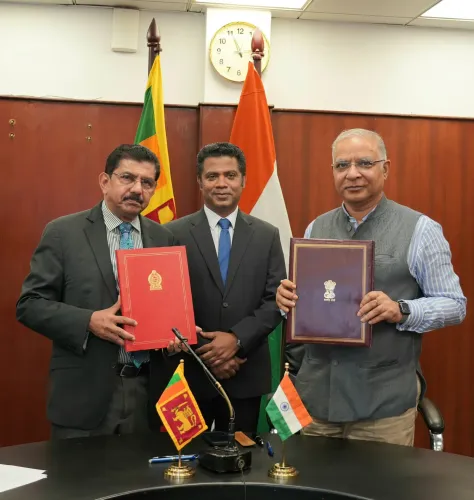
100 fully-equipped ambulances for Sri Lanka's 1990 Suwa Seriya Emergency Ambulance Service formalised via a new MoU with Indian grant assistance of approximately USD 5.28 million .
50 Medical Kiosks / Health ATMs announced to expand diagnostics and telemedicine access at the primary-care level across Sri Lanka.
Both initiatives fall under India's broader USD 450 million post-Cyclone Ditwah rehabilitation package for Sri Lanka.
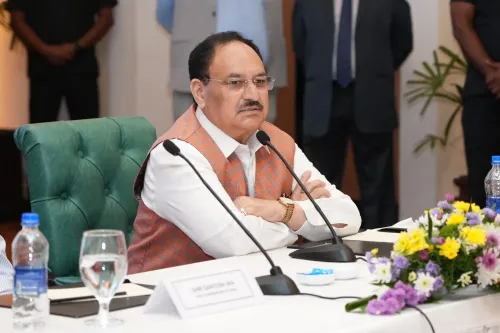
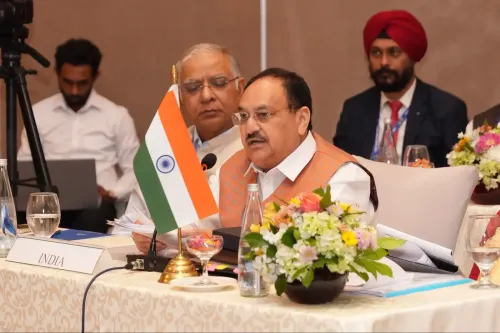
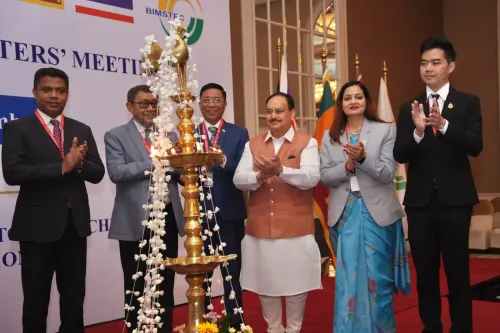
Deliverables were announced on the sidelines of the First BIMSTEC Health Ministers' Meeting in Colombo on 11 November 2026 .
India has previously supplied multiple ambulance batches to Suwa Seriya, making this latest MoU part of a sustained multi-year health partnership.
The announcements are framed under PM Narendra Modi's 'Neighbourhood First' and 'MAHASAGAR' foreign-policy vision.
India moved its Neighbourhood First policy from pledge to paperwork in Colombo on Wednesday, as Union Health Minister J. P. Nadda signed a fresh MoU for 100 fully-equipped ambulances and announced 50 Medical Kiosks for Sri Lanka — concrete deliverables that signal New Delhi's intent to anchor regional influence through healthcare rather than just diplomacy.
100 Ambulances and a USD 5.28 Million Grant
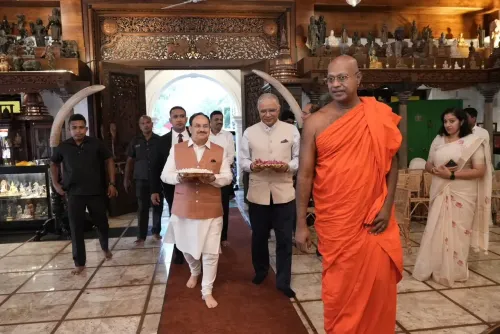
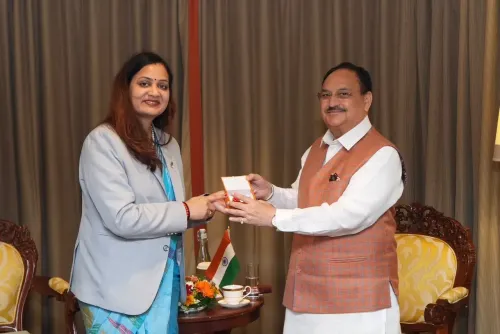
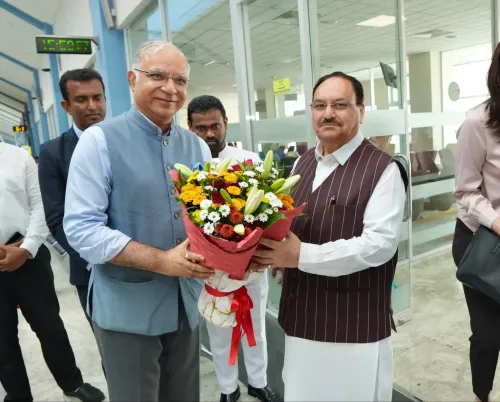
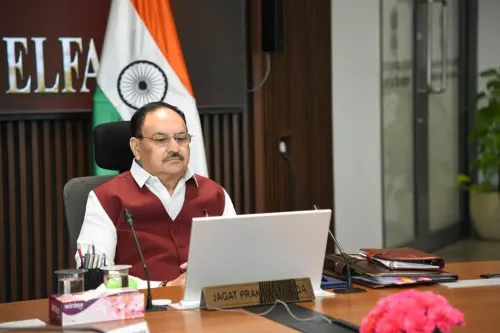
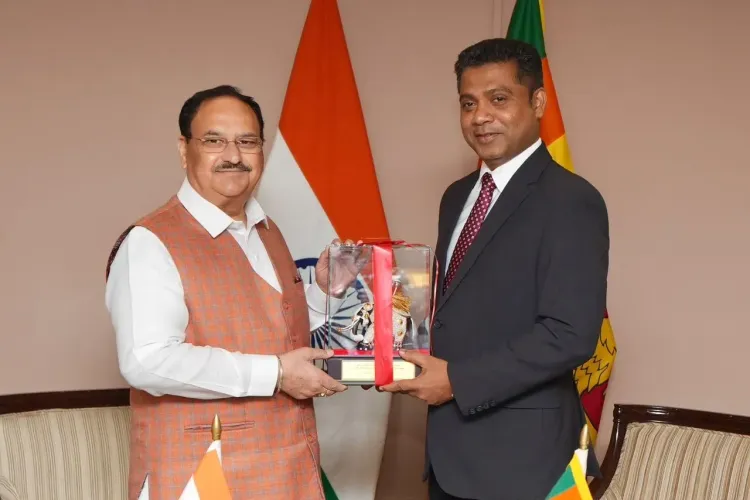
At the margins of the First BIMSTEC Health Ministers' Meeting, Nadda met Sri Lanka's Minister of Health and Mass Media, Dr. Nalinda Jayatissa, and witnessed the exchange of an MoU formalising the supply of 100 additional fully-equipped ambulances to Sri Lanka's 1990 Suwa Seriya Emergency Ambulance Service — the island nation's flagship national emergency-response network. The Indian grant assistance for the consignment stands at approximately USD 5.28 million.
The 'additional' in that number matters. India has supplied multiple earlier batches of ambulances to Suwa Seriya under previous grant agreements, making this the latest chapter in a sustained, multi-year partnership rather than a one-off gesture. Each ambulance that reaches a Sri Lankan district represents a direct upgrade to the last-mile emergency chain that ordinary citizens depend on.
50 Health ATMs Inside a USD 450 Million Rehabilitation Package
Alongside the ambulance deal, Nadda announced India's support for 50 Medical Kiosks — also called Health ATMs — designed to extend diagnostics and telemedicine access at the primary-healthcare level across Sri Lanka. The kiosks fall under India's USD 450 million post-Cyclone Ditwah rehabilitation package, a broad assistance envelope that spans infrastructure, livelihoods, and now health delivery.
Health ATMs are compact, sensor-laden units that allow patients to run basic vitals — blood pressure, blood oxygen, glucose, ECG — without a physician in the room, transmitting data to a remote doctor via telemedicine. Rolling out 50 such units in a country still rebuilding from a natural disaster could meaningfully compress the gap between rural populations and specialist care.
BIMSTEC as the Wider Frame
The bilateral deal was struck inside the larger room of the First BIMSTEC Health Ministers' Meeting, a gathering of the Bay of Bengal Initiative for Multi-Sectoral Technical and Economic Cooperation's seven member states. BIMSTEC health ministers have periodically coordinated on regional disease surveillance and health security, and the Colombo meeting represents a step toward institutionalising that cooperation at the ministerial level for the first time.
India has used similar twin-track diplomacy — bilateral grants plus regional institution-building — with other neighbours. Ambulance fleets and telemedicine infrastructure have been extended to Nepal and Bangladesh under comparable frameworks, making Sri Lanka the latest node in what New Delhi frames as an Indian Ocean health architecture.
Nadda tied both announcements explicitly to Prime Minister Narendra Modi's 'Neighbourhood First' and 'MAHASAGAR' vision — the latter a recently articulated maritime-neighbourhood engagement doctrine — framing the deliverables not as charity but as shared investment in regional health security.
What Sri Lanka's Citizens Stand to Gain
For Sri Lankans, the numbers translate into tangible outcomes: faster emergency response in districts where Suwa Seriya ambulances are still scarce, and primary-care diagnostics in communities where the nearest hospital may be hours away. With the country continuing its post-crisis recovery, strengthening the health system's peripheral infrastructure addresses one of the most visible gaps that emerged during the economic crisis years.
The rollout timeline for both the ambulances and the kiosks will be the real test — MoUs set the stage, but delivery schedules and district-allocation plans will determine how quickly the commitments reach the people they are meant for.
Point of View
Every ambulance bearing an Indian flag on a Sri Lankan highway is soft-power in motion. The MAHASAGAR doctrine, still new, is here being operationalised in the most tangible way possible: emergency vehicles and diagnostic kiosks rather than communiqués. The real test of this health-diplomacy model will be whether the rollout timelines hold and whether the kiosks are sited in genuinely underserved areas — outcomes that will shape perceptions in Colombo far more than the signing ceremony itself.
NationPress
11 Nov 2026
Frequently Asked Questions
What did India and Sri Lanka sign at the BIMSTEC Health Ministers' Meeting in 2026?
India and Sri Lanka signed an MoU for the supply of 100 fully-equipped ambulances to Sri Lanka's 1990 Suwa Seriya Emergency Ambulance Service, backed by Indian grant assistance of approximately USD 5.28 million. India also announced support for 50 Medical Kiosks to expand primary healthcare and telemedicine.
What is the 1990 Suwa Seriya service in Sri Lanka?
The 1990 Suwa Seriya Emergency Ambulance Service is Sri Lanka's national emergency ambulance network. India has supplied multiple batches of ambulances to the service under grant assistance agreements over several years.
What are Health ATMs or Medical Kiosks?
Health ATMs are compact diagnostic units that allow patients to self-test basic vitals such as blood pressure, blood oxygen levels, and blood glucose, with data transmitted to a remote doctor via telemedicine, expanding healthcare access in areas with limited medical facilities.
What is India's Neighbourhood First policy?
Neighbourhood First is a foreign-policy doctrine under Prime Minister Narendra Modi that prioritises development cooperation, connectivity, and people-to-people ties with India's immediate neighbours. Health assistance, infrastructure grants, and regional cooperation through bodies like BIMSTEC are key instruments of this approach.
What is BIMSTEC and why was its health ministers' meeting significant?
BIMSTEC — the Bay of Bengal Initiative for Multi-Sectoral Technical and Economic Cooperation — is a seven-nation regional grouping. The Colombo gathering was the First BIMSTEC Health Ministers' Meeting, marking a step toward institutionalising ministerial-level coordination on regional health security and disease surveillance.